


Your jaw wakes up sore. You’re tired at 2 PM even when you slept eight hours.
Most of us chalk these up to getting older, working too hard, or one glass of wine too many. They’re easy things to dismiss — until they pile up and quietly shape your day.
Here’s something most adults never hear from a doctor: the tongue, lips, and breathing muscles can be retrained. Short exercises, short sessions, steady change. It’s not surgery. It’s not CPAP. It’s closer to physical therapy for your airway.
This guide walks adults through adult myofunctional therapy breathing improvement Lakewood Colorado providers use as a standalone approach or alongside CPAP, tongue tie release, and orthodontics. Our Lakewood office sits a short drive from central Lakewood, West Denver, and Englewood, and the first visit includes a functional breathing assessment and a CBCT airway image — so you actually see what’s happening before you decide anything.
Mouth Breathing Is a Pattern, Not a Personality Trait
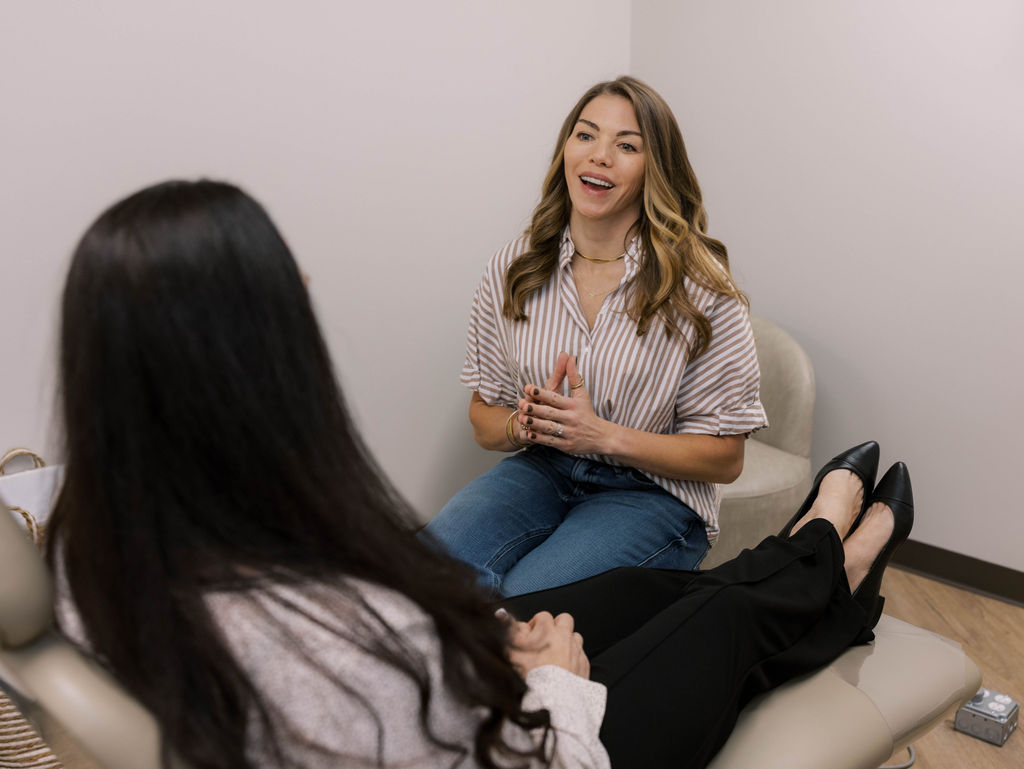
Most adults who mouth breathe have been doing it since childhood. Nobody flagged it. It just became the way they breathed.
The tongue ends up resting low instead of against the palate. Lips sit slightly apart at rest. Air bypasses the nose on its way in. Over years, this shapes the jaw, changes facial posture, and quietly chips away at sleep quality.
Common signs most adults ignore:
- Dry mouth and sore throat on waking
- Snoring — even “light” snoring
- Daytime fatigue that doesn’t match your sleep hours
- Brain fog in the early afternoon
- Chapped lips that never fully heal
- Mouth slightly open during focused work
There’s also a less obvious issue: nasal breathing produces nitric oxide, which helps the cardiovascular system absorb oxygen more efficiently. Mouth breathing skips that step. So your oxygen uptake takes a quiet hit even when you think you’re breathing “fine.”
Many Englewood remote workers noticed the pattern for the first time during pandemic-era video calls — seeing themselves on camera, mouth slightly open, head slightly forward. That moment is often the start.
Myofunctional Therapy Retrains the Muscles That Control Breathing and Sleep

The exercises are short. The work is small. The change comes from doing it steadily.
Therapy targets four things: tongue posture, lip seal, swallow pattern, and nasal breathing as a default. Each exercise takes under a minute. Most adults do 5 to 10 minutes of practice a day, plus weekly or biweekly in-office sessions with a trained therapist.
What a typical session includes:
- Review of the week’s home practice
- 2–3 new or refined exercises with coaching
- Progress measurements (breath-hold times, tongue strength, posture checks)
- Home practice plan for the coming week
- Check-in on sleep, energy, and partner feedback
The exercises look ordinary. Holding the tongue against the palate while humming. Breathing drills with the lips closed. Swallow-pattern retraining with water sips. The American Speech-Language-Hearing Association’s resource on orofacial myofunctional disorders describes this kind of muscular retraining as essential for establishing proper oral rest posture and nasal breathing — both of which are foundational for airway health.
A lot of Belmar-area remote workers fold practice into morning routines — brushing teeth, the walk to the coffee shop, a stretch break between meetings. It’s not another appointment to fit in. It’s a small upgrade to things you already do.
Adults Often See Snoring, Fatigue, and Jaw Tension Ease Over Months
Change shows up in stages, not all at once. Here’s what the arc usually looks like.
Weeks 1–4: better lip seal at rest, less dry mouth on waking, tongue starts finding the palate on its own during the day.
Weeks 4–12: snoring volume and frequency typically decrease. Daytime energy starts to shift. Morning headaches ease. Partners often notice quieter nights before you do.
Months 3–6: deeper sleep, fewer morning headaches, reduced jaw tension, better endurance during exercise. Some adults find their CPAP pressure settings can be reduced (always with your sleep doctor’s sign-off). Others find therapy alone handles their mild sleep-disordered breathing.
Jaw tension, neck pain, and clenching often improve as a secondary benefit — because tongue posture and jaw compensation are linked. Fix one, the other usually follows.
West Denver and Harvey Park runners training on the Bear Creek Trail frequently report better endurance once nasal breathing becomes the default. Oxygen flows more efficiently. You’re not fighting your own mouth to get air.
Be honest with yourself about the timeline. This isn’t overnight. The adults who see the best results treat the exercises like flossing — a small daily commitment that pays off over months.
Therapy Works Alone or Alongside CPAP, Tongue Tie Release, and Orthodontics
One worry we hear often: does this mean I have to stop my CPAP?
No. Therapy runs alongside almost every other airway treatment. It rarely replaces something on its own — it supports whatever’s already in place.
How therapy fits with other treatments:
- For mild sleep-disordered breathing: therapy can be a standalone approach
- For moderate to severe sleep apnea: therapy complements CPAP or an oral appliance and may reduce pressure needs over time
- For adults with a tongue tie: the release comes first, then therapy consolidates the new range of motion
- For adults with MARPE or adult expansion: therapy runs in parallel to support the new jaw width
- For TMJ pain: therapy often eases jaw compensation patterns that nightguards alone don’t address
A consult with CBCT airway imaging maps out which combination fits your specific anatomy. No guessing. No one-size-fits-all.
The goal isn’t to replace what’s working. The goal is to treat the muscle patterns underneath — which is the piece most providers skip.
Central Lakewood, West Denver, and Englewood Commutes Make the Office Easy to Reach
The office sits at 3900 S Wadsworth Blvd in south Lakewood. For most central and west-side adults, it’s a short hop.
From central Lakewood (Belmar or Alameda corridor): Wadsworth Boulevard south, about 10 minutes.
From West Denver (Harvey Park, Barnum, Westwood): US-6 or Alameda west, then south on Wadsworth. About 15 to 20 minutes.
From Englewood: west on Hampden or US-285, about 15 to 20 minutes depending on traffic.
Parking is free in the surface lot. The office is on the 6th floor, Suite 625 — elevator directly from the ground floor. Monday sessions can run until 5 PM, which helps remote and hybrid workers catch appointments after the work day. Morning slots before 9 AM are also available Tuesday through Thursday.
The drive is worth the trip. Finding adult myofunctional therapy paired with CBCT airway imaging under one roof is hard to do in a West Denver general dental practice — and that combination is what makes the treatment actually land.
Frequently Asked Questions
What is adult myofunctional therapy, in plain language?
It’s a set of short, targeted exercises that retrain the tongue, lips, and breathing muscles to function the way they were designed to. Think of it as physical therapy for the airway. Our full approach is described on our adult myofunctional therapy service page.
Will I have to stop using my CPAP?
No. Therapy often runs alongside CPAP and may reduce pressure needs over time — but you should never change CPAP settings without your sleep doctor’s input. Therapy supports your current treatment rather than replacing it.
How long is the drive from Englewood or Harvey Park?
The Lakewood office is about 15 to 20 minutes from most Englewood and West Denver neighborhoods via US-285, Hampden, or US-6 connecting to Wadsworth. Midday traffic is usually lighter than morning or evening commute hours.
Can therapy really help snoring?
Many adults see measurable reduction in snoring intensity and frequency over 3 to 6 months of consistent therapy, though results depend on the underlying cause. Structural issues may still need imaging and a coordinated plan — which is why the first visit includes a CBCT scan.
Is this the same as speech therapy?
No. Myofunctional therapy is structured differently — focusing on resting posture, breathing, and swallowing rather than speech production. Some speech therapists also train in myofunctional techniques, but it’s a distinct field.
Do I need a referral from my doctor to start?
No referral is required. A consultation includes a functional assessment and CBCT airway imaging so the treatment plan is built around your specific anatomy and symptoms.
How long does each session take, and how often do I come in?
In-office sessions usually run 30 to 45 minutes, typically weekly or biweekly for the first few months. Home practice is 5 to 10 minutes a day between sessions — short enough to fit around a full work schedule.
What results can I realistically expect?
Most adults report improvements in energy, sleep, snoring, and jaw tension over 3 to 6 months of consistent therapy. The adults who see the biggest changes are the ones who treat the daily practice like flossing — a small, steady commitment that compounds.

