


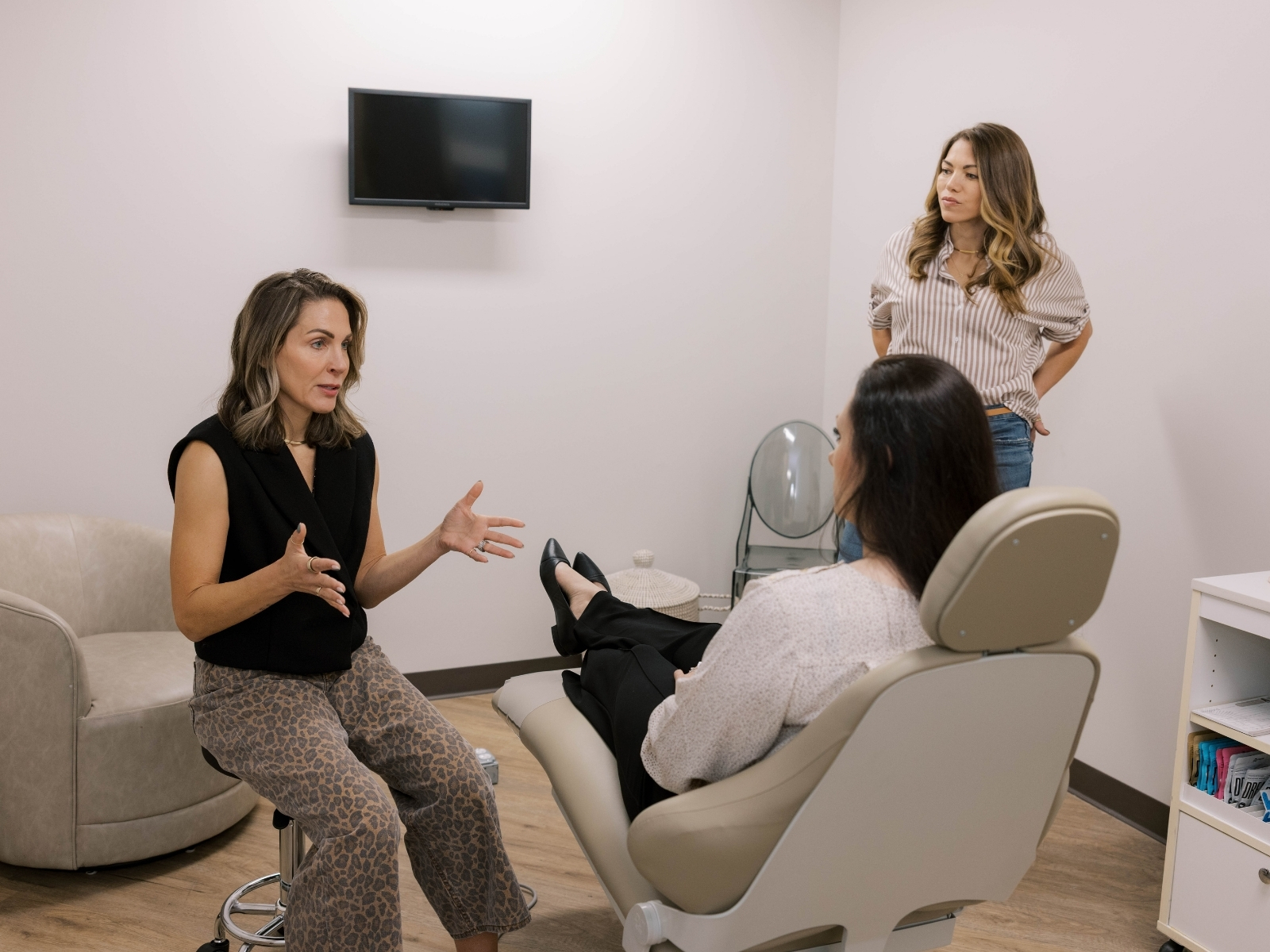

If you live in Villa Park, Barnum, Mar Lee, or near Sloan Lake, you might be dealing with chronic jaw pain that won’t quit. Or maybe you’re snoring so loud your partner’s threatening separate bedrooms. Speech feels effortful. Sleep leaves you exhausted.
Here’s what most West Denver adults don’t know: tongue-tie isn’t just an infant feeding problem.
Ankyloglossia—the medical term for tongue-tie—affects plenty of adults. You’ve probably lived with it for decades without anyone checking. That tight band of tissue under your tongue? It’s called the lingual frenulum, and when it’s too restrictive, it changes everything about how your jaw sits, how your airway functions, and how you sleep.
We’re talking about a physical restriction that impacts jaw position, limits airway space during sleep, and forces compensatory swallowing patterns that strain your TMJ. Not stress. Not bad habits. An actual anatomical issue.
This page walks through adult tongue tie Denver symptoms, the connection to TMJ dysfunction and sleep-disordered breathing, what laser frenectomy involves, and why myofunctional therapy matters after the release. We’ll also cover how to get here from West Denver—because specialized airway evaluation requires in-office CBCT imaging and functional assessment. You can’t diagnose this over the phone.
Our Lakewood location sits right off S Wadsworth, about 10-15 minutes from Villa Park or Sloan Lake via US-6 west. If you’re commuting from the Federal Center, there’s light rail access with over 1,000 parking spaces at Lakewood-Wadsworth Station—just a 5-minute walk to our office.
We see patients Monday through Thursday, 8am to 5pm (closing at 3pm Tuesday-Thursday). Fridays by appointment only. Same-week consultations available.
Think tongue-tie might be affecting your sleep or jaw? Call (720) 783-5424 or book your West Denver consultation online.
Why Adult Tongue-Tie Often Goes Undiagnosed in West Denver and Beyond
Most West Denver adults with tongue-tie have seen multiple providers—dentists in Villa Park, chiropractors near Sloan Lake, maybe a sleep specialist downtown—without anyone ever checking the lingual frenulum.
Here’s why it gets missed.
Pediatricians routinely assess newborns for tongue-tie because it affects breastfeeding. But after infancy? The evaluation stops. Your dentist might notice limited tongue mobility during a cleaning and say nothing. Your doctor attributes TMJ pain to stress, snoring to weight gain, speech issues to habit.
The symptoms get compartmentalized. You’re told to try a nightguard for grinding. Lose 20 pounds for the snoring. See a therapist for the headaches.
Nobody’s looking at the actual restriction.
CBCT imaging—advanced 3D dental scans—reveals what a visual exam misses. The restricted frenulum tethering your tongue. The narrow airway space in your throat. The forward jaw position compensating for poor tongue posture.
We see this constantly with Federal Center employees who’ve normalized chronic fatigue. They assume daytime exhaustion comes from the commute, the job, getting older. They don’t connect it to tongue-tie restricting their airway during sleep, fragmenting rest, preventing deep sleep cycles.
The restriction was always there. It just took decades before the cumulative strain became unbearable.
How Tongue-Tie Affects Jaw Position and Causes TMJ Pain in Adults

If you’ve got a desk job and you’ve noticed jaw clenching during yoga classes at one of those Villa Park or Sloan Lake studios—especially during core work—your tongue-tie might be the reason.
Here’s the mechanism.
Your tongue should rest on the roof of your mouth, supporting your upper jaw and keeping your bite aligned. When tongue-tie prevents that proper resting position, your jaw compensates. It shifts forward. It tightens. Over years, this compensatory pattern causes serious problems.
Chronic headaches. Teeth grinding at night (bruxism). Jaw clicking or popping when you chew. Limited jaw opening that makes dental work uncomfortable. Pain that radiates into your neck and shoulders.
Your dentist probably made you a nightguard. It stops the grinding noise, protects your enamel—but it doesn’t address why you’re grinding. The root cause is mechanical. Your tongue can’t reach the palate, so your jaw stays locked in a strained position.
Laser frenectomy releases the restriction. Myofunctional therapy retrains your tongue to rest properly. Together, they relieve the mechanical strain that’s been driving your TMJ dysfunction.
Not another nightguard. Actual relief.
The Connection Between Tongue-Tie, Snoring, and Sleep-Disordered Breathing

Sloan Lake high-rise residents deal with an interesting problem: shared walls. When you’re snoring loud enough that your partner hears it through drywall—or worse, your neighbor mentions it—you know it’s bad.
Here’s what’s happening in your airway.
Tongue-tie restricts your posterior tongue from elevating during sleep. When you lie down, that restricted tongue falls backward, reducing the space in your throat. Airflow becomes turbulent. Turbulent airflow creates vibration—what you hear as snoring.
But it’s not just annoying. It’s a sign your airway is compromised.
Narrow airway space causes more than snoring. It triggers frequent waking (even if you don’t remember it), oxygen desaturation, and sleep fragmentation that leaves you exhausted despite spending eight hours in bed.
West Denver commuters on the RTD W Line or driving I-70 and US-6 notice the dangerous drowsiness on the way home. That’s not normal tiredness. That’s your brain struggling to function after a night of disrupted sleep caused by restricted airflow.
Addressing tongue-tie improves airway volume. More space means smoother airflow, less snoring, better oxygen levels, and restorative sleep.
Your relationship might improve, too. Separate bedrooms aren’t inevitable.
Schedule a home sleep study to assess how tongue-tie affects your breathing. West Denver families—we’re a 15-minute drive from Villa Park and Sloan Lake.
What to Expect During Laser Tongue-Tie Release for Adults
The procedure itself takes about 15-20 minutes.
We use local anesthesia to numb the area under your tongue—same numbing agent your dentist uses for fillings. Once you’re comfortable, the laser releases the lingual frenulum with precision. Minimal bleeding. No sutures required.
Most West Denver patients from Barnum or Mar Lee return to work the next day. You’ll need to stick with soft foods for a few days—smoothies, scrambled eggs, mashed potatoes—but you’re not bedridden.
Federal Center employees often schedule Friday appointments since the office closes weekends. That gives you two to three days of recovery time without missing work.
Post-procedure exercises start immediately. These aren’t optional. The exercises prevent reattachment, promote healing, and begin retraining your tongue’s range of motion. We’ll show you exactly what to do before you leave the office.
Follow-up visits monitor healing and tongue mobility progress. We’re checking that the release is maintaining proper depth, that you’re regaining full tongue movement, and that scar tissue isn’t forming in ways that limit function.
The procedure is straightforward. The commitment comes after—doing the exercises daily, attending myofunctional therapy, giving your body time to adapt to new movement patterns.
Myofunctional Therapy After Frenectomy: Retraining Your Tongue and Jaw

The frenectomy creates physical space. Myofunctional therapy teaches you how to use it.
Think of it like physical therapy after knee surgery. The surgeon repairs the joint, but without PT, you won’t regain full strength or range of motion. Same principle here.
If you’re already doing yoga or Pilates at one of those Villa Park studios, you’ll appreciate the structured exercise approach. Myofunctional therapy involves 15-20 minutes of daily exercises that retrain four key functions:
- Tongue resting posture: Learning to keep your tongue on the roof of your mouth instead of on the floor
- Nasal breathing: Retraining yourself to breathe through your nose, not your mouth
- Proper swallowing: Correcting the tongue-thrust swallow pattern many tongue-tied adults develop
- Jaw relaxation: Releasing the chronic tension that built up over years of compensation
The program typically runs 8-12 weeks with weekly check-ins. We’re monitoring your progress, adjusting exercises as you gain strength and coordination, and ensuring you’re building lasting habits—not just going through the motions.
West Denver professionals fit these exercises into morning or evening routines. No gym required. No equipment. Just consistent practice.
This is what creates lasting TMJ relief and airway improvement. The release opens the door. Therapy walks you through it.
How to Reach Our Lakewood Office from West Denver Neighborhoods
From Villa Park or Sloan Lake:
Take US-6 west toward the mountains. Continue to Wadsworth Boulevard and turn south (left). Our office is at 3900 S Wadsworth Boulevard, Suite 625—about 10-15 minutes total drive time.
From Barnum or Mar Lee:
Head south on Federal Boulevard to Hampden Avenue (Highway 285). Turn west (right) toward the foothills, continue to Wadsworth Boulevard, then head south. Takes about 12 minutes.
Federal Center Light Rail Commuters:
Exit at Lakewood-Wadsworth Station on the W Line. There’s a 1,000-space parking garage if you’re driving to the station. From there, it’s a 5-minute walk to our building. Easy to combine your appointment with your regular commute.
Parking:
Free parking available at 3900 S Wadsworth Boulevard (Suite 625). Ground-level entrance near Foothills Golf Course. No metered spots, no validation needed.
Office Hours:
- Monday: 8:00 AM – 5:00 PM
- Tuesday-Thursday: 8:00 AM – 3:00 PM
- Friday: By Appointment Only
- Saturday-Sunday: Closed
Schedule around your West Denver work commute—early morning or late afternoon appointments available Monday through Thursday.
Frequently Asked Questions
Can adults in their 40s, 50s, or 60s still benefit from tongue-tie release?
Yes, age doesn’t limit the benefits. Adults in their 40s, 50s, and 60s regularly report significant TMJ relief, better sleep quality, and improved speech clarity after frenectomy. The tongue restriction doesn’t care how old you are—releasing it works at any age. Recovery might take slightly longer than it would for a younger patient, but the functional improvements are just as real.
How long does recovery take for West Denver professionals who work full-time?
Most people return to desk work the next day on a soft food diet. If you work at the Federal Center or downtown Denver, you can schedule a Friday appointment and recover over the weekend. Physical jobs requiring heavy lifting or talking all day (sales, teaching) might need two to three days off. The discomfort is manageable—more annoying than painful.
Is laser tongue-tie release covered by dental or medical insurance?
Coverage varies by plan. Some medical insurance covers the procedure if it’s diagnosed as contributing to sleep-disordered breathing or significant functional impairment. Dental insurance rarely covers it. We accept HSA and FSA payments, which many West Denver professionals have through their employers. Call your insurance company with the CPT code we provide to verify your specific coverage before booking.
How do I know if my TMJ pain or snoring is caused by tongue-tie versus other issues?
CBCT imaging and functional assessment definitively identify whether a restricted frenulum and narrowed airway are causing your symptoms. We can see the anatomical restriction, measure tongue mobility, and assess how it’s affecting your jaw position and airway space. If tongue-tie isn’t the root cause, we’ll tell you—and refer you to the right specialist who can help.
Do I need myofunctional therapy after frenectomy, or will the release alone fix my symptoms?
You need both for lasting improvement. The release creates physical space by removing the restriction. Myofunctional therapy retrains your tongue to use that space properly—correcting decades of compensatory movement patterns. Without therapy, many adults fall back into old habits because their tongue “doesn’t know” how to rest on the palate. Both are required for optimal TMJ and sleep outcomes.
How far is the practice from Sloan Lake, Villa Park, or Barnum neighborhoods?
About 10-15 minutes by car via US-6 west or Federal Boulevard south to Wadsworth. If you take the RTD W Line, exit at Lakewood-Wadsworth Station—there’s a 1,000-space parking garage and it’s a 5-minute walk to our office at 3900 S Wadsworth Boulevard, Suite 625.
Ready to address TMJ pain, snoring, or speech issues at the source? Contact our Lakewood airway specialists—convenient access from all West Denver neighborhoods.

