




Your child works hard in speech therapy, but certain sounds still won’t come out right. You’ve noticed the frustration on their face when classmates don’t understand them. And you’re starting to wonder if there’s something physical getting in the way.
Here in Englewood, many families discover that tongue-tie restricts their child’s ability to form clear speech sounds. Speech therapy helps with practice and patterns, but if the tongue can’t reach where it needs to go, progress stalls.
Laser frenectomy releases that restriction. Combined with myofunctional therapy, it gives your child’s tongue the mobility needed for clearer speech.
We’re located 15 minutes west of Englewood at 3900 S Wadsworth Blvd in Lakewood. Our practice specializes in children’s tongue-tie release using gentle CO2 laser technology. We coordinate with your child’s speech therapist to support their development.
Serving families from Englewood, Sheridan, Littleton, and throughout the southeast Denver metro area.
Call (720) 783-5424 to schedule a tongue-tie evaluation for your Englewood child.
Signs Your Englewood Child’s Speech Delay May Be Tongue-Tie Related

Parents in the Englewood Schools district know the speech therapy waitlists. Six to eight weeks is common. Your child finally gets in, works with their SLP week after week, but those R and L sounds still don’t click.
The tongue physically can’t reach where it needs to go.
Tongue-tie restricts the tongue’s ability to elevate and touch the roof of the mouth. Without that movement, certain sounds stay out of reach. Your child substitutes easier sounds instead—”wabbit” for “rabbit,” “yion” for “lion.”
Watch for these signs:
- Tongue cannot touch the roof of the mouth when asked
- Struggles with R, L, or TH sounds despite months of practice
- Speech therapist says “the movements just aren’t happening”
- Frustration during speech activities at Belleview or Bishop Elementary
- Other children ask them to repeat themselves frequently
This isn’t about effort. Your child is trying. The frenulum—that band of tissue under the tongue—is holding the tongue down. It’s a physical limitation, not a practice issue.
An evaluation checks tongue mobility, not just what the frenulum looks like. Some ties are obvious. Others hide until you ask the child to lift their tongue or move it side to side.
If your child’s tongue can’t touch the spot right behind their front teeth, tongue-tie may be restricting speech development.
How Tongue-Tie Restricts Speech Sound Production in Children

The tongue is the most important articulator for clear speech. It needs to reach specific points inside the mouth to create different sounds.
For the R sound, the tongue lifts toward the roof of the mouth. For L, the tip touches right behind the front teeth. TH requires the tongue to extend slightly forward. S and Z need precise tongue placement against the alveolar ridge—that bumpy spot behind your upper teeth.
A tight frenulum prevents the tongue from reaching these positions.
The restriction isn’t always at the tip. Sometimes the back of the tongue can’t elevate properly. The lateral edges can’t move side to side. Children compensate by using their lips, cheeks, or jaw to approximate the sound.
These compensatory patterns become habits. Even after months of speech therapy, the habit persists because the tongue still can’t move freely.
Common compensations include:
- Using lips to make R sounds (sounds like W)
- Jaw movement to compensate for tongue immobility
- Distorted S sounds from air escaping around the tongue
We evaluate both speech production and breathing impact during a tongue-tie assessment. Many children with restricted tongues also mouth breathe, which affects facial development and sleep quality. Research from the American Speech-Language-Hearing Association confirms that tongue-tie can significantly impact articulation development in young children.
The mechanical cause matters. Your child isn’t choosing to pronounce words incorrectly. Their tongue is tethered.
Laser Tongue-Tie Release for Children Ages 3-10
The procedure takes 10 to 15 minutes. We use a CO2 laser, which provides precision and minimal bleeding compared to scissors techniques.
Your child receives local anesthetic or light sedation depending on age and comfort level. The laser releases the frenulum quickly. Most children feel pressure but not sharp pain.
We perform the procedure at our Lakewood office, six miles west of Englewood via Hampden Avenue. The office is accessible with free parking and an elevator to Suite 625.
What happens after:
- Most children return to normal activities within 24 to 48 hours
- Post-procedure exercises prevent reattachment and improve mobility
- You’ll do simple stretches with your child several times daily for two weeks
- Discomfort is typically mild—ibuprofen manages it well
Ages three to 10 represent an ideal window. Younger than three, cooperation can be challenging. Older than 10, compensatory speech patterns become more ingrained.
Parents from Sheridan and Littleton appreciate our same-week appointment availability. We understand that once you’ve identified the issue, you want to address it quickly.
The laser heals faster than traditional scissors frenectomy. There’s no need for stitches. The precision reduces trauma to surrounding tissue.
Call (720) 783-5424 or schedule your child’s laser frenectomy consultation today for this week’s availability.
Myofunctional Therapy After Frenectomy Improves Speech Outcomes
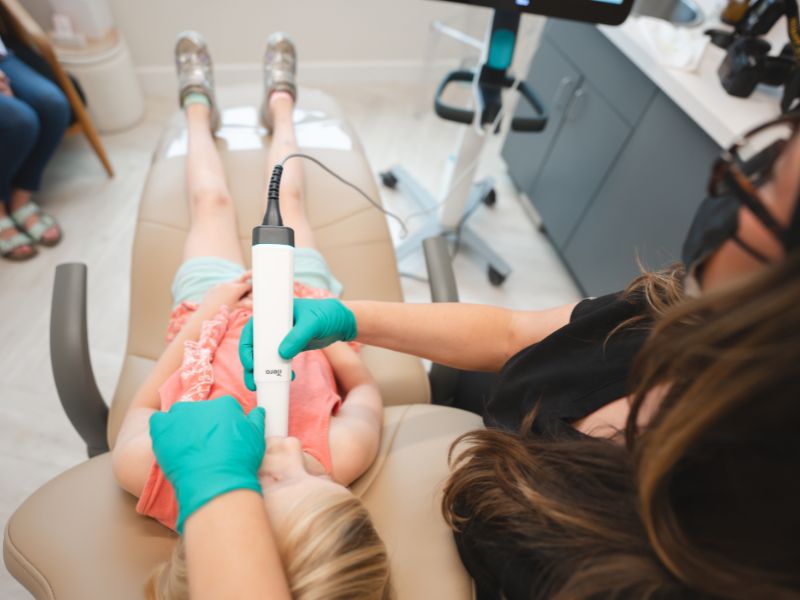
Releasing the tongue-tie removes the restriction. But your child’s tongue doesn’t automatically know how to move correctly.
Think of it like removing a cast after a broken arm. The bone is healed, but the muscles need retraining.
Our pediatric myofunctional therapist works with children post-procedure. Therapy teaches proper tongue resting position and functional movements. The tongue should rest against the roof of the mouth, not on the floor. The Academy of Orofacial Myofunctional Therapy sets standards for these therapeutic techniques to ensure consistent, evidence-based care.
Therapy includes:
- Tongue range-of-motion exercises
- Swallowing pattern correction
- Coordination drills for speech sounds
- Nasal breathing techniques
We coordinate with your child’s speech-language pathologist to ensure a consistent approach. The SLP works on speech sound production. The myofunctional therapist addresses tongue posture, muscle patterns, and oral habits.
Many Englewood families see speech improvement within six to 12 weeks of combined treatment. The timeline depends on how ingrained the compensatory patterns were and how consistently exercises are practiced at home.
Myofunctional therapy also addresses mouth breathing and improper swallowing. These issues often accompany tongue-tie and affect long-term health.
The exercises are simple. Most take five to 10 minutes twice daily. Parents participate in sessions to learn how to support practice at home.
Learn more about our Pediatric Myofunctional Therapy program and how it supports speech development after frenectomy.
Reaching Our Lakewood Practice from Englewood Neighborhoods
From the CityCenter Englewood area, take Hampden Avenue west. The drive takes about 15 minutes in non-rush traffic.
If you’re coming from Sheridan neighborhoods, merge onto Hampden from South Santa Fe Drive and continue west.
Our practice is located at 3900 S Wadsworth Blvd, Suite 625, near Foothills Golf Course. Free parking is available in the building lot. An accessible elevator takes you to the sixth floor.
Timing tips for Englewood families:
- Morning appointments (8 to 9 AM) avoid school drop-off traffic
- You’ll miss the I-70 commute congestion
- Tuesday through Thursday 8 AM to 3 PM works well for working parents
Families from Swedish Medical Center Englewood are familiar with traveling to specialists in this area. The route is straightforward—straight shot west on Hampden.
If you’re planning around summer activities at Pirates Cove, we’re happy to accommodate your schedule. We understand that Englewood families balance multiple commitments.
Parking and access:
- Building entrance on west side of S Wadsworth
- Elevator directly to Suite 625
- Waiting room has space for siblings if needed
The location is easy to find. And the 15-minute drive is worth it when your child finally pronounces their name clearly.
What Englewood Parents Should Know About Children’s Tongue-Tie Treatment
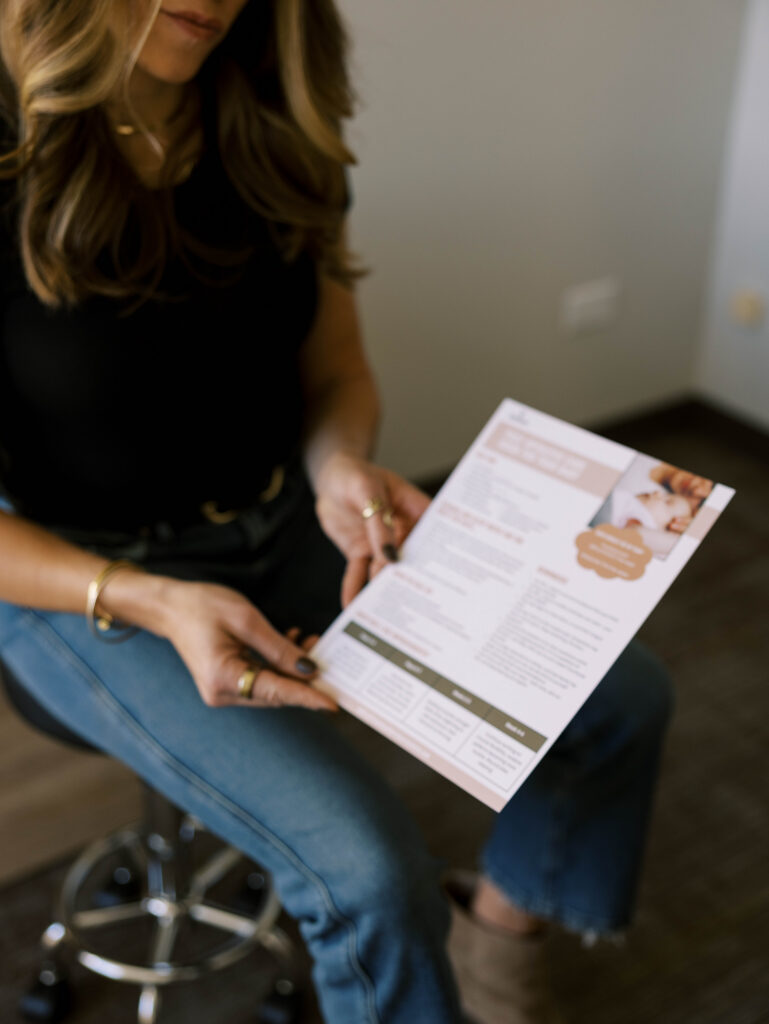
Not all pediatric dentists offer laser frenectomy or myofunctional therapy. Many practices focus on cavity prevention and routine cleanings.
Airway-focused dentistry is different. We evaluate speech, breathing, and facial development together. A tongue-tie that affects speech often affects sleep and airway function too.
Our evaluation includes:
- Tongue mobility assessment (can it reach roof of mouth, move laterally)
- Frenulum appearance and attachment point
- Speech sound production screening
- Breathing pattern observation
- 3D imaging (CBCT) if orthodontic concerns exist alongside tongue-tie
We coordinate with Englewood-area speech therapists and pediatricians. Your child’s SLP can share observations about which sounds are most affected. We incorporate that into the treatment plan.
Cost and payment:
- Tongue-tie release typically costs $800 to $1,200
- HSA and FSA accepted
- Payment plans available for Englewood families
- We provide documentation for insurance submission (coverage varies)
Parents at Belleview and Bishop Elementary often share provider recommendations in school groups. Word spreads when a child’s speech suddenly improves.
Post-procedure follow-up ensures proper healing and optimal tongue mobility. We check range of motion at two weeks and six weeks. Myofunctional therapy typically starts within the first week after release.
The goal isn’t just to cut the tie. It’s to restore full tongue function so your child can speak clearly, breathe properly, and develop a healthy facial structure.
If your Englewood child has been stuck in speech therapy without progress, a tongue-tie evaluation might be the missing piece.
Call (720) 783-5424 to schedule. Serving Englewood, Sheridan, and Littleton with children’s tongue-tie treatment.
Frequently Asked Questions
How do I know if my Englewood child’s speech delay is caused by tongue-tie?
A tongue-tie evaluation checks if your child’s tongue can reach the roof of their mouth and move side-to-side freely. We assess mobility, not just appearance. During the exam, we ask your child to lift their tongue, stick it out, and move it to each corner of their mouth. If they can’t complete these movements, tongue-tie may be restricting speech development. Many children compensate so well that parents don’t notice the limitation until it’s tested directly.
How long does it take to drive from Englewood to your Lakewood office?
The drive from Englewood to our practice at 3900 S Wadsworth Blvd takes about 15 minutes via Hampden Avenue. Head west on Hampden from CityCenter Englewood or from Santa Fe Drive if you’re in Sheridan. Free parking is available in our building lot, and an accessible elevator takes you to Suite 625. Morning appointments between 8 and 9 AM help you avoid school traffic.
Will my child need speech therapy after laser tongue-tie release?
Most children continue working with their speech therapist after frenectomy and also participate in myofunctional therapy to retrain tongue movements. The laser releases the physical restriction, but the tongue needs to learn new movement patterns. Your SLP focuses on speech sound production while our myofunctional therapist addresses tongue posture and muscle coordination. Working together creates the best outcomes for Englewood children.
What sounds are hardest for kids with tongue-tie to pronounce?
Children with tongue-tie typically struggle most with R, L, TH, S, and Z sounds because these require precise tongue tip elevation. The R sound needs the tongue to lift toward the roof of the mouth. L requires contact right behind the front teeth. Without mobility, children substitute easier sounds—”wabbit” becomes “rabbit,” or the S comes out with a lisp. Each child’s pattern is unique, but these five sounds consistently challenge tongue-tied kids.
Can tongue-tie affect my child’s breathing and sleep, not just speech?
Tongue-tie frequently restricts the airway, leading to mouth breathing, snoring, and poor sleep quality in addition to speech delays. The tongue should rest against the roof of the mouth, which helps maintain proper airway space. When tongue-tie prevents this position, children breathe through their mouth instead. This affects facial development, sleep quality, and behavior. We evaluate the whole picture—speech is often just the most obvious symptom.
Do you accept HSA or FSA for children’s tongue-tie release in Englewood?
We accept HSA and FSA for tongue-tie evaluation and laser frenectomy procedures. Bring your card to your appointment. We also provide itemized documentation you can submit to insurance, though coverage varies widely by plan. Most Englewood families use their HSA funds to cover the procedure cost, which typically ranges from $800 to $1,200 depending on complexity and whether sedation is needed.

