


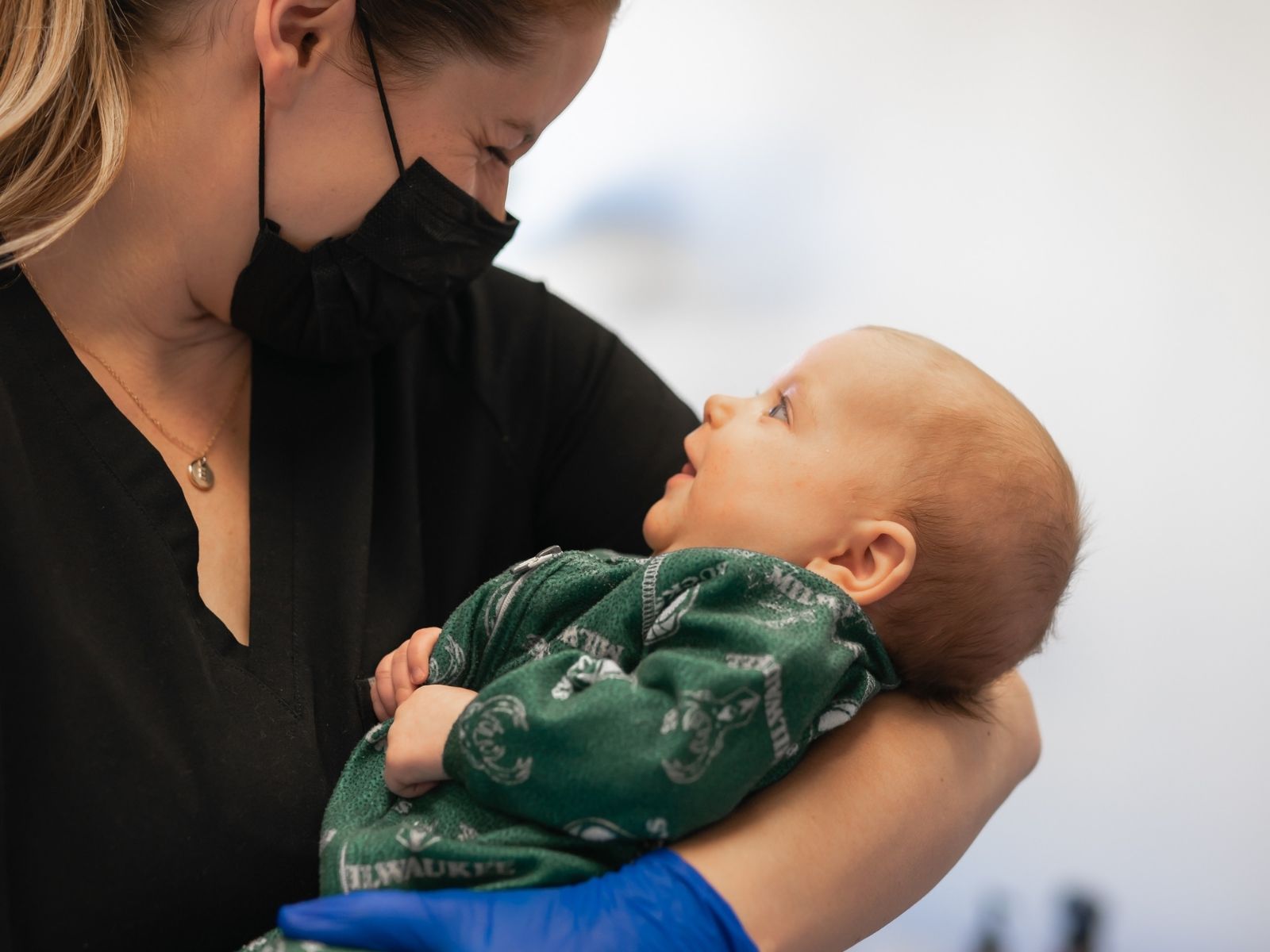


You’re home. Your baby has just had the release. Now what?
If you’re reading this at 2 AM, still in the recovery chair you set up in the nursery last week, we see you. Most tongue tie content online focuses on the decision to do the release. Much less of it walks you through what comes next — which is where new parents actually need the map.
This guide walks Lakewood families through infant tongue tie recovery after frenectomy Lakewood Colorado parents can expect, hour by hour, day by day. First 24 hours. First week. First month. What’s normal, what isn’t, and when to call.
The release is the short part. Recovery is where outcomes are made — in the feeds, the stretches, the sleep, and the follow-up visits. Our Lakewood office is a short drive from Bear Creek, Kendrick Lake, and the south Lakewood corridor, and recovery support is available in-office and by phone.
The First 24 Hours After a Frenectomy Are Usually Calmer Than Parents Expect
Most parents brace for the worst. The reality is usually gentler.
Fussiness is common for a few hours after the release, then most babies settle back into their normal rhythm. Feeding right after the procedure helps — the act of nursing or taking a bottle soothes and re-engages the tongue. A little bit of bleeding or a small white patch under the tongue is normal healing, not a problem. La Leche League International notes that some babies take naturally to the new tongue movement right away, while others need a few days to learn what their tongue can now do.
What the first day usually looks like:
- Skin-to-skin for as much of the evening as possible
- Shorter, more frequent feeds rather than long ones
- Gentle motion — rocking, babywearing, a slow walk
- A warm bath before bed, if that’s part of your routine
- Extra cuddles and close sleep
A lot of Bear Creek and Kendrick Lake parents set up a quiet “recovery corner” in the week before the release — a soft chair, burp cloths, a phone charger, a water bottle, a few snacks. That small prep pays off the first night.
Post-Release Stretches Keep the Healing Site Open
This is the part that feels most intimidating before you start. It gets easier by day two.
Gentle stretches are done four to six times a day for about two weeks. Each round takes under a minute. The goal is to keep the healing site open so the tongue keeps its new range of motion — not to cause pain or force anything. The American Academy of Pediatric Dentistry’s policy on frenulum management describes aftercare as one piece of a coordinated approach, alongside feeding support and follow-up.
What makes stretches easier:
- Clean hands, short nails, a soft light
- Do them when baby is drowsy, just after a feed, or at a diaper change
- Hum or sing while you do them — babies settle faster with your voice
- Set phone reminders so you’re not tracking it in your head
- Pair them with something you already do: diaper change, stroller walk, morning feed
We show you exactly how at the release appointment, and we send you home with written instructions and a short video. You won’t be guessing.
Some south Lakewood parents fold stretches into Bear Creek Trail stroller walks — baby settled in the carrier, quick round done at a stopping point. It works.
Feeding and Sleep Often Shift Within the First Week
Here’s where the payoff starts showing up.
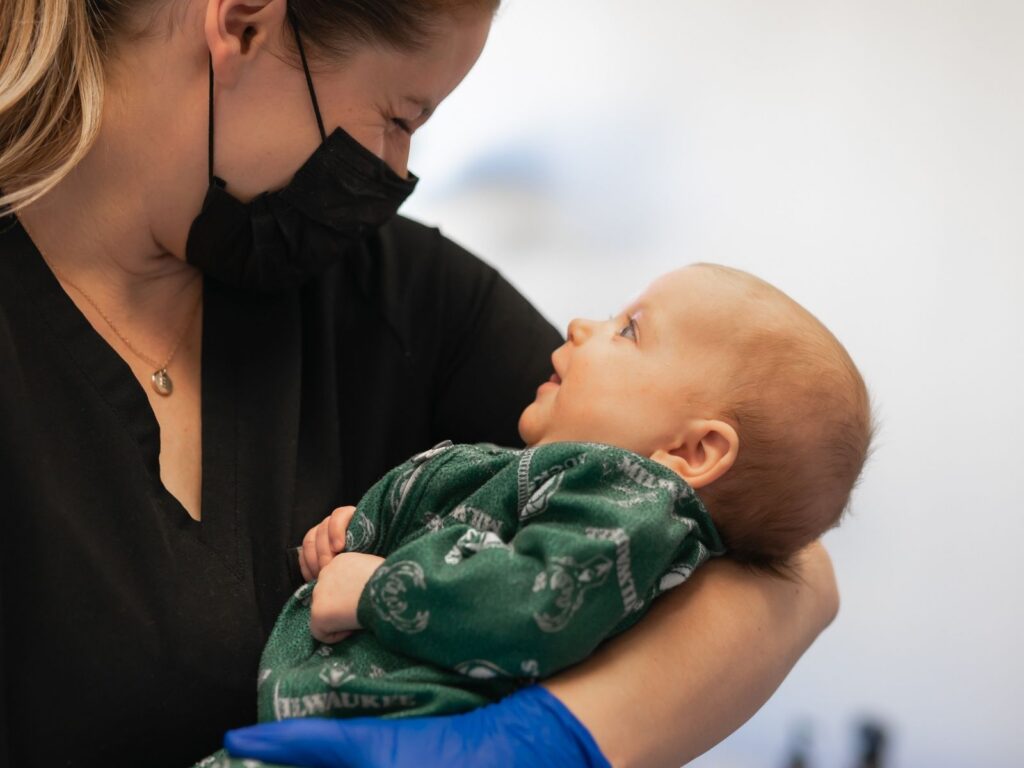
Many parents notice a deeper latch, quieter feeds, and less clicking within the first few days. Feeds often get shorter because baby transfers milk more efficiently. Reflux, gassiness, and gulping can start to ease within days to a couple of weeks. Some babies sleep longer stretches — 30 to 60 minutes more — within the first two weeks.
Common early signs of progress:
- Deeper, quieter latch without nipple pain
- Shorter feeds (20 minutes instead of 45)
- Less clicking or breaking suction
- Fewer spit-ups after feeds
- Slightly longer sleep stretches
Some babies also benefit from a short bodywork or craniosacral session in the first week or two. Tension patterns built up over weeks of struggling to feed don’t always release on their own. Lactation consultants in Columbine and south Lakewood often coordinate follow-up visits with our office — we work as a team because most recoveries need more than one set of hands.
Be honest with yourself about the timeline. Not every baby changes overnight. Some take days. Some take weeks. Steady improvement is what we’re watching for — not overnight miracles.
Knowing When to Call Versus When to Wait Calms New Parents Quickly
Panic is easier when you don’t have benchmarks. So here are the benchmarks.
Call our office (or your pediatrician) if you see:
- Active bleeding that doesn’t stop with gentle pressure
- Refusal to feed for more than 6 hours
- Fever over 100.4°F
- Swelling that’s getting worse, not better
- Baby seems significantly less alert than normal
Wait and watch — these are usually normal:
- Mild fussiness the first day or two
- Short sleep stretches the first night
- The white or yellow patch under the tongue (healing tissue, not infection)
- Some brief crying during stretches
- A little bit of drool or saliva change
What the healing site looks like over two weeks:
- Day 1: small red spot, possibly slight pink tinge
- Day 3: white or pale yellow patch forming (normal, not pus)
- Day 7: patch still present, less tender
- Day 14: patch fading, new pink tissue underneath
When in doubt, call. We’d rather answer a question at 8 AM than have you worry all weekend.
Driving to the Lakewood Office With a Recovering Newborn Is Manageable
The drive is shorter than most south Lakewood parents expect.
The office sits at 3900 S Wadsworth Blvd in south Lakewood. For most Bear Creek and Kendrick Lake families, that’s five to ten minutes. For Columbine families, it’s closer to fifteen or twenty.
From Bear Creek or Bear Creek Lake Park: Wadsworth Boulevard north, about 5 to 10 minutes.
From Kendrick Lake or Green Mountain: Kipling or Wadsworth south, roughly 8 to 12 minutes.
From Columbine: Wadsworth Boulevard straight north, about 15 to 20 minutes.
Parking is free in the surface lot. The building entry is stroller-friendly — no stairs to navigate with a car seat. The elevator takes you straight to Suite 625 on the sixth floor. The lobby is quiet enough to nurse before the appointment if baby wakes up hungry.
The drive is worth the trip. No practice in Lakewood offers the same full infant-through-adult airway recovery support under one roof — laser release, lactation coordination, bodywork referrals, feeding follow-up, and myofunctional therapy when siblings need it too.
Frequently Asked Questions
Is the procedure painful for my baby?
Most babies experience brief discomfort similar to a vaccine and settle back to normal feeding within minutes. The laser is quick, numbing is applied, and most crying reflects the position and the swaddle more than the release itself. If you’re still weighing whether to do the release at all, our guide on infant tongue tie and breastfeeding help in Lakewood walks through the decision.
What does infant tongue tie recovery look like after a frenectomy?
Most babies settle within hours of the release, with feeding and sleep shifts appearing over the first two weeks. Gentle stretches are done four to six times a day for about two weeks to keep the healing site open.
When will I notice improvements in feeding and sleep?
Many families notice deeper latching and quieter feeds within 24 to 72 hours, with broader sleep and reflux improvements over 2 to 4 weeks. Timing varies by baby. If improvements stall, a lactation follow-up or bodywork session often helps.
How long do I need to do the stretches?
Most families do gentle stretches for about two weeks, four to six times a day, to keep the site open. Your provider will confirm the timeline at your follow-up and let you know when to stop.
What if I can’t make it back for the follow-up from Columbine?
Virtual check-ins are available for out-of-town families, and in-person follow-ups are usually a short 15 to 20 minute visit. From Columbine, plan the route straight up Wadsworth Boulevard.
Do I need to see a lactation consultant too?
Many babies benefit from a session with an IBCLC during the first week to rebuild the latch pattern. We coordinate referrals directly. Our article on tongue tie support near Edgewater and Sloan’s Lake covers how lactation consultants and airway care work together during recovery.
Is it safe to drive home with a recovering baby after the release?
Yes. Most babies are alert, calm, and feed on the way home or shortly after arrival. Bring a caregiver to ride in back with baby if possible, especially for longer drives from Columbine.
My baby seems fussier on day 3 than day 1. Is something wrong?
Usually no. Days 3 to 5 can feel harder than day 1 because the initial relief wears off and the healing tissue starts to feel tender. Continue the stretches gently, keep up frequent feeds, and call if fussiness comes with fever, refusal to feed, or worsening swelling.
Were we right to do this at all? I keep second-guessing it.
That doubt is common, especially in the harder stretch around days 3 to 5. Worth knowing that the tissue itself doesn’t loosen on its own over time, which is why waiting rarely resolves feeding problems that trace back to a restriction. Our guide on whether a tongue-tie can heal naturally without surgery covers what the tissue actually is and why wait-and-see advice often falls short.
What should I watch for if we also had a lip tie released?
Expect a similar healing timeline under the upper lip. Gentle stretches apply there too. If you’re still sorting out whether your baby had a tongue tie, a lip tie, or both, our guide on tongue tie vs lip tie for Wheat Ridge parents covers the distinctions.

