



Here’s something that happens a lot. A mom in Edgewater is two weeks postpartum, nursing around the clock, and something just isn’t right. Her lactation consultant has been wonderful — adjusted the latch, tried every position — but the clicking won’t stop. The feeds run long. And she’s exhausted in a way that goes beyond normal new-parent tired.
Then her IBCLC mentions tongue tie. And suddenly there’s a new question to answer: where do you even go for that?
If you’re in Edgewater or over by Sloan’s Lake, the answer is closer than you’d think. Untethered Airway Health Center is on S Wadsworth Blvd in Lakewood — about 15 to 20 minutes south, straight down Sheridan. No freeway. No complicated route. And unlike a general pediatric office, this is all we do. Airway. Feeding. Tongue ties. For infants, kids, and adults, all under one roof.
We’re open Monday through Thursday, and Friday by appointment.
Edgewater and Sloan’s Lake Families Already in the Feeding Support Ecosystem
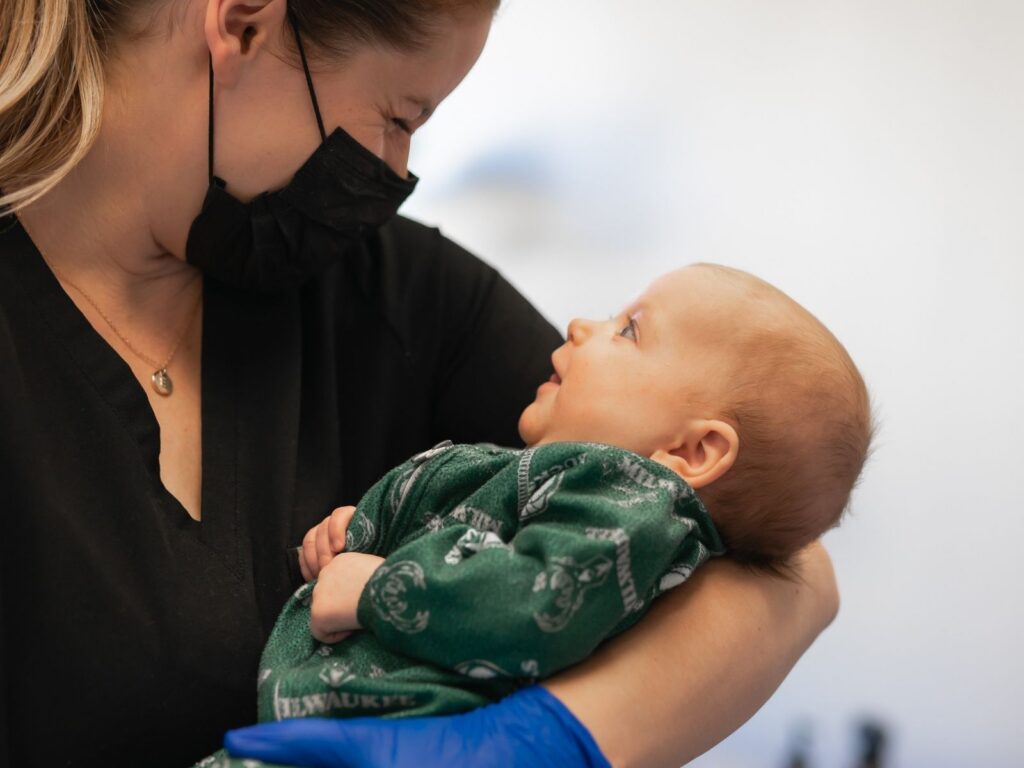
Edgewater is a small city with a strong community feel. If you’ve spent any time at the Edgewater Public Market on W. 20th Ave., you know what we mean — it’s the kind of place where young parents run into each other, swap recommendations, and talk honestly about what’s working and what isn’t. Feeding struggles come up a lot in those conversations.
The area skews young. The median age in Edgewater hovers around 33, which means there are a lot of new and growing families here. Many of them are already plugged into the lactation support network before their baby even arrives. They’ve got an IBCLC lined up. They know what a good latch should feel like.
But when feeding problems persist despite all that support, the next step isn’t always obvious. IBCLCs in the west Denver corridor are good at identifying tongue restriction as a possible cause — and when they do, they need somewhere to send families for that next step. That’s where we come in.
Sloan’s Lake families face the same thing. It’s a slightly longer drive from the Denver side, but 20 to 25 minutes on Wadsworth is nothing when you’ve been struggling through every single feed for weeks.
What Tongue Tie Looks Like When Your Lactation Consultant Raises a Red Flag

Your IBCLC has seen a lot of babies. When she mentions tongue tie, she’s not guessing. She’s seeing a pattern.
Here’s what that pattern usually looks like from a parent’s perspective:
- Clicking during nursing — baby is losing suction and compensating mid-feed
- Slipping off the breast repeatedly, not just once in a while
- Feeding sessions lasting 45 minutes or longer, with baby still seeming hungry after
- Nipple pain that doesn’t improve despite adjusting position and latch
- Nipple comes out compressed or flattened after the feed — wedge-shaped
- Baby seems gassy or colicky after most feedings, even when burped well
- Poor weight gain despite nursing frequently
Some signs are subtler. Baby always tilts their head to one side. Baby falls asleep before finishing. Baby chews rather than using a smooth, rhythmic suck. These are the things that are easy to dismiss individually but start to form a picture together.
According to the American Academy of Pediatrics, tongue tie affects an estimated 4 to 10 percent of newborns — and many go unidentified in the early weeks because the signs are subtle and overlap with other causes. A proper specialist assessment is the only way to know for sure.
Why Tongue Tie Assessment Requires More Than a Quick Visual Check
Most parents have already been told “everything looks fine” before they find us. Their pediatrician looked in the baby’s mouth, maybe lifted the tongue, and didn’t see an obvious restriction. And they might be right — visible tongue ties are easy to spot.
But posterior tongue ties are a different story. They sit further back, they’re not always visible, and they require a functional assessment to catch. That means evaluating how the tongue actually moves — elevation, lateralization, cupping — not just how it looks at rest.
At Untethered, we use a structured assessment process that goes well beyond a visual check. We look at tongue mobility, palate shape, and oral structure. When needed, our CBCT imaging gives us a detailed 3D view of anatomy that no standard exam can replicate.
For families coming from Edgewater and North Lakewood, there aren’t many providers with this kind of setup nearby. Most specialized tongue tie care in the Denver metro is further east or south. We’re right on Wadsworth — the most direct route from where you are.
How the Release Procedure Works and What Recovery Looks Like

If the assessment confirms a tongue tie, the next conversation is about the procedure. And most parents are relieved by how straightforward it actually is.
Laser frenectomy for infants is brief — we’re talking minutes, not an operating room procedure. We use a topical numbing agent. No general anesthesia. The laser allows us to be precise and minimize discomfort in a way that older scissor techniques simply can’t match.
Most babies can nurse right after. That’s intentional — feeding immediately after helps soothe the baby and supports healing. You’ll leave with a clear written aftercare plan that tells you exactly what’s normal, what to watch for, and what to do.
A few things worth knowing going in:
- Improvement in feeding is usually gradual, not instant
- Most families notice real changes within 1 to 2 weeks
- Some babies benefit from follow-up bodywork — craniosacral therapy or occupational therapy — to retrain sucking patterns
- Fussiness for a day or two post-procedure is normal and temporary
We coordinate with your referring IBCLC so your aftercare plan is aligned. You don’t have to manage the handoff yourself.
The Care Team Model: Why Tongue Tie Is Rarely Solved by One Provider Alone
The families who do best after a tongue tie release aren’t the ones who treated it like a one-and-done procedure. They’re the ones who kept showing up — back to their lactation consultant, into a bodywork appointment, doing the daily stretches at home.
Tongue tie affects how the whole mouth works. The release removes the restriction, but the muscles and patterns that developed around that restriction don’t automatically reset. That’s where the rest of the team comes in.
Here’s what that typically looks like:
- Your IBCLC continues working on latch, position, and feeding mechanics
- Untethered handles the structural assessment and release
- Bodywork providers — craniosacral therapists, OTs, chiropractors — address compensatory tension that built up during weeks of restricted movement
La Leche League International notes that ongoing lactation support after a tongue tie release significantly improves long-term breastfeeding outcomes — which is exactly why we build the care plan around your existing IBCLC, not instead of her.
If you already have a lactation consultant you trust in Edgewater or the Sloan’s Lake area, keep working with her. Bring her notes to your assessment appointment. We build our plan around what she’s already observing.
Getting to the Lakewood Office from Edgewater and the Sloan’s Lake Area
Untethered Airway Health Center 3900 S Wadsworth Blvd, Suite 625, Lakewood, CO 80235 (720) 783-5424
From Edgewater (near 20th Ave & Sheridan Blvd): Head south on Sheridan Boulevard, then continue south on Wadsworth. The office sits near the Wadsworth and Highway 285 corridor, close to Foothills Golf Course. Drive time is roughly 15–20 minutes.
From Sloan’s Lake (Denver side): Take W. 17th Ave or Alameda west to Wadsworth, then head south. Plan for about 20–25 minutes depending on Wadsworth traffic.
The office is in a professional building with a surface parking lot — important when you’re loading and unloading an infant car seat. Suite 625 is on the 6th floor with elevator access.
Hours:
| Day | Hours |
|---|---|
| Monday | 8:00 AM – 5:00 PM |
| Tuesday | 8:00 AM – 3:00 PM |
| Wednesday | 8:00 AM – 3:00 PM |
| Thursday | 8:00 AM – 3:00 PM |
| Friday | By Appointment Only |
| Saturday | Closed |
| Sunday | Closed |
Early morning appointments on Monday through Thursday tend to avoid the heavier midday Wadsworth traffic.
Frequently Asked Questions
How far is the Lakewood tongue tie office from Edgewater? About 15 to 20 minutes south via Sheridan Boulevard and Wadsworth — a straightforward route with no highway required. Untethered Airway Health Center is located at 3900 S Wadsworth Blvd, Suite 625, Lakewood, CO 80235.
My lactation consultant thinks my baby has a tongue tie. What’s the next step? A functional assessment is the right move — not just a visual check. Bring your IBCLC’s notes when you come in. We build our evaluation around what she’s already seeing — tongue mobility, palate shape, and feeding mechanics. You can learn more about what that assessment involves on our infant tongue tie release page.
Can I keep seeing my Edgewater lactation consultant after the procedure? Yes, and we encourage it. Untethered coordinates with outside IBCLCs, and continuing with your current provider after the laser frenectomy is an important part of the recovery process.
Is parking available at the Lakewood office with a newborn? Yes. There’s a surface parking lot at the building on S Wadsworth, and elevator access up to Suite 625 on the 6th floor — convenient for parents managing an infant car seat.
My baby clicks while nursing but my pediatrician said everything looks fine. Should I still get an assessment? Clicking during nursing is a common sign of poor suction — which tongue tie can cause. Pediatricians often do a quick visual check, but posterior tongue ties are easy to miss that way. A specialist looks at how the tongue moves, not just how it looks at rest. If you’re trying to understand what symptoms to watch for before booking, our guide on walks through the full picture.
How soon after birth should I bring my baby in for an evaluation? Earlier is better. The first few weeks are the easiest window for assessment and, if needed, intervention. If your lactation consultant has already raised a concern, it’s worth following up sooner rather than later. We cover the timing question in more detail in our article on tongue tie symptoms in babies for South Lakewood families.

