





You slept eight hours last night. Maybe more. And you woke up feeling like you didn’t sleep at all.
The headache’s already there before your feet hit the floor. Your mouth is dry, your jaw aches, and somewhere in the back of your mind, you’re doing math — how many cups of coffee will it take to make the drive down I-43 feel safe today. Your partner, if they haven’t already moved to the guest room, recorded you snoring again. They want you to do something about it. So do you. You just don’t know what actually works.
That’s what most people are dealing with when they find us. They live on the East Side — Brady Street, Murray Hill, somewhere near UWM, a duplex off Downer — and they’ve been tired for years. They’ve tried a CPAP. Maybe they’ve tried the nose strips and the wedge pillows and the mouth guard from Amazon. None of it got to the actual problem.
We’re an airway health center on E Webster Place in Downer Lakeview Commons, and sleep apnea treatment for people on the east side Milwaukee is one of the main reasons they walk through our door. What we do is different from what you’ve probably been offered before. We look at why your airway closes at night — the actual structure — and we treat that.
Same-week consultations are open Monday through Thursday. If you’ve been sitting on this for a while, that’s OK. Most of our patients have too.
Common Signs of Sleep Apnea That East Side Adults Overlook
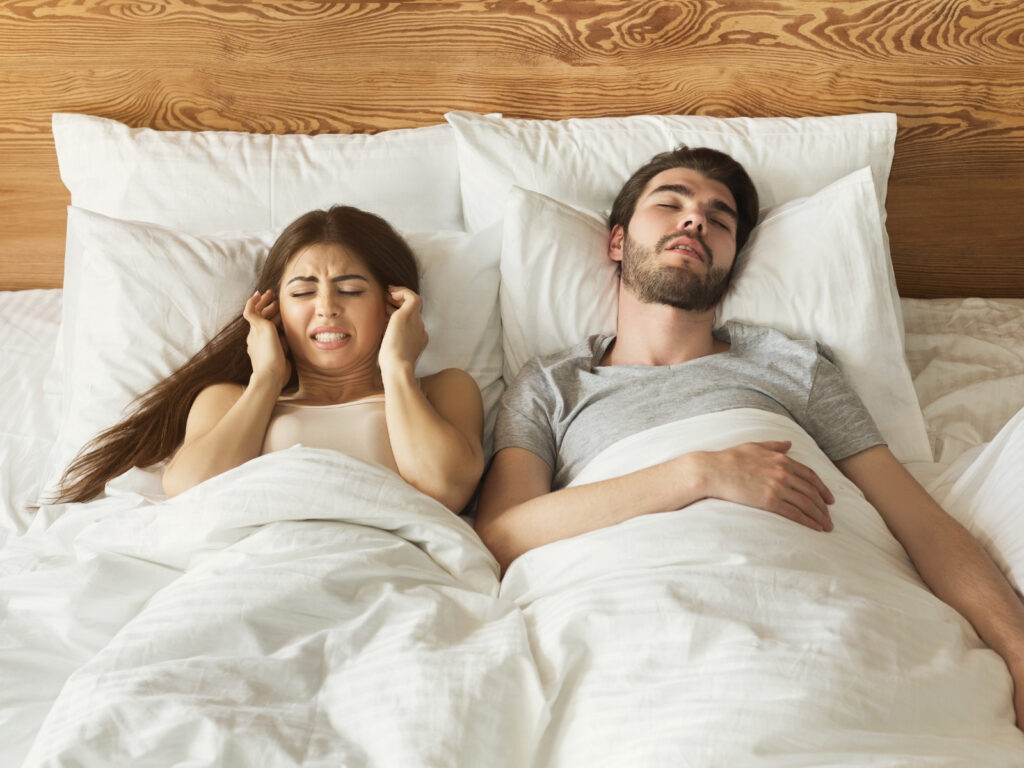
Here’s the thing about sleep apnea — most people who have it don’t know they have it. Not really. They know they’re tired. They know something’s off. But they’ve been living with it so long that “off” just feels normal.
The loud snoring is usually the first clue, and it’s almost never the person snoring who notices. It’s the partner. The one lying awake at 2 AM listening to you stop breathing and start again. Some partners count the pauses. Some record them on their phone. Some just quietly move to the couch. By the time a couple is sleeping in separate rooms, the snoring has been going on for years.
Then there are the mornings. You wake up with a headache almost every day. Your mouth is bone dry. Your jaw is sore — not from clenching, or not just from clenching, but because your body has been fighting for air all night. You don’t feel rested. You haven’t felt rested in a very long time.
The daytime is where it gets scary. Brain fog at your desk. Forgetting things you shouldn’t forget. Falling into a micro-sleep on the drive downtown. A lot of East Side residents commute on I-43 every morning, and that drowsiness behind the wheel isn’t just inconvenient. It’s dangerous.
And here’s what catches people off guard — many East Side adults chalk up their congestion to Wisconsin winters or seasonal allergies year after year. But allergies don’t explain the gasping. They don’t explain why you wake up fifteen times a night without remembering any of it. When the congestion never fully clears, it’s worth asking whether the problem is in your airway, not in the air.
A few signs that tend to go together:
- Loud snoring that’s gotten worse over time — not better
- Waking up with headaches, dry mouth, or a sore jaw
- Daytime exhaustion no amount of sleep seems to fix
- Brain fog or trouble focusing at work
- Your partner has mentioned pauses in your breathing
- You’ve blamed allergies for congestion that sticks around all year
If three or four of those sound familiar, it’s probably not just stress. And it’s probably not just aging. Something structural may be going on with your airway — and that’s actually good news, because structural problems can be treated.
How Airway-Focused Treatment Differs from CPAP Therapy
CPAP works- we won’t pretend it doesn’t. For a lot of people, it keeps the airway open at night and reduces apnea events on paper. The problem is that “works on paper” and “works in your life” are two very different things.
The machine pushes pressurized air past whatever is blocking your airway. It doesn’t change the blockage. It doesn’t ask why the blockage is there. It just forces air through, every single night, for as long as you use it. And the moment you stop — on a trip, or because the mask drives you crazy, or because you just can’t do it anymore — the apnea comes right back. Nothing has changed.
Published data from the American Academy of Sleep Medicine suggests that somewhere between 30 and 50 percent of patients stop using their CPAP within the first year. That’s not a willpower problem. That’s a design problem. Masks leak. They cause dry eyes. And we can only imagine how claustrophobic they feel. The noise bothers your partner — the same partner who was already losing sleep from your snoring. And every time you travel, you’re packing an extra bag. A lot of East Side adults who commute downtown or fly out of Mitchell for work have told us the CPAP bag was the last straw.
Airway-focused treatment asks a different question. Instead of how do we push air past the obstruction, we ask what’s causing the obstruction in the first place.
The answers vary from person to person. But they tend to fall into a few categories:
- A narrow upper jaw that restricts the nasal airway
- A tongue-tie pulling the tongue backward into the throat during sleep
- Soft palate tissue that vibrates and collapses
- Poor tongue posture and breathing habits that have gone uncorrected for decades
A CBCT scan — a 3D image of your skull, jaw, and airway — shows us the exact point of restriction. A standard sleep study tells you that your airway collapses. A CBCT shows you where and why. That’s the difference between managing a problem and actually solving it.
We’re not anti-CPAP. Some patients still benefit from it during treatment, and some need it long-term. But for the adults we see — especially the ones who gave up on CPAP months or years ago — the goal is structural change. Fix what’s causing the collapse, and you may not need the machine at all.
That’s a future worth considering. Especially if your CPAP is currently collecting dust on your nightstand.
What to Expect at Your First Sleep Apnea Evaluation
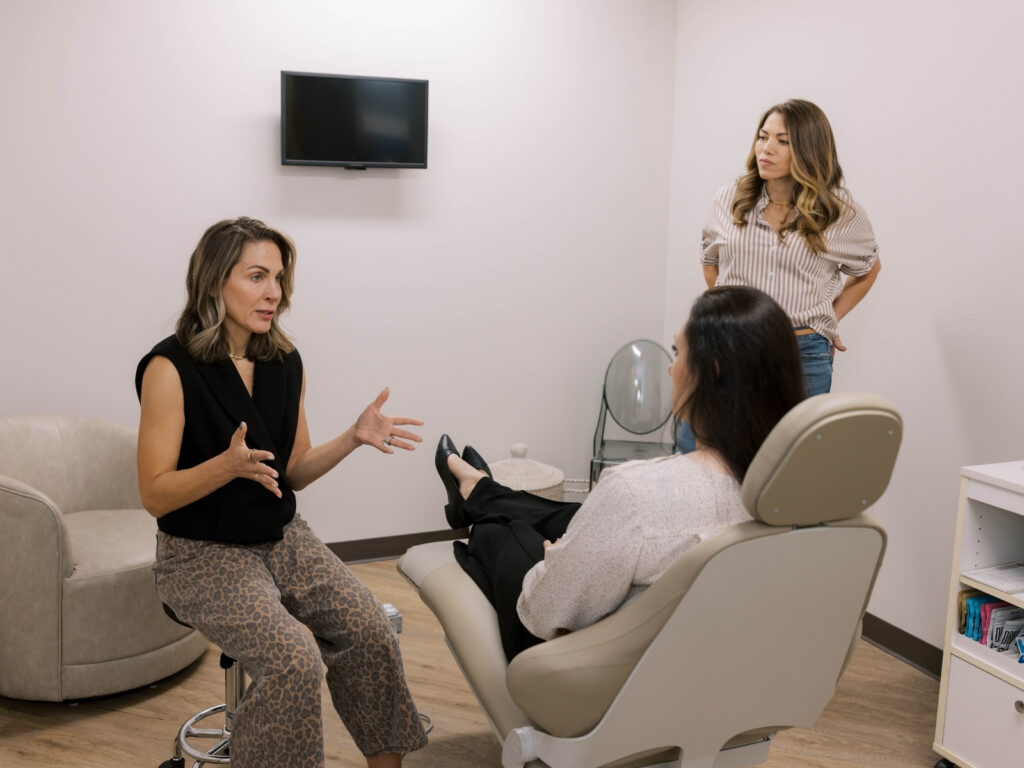
Most of the adults who come in have already done a lot of homework. They’ve read the Reddit threads. They’ve watched the YouTube videos. They’ve Googled “CPAP alternatives” more times than they can count. By the time they book, they don’t need convincing that something’s wrong. They need someone to finally figure out what it is.
Your first visit happens at our office on E Webster Place, right off Downer Avenue. Appointments run Monday through Thursday, 8 AM to 3 PM. The Downer Garage at 2584 N Downer Ave has covered parking steps from the building, so you’re not circling blocks looking for a meter.
The evaluation starts with a conversation. We want to hear your whole story — the snoring, the fatigue, the CPAP you tried, the doctor who told you to lose weight. All of it. Treatments that didn’t work tell us just as much as your symptoms do.
From there, we’ll likely take a CBCT scan. It’s a 3D image of your airway, jaw, and skull — takes a few seconds and shows us things a standard sleep study can’t. Where exactly your airway narrows. How your jaw is positioned. Whether your tongue has room to rest where it should.
If we need more data, a home sleep study lets you test in your own bed. Your East Side apartment. Your house in Murray Hill. Wherever you actually sleep — not a sterile lab wired up to machines.
No referral is usually needed. Most patients find us through their own research and book directly.
Treatment Options That Address the Root Cause of Sleep Apnea
Once we know where and why your airway is restricted, we build a plan around that. Not a generic protocol. Your plan.
Here’s what that might include:
- MARPE (Miniscrew-Assisted Rapid Palatal Expansion) widens a narrow upper jaw to open the nasal airway. Adults who’ve been told jaw surgery is the only path often find MARPE is a less invasive alternative.
- Myofunctional therapy retrains tongue posture and breathing patterns. Think of it as physical therapy for the muscles that keep your airway open while you sleep.
- Adult tongue-tie release removes tissue restriction that pulls the tongue backward into the airway at night.
- Laser soft palate treatment reduces the tissue vibration that causes loud snoring.
Some patients need one of these and some need a combination. The point is that each one targets a specific structural cause — not just the symptom of interrupted breathing.
The American Heart Association has noted the link between untreated sleep apnea and increased cardiovascular risk, including high blood pressure, heart disease, and stroke. That connection alone makes this worth taking seriously. And research published in the Journal of Clinical Sleep Medicine has shown that palatal expansion in adults can measurably increase airway volume — meaning structural treatment isn’t just theory. It’s backed by data.
A personalized plan replaces the one-size-fits-all CPAP prescription. That’s the whole idea.
Getting to E Webster Place from the East Side
Our office is inside Downer Lakeview Commons at 2524 E Webster Pl #201a, Milwaukee, WI 53211.
The Downer Garage on N Downer Ave has covered parking with 24/7 access. No circling for street spots near Brady or North Ave. Metered street parking is also available on surrounding blocks if you prefer.
MCTS bus routes run along Oakland Avenue and North Avenue and connect to the Downer corridor. Bublr Bike stations sit nearby for riders coming along the lakefront or from UWM.
If you live in the Upper East Side, Murray Hill, or Downer Woods, you’re within a five-minute drive or a short walk. Shorewood and Whitefish Bay residents can reach us in under ten minutes via Lake Drive or Capitol Drive.
Frequently Asked Questions
How long does it take to get to E Webster Place from Brady Street? About five minutes by car heading north on Prospect or Farwell Avenue. Covered parking is available in the Downer Garage at 2584 N Downer Ave, so you won’t need to hunt for a spot.
Do I need a referral from my doctor to be evaluated for sleep apnea? No referral is typically required. Most of our sleep apnea patients schedule directly after doing their own research into airway-focused treatment options.
Can I do a sleep study at home instead of a lab? Yes. A home sleep study lets you test in your own bed — your East Side apartment, your house, wherever you normally sleep. It’s more comfortable and gives us accurate data about your breathing patterns.
Is this treatment covered by insurance? Some portions of sleep apnea treatment may be covered. We provide detailed cost information before any treatment begins, and HSA/FSA funds can often be applied.
What if I already tried CPAP and it didn’t work? Many of our patients came to us specifically because CPAP failed them. Airway-focused sleep apnea treatment targets the structural cause of obstruction rather than forcing air past it. That’s a fundamentally different approach.
Is street parking available near Downer Lakeview Commons? Metered street parking is available on nearby blocks. The Downer Garage at 2584 N Downer Ave also offers covered parking steps from our office and is open 24/7.

