


For Milwaukee residents from the East Side, Riverwest, and Shorewood, exhausted mornings are becoming routine. You’re sleeping eight hours but waking up feeling like you didn’t sleep at all.
Many adults living near UWM, along Oakland Avenue, or in Riverwest’s historic duplexes don’t realize their sleep problems trace back to a physical restriction they’ve had since birth. Adult tongue-tie restricts tongue movement and creates breathing problems during sleep. When left untreated, it worsens snoring, causes airway collapse, and can lead to obstructive sleep apnea.
This connection between tongue tie and sleep apnea affects thousands of Milwaukee professionals, parents, and partners. Understanding how tongue-tie impacts your breathing helps you find root-cause solutions instead of just managing symptoms.
Our East Side Milwaukee location near Downer Woods offers comprehensive airway evaluation and laser frenectomy. We’re open Monday through Thursday from 8:00 AM to 3:00 PM, with Friday appointments available by request.
How Adult Tongue Tie Restricts Your Airway During Sleep
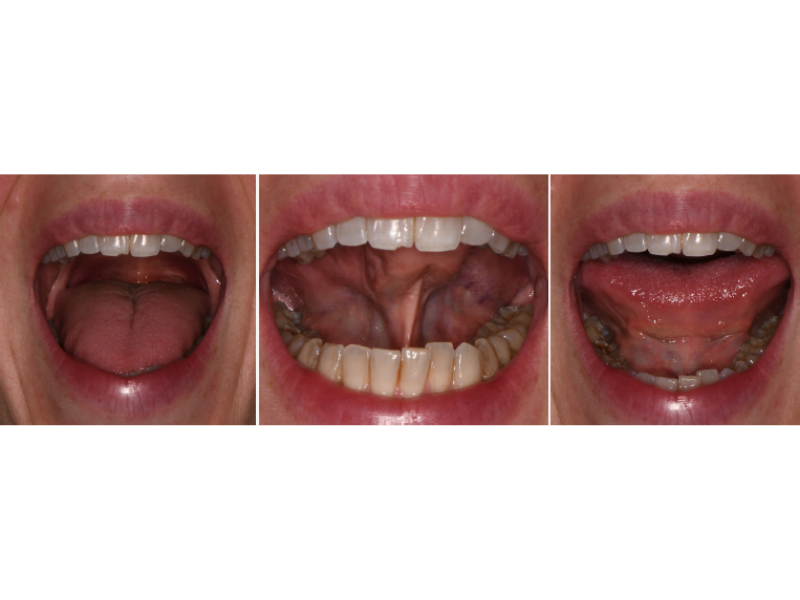
Your tongue normally rests against the roof of your mouth during sleep. This position keeps your airways open and allows smooth breathing all night long.
Tongue-tie restricts this natural positioning. The tight tissue band under your tongue prevents it from reaching the roof of your mouth. During sleep, your tongue falls backward instead. It blocks your airway.
This creates the sound you know as snoring—turbulent airflow struggling through a restricted space. Your oxygen levels drop. You wake up dozens of times each night, often without remembering. These are apnea events, and research shows they significantly increase cardiovascular risk.
Milwaukee adults ages 35-68 who snore loudly and wake gasping know this pattern well. Professionals commuting on I-43 or I-94 fight dangerous drowsiness during their drive. Partners whose spouses sleep in separate rooms due to snoring—common in Shorewood and East Side homes—understand the relationship strain.
Here’s what happens physically:
- Restricted tongue mobility forces mouth breathing at night
- Mouth breathing causes the tongue to fall back even further
- Your airway collapses repeatedly throughout the night
- Each collapse triggers a micro-awakening (even if you don’t remember it)
- Milwaukee winters make nasal breathing even harder, compounding the problem
Many Riverwest residents in 2-4 unit apartment buildings notice their snoring affects neighbors through shared walls. UWM faculty and staff with tongue-tie often struggle with afternoon fatigue despite living just blocks from campus.
The worst part? You’re trying to sleep. Your body just can’t.
Signs Your Sleep Problems May Be Related to Tongue Tie
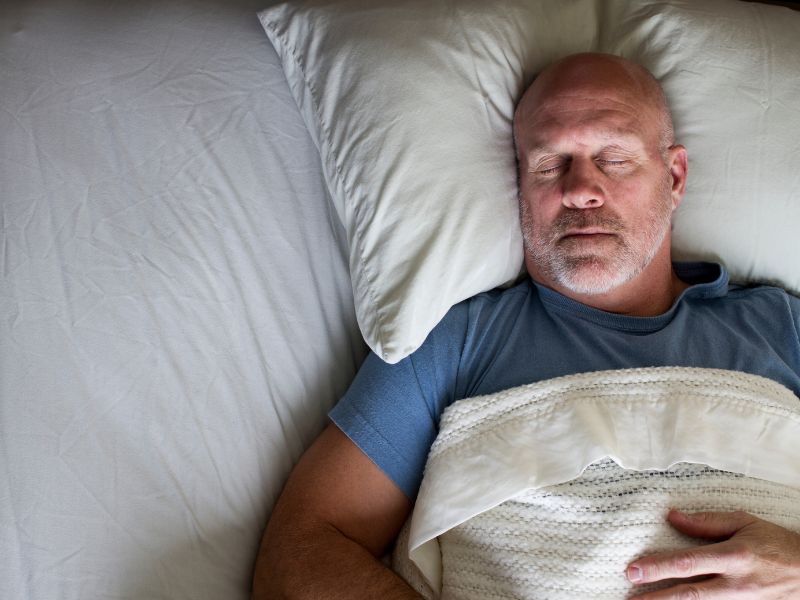
You’ve probably tried to fix your sleep problems already. Maybe you bought a new mattress, changed your sleep schedule, or cut out caffeine. Nothing worked because the problem isn’t behavioral—it’s anatomical.
Adults who’ve tried CPAP but can’t tolerate it often have underlying tongue-tie. Milwaukee professionals at Northwestern Mutual, Froedtert, or Johnson Controls notice their performance declining despite getting “enough” sleep. Their partners record them gasping or holding their breath at night.
Watch for these signs:
- Morning headaches within 30 minutes of waking (every single day)
- Dry mouth and sore throat when you wake up—cotton mouth feeling
- Limited tongue mobility—can’t touch tongue tip to roof of mouth or stick it past your lower lip
- Teeth grinding at night despite wearing a mouthguard for years
- Chronic TMJ pain, jaw clicking, or facial pain not resolved by other treatments
- Brain fog and memory issues throughout the day
- Coffee dependency just to function normally
- High blood pressure that doesn’t respond well to medication
The National Institutes of Health notes that untreated sleep apnea contributes to these symptoms and more. But when tongue-tie is the underlying cause, treating the apnea alone won’t solve the problem.
Shorewood residents often notice symptoms worsen during alternate-side parking nights. The 2-5 AM enforcement disrupts already poor sleep, making exhaustion even more severe. UWM area residents walking to Bradford Beach or Lake Park realize they’re mouth breathing during exercise—another sign of restricted airway function.
Your body’s been trying to tell you something. It might be time to listen.
Why CPAP Alone Doesn’t Fix Tongue-Tie-Related Sleep Apnea
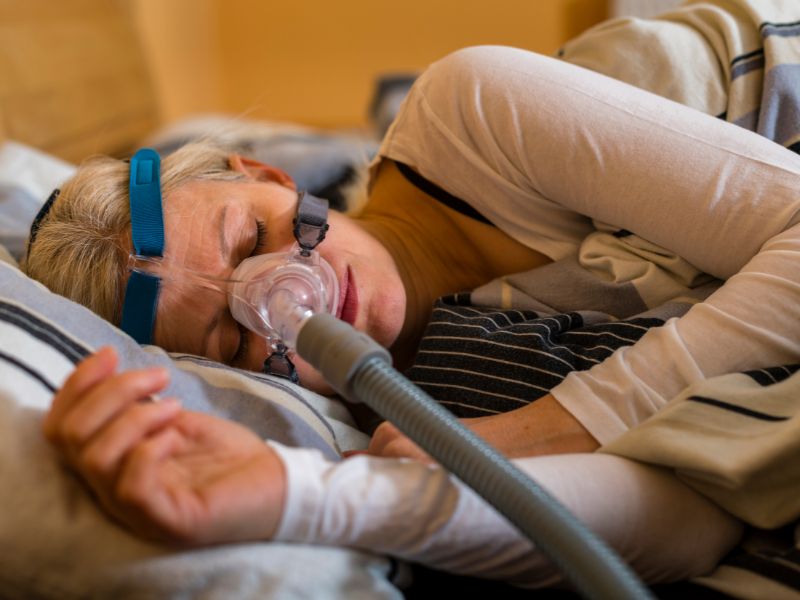
Your doctor prescribed a CPAP machine. You tried it. The mask felt claustrophobic, the pressure was uncomfortable, and you still woke up tired.
You’re not alone. Many Milwaukee adults seeking alternatives before trying CPAP (or after failing it) discover the machine doesn’t address why their airway is narrow in the first place.
CPAP forces air through a restricted airway. It’s like blowing up a balloon with a kink in it—you need more pressure to get the same result. But the kink is still there.
Tongue-tie creates an anatomical restriction that CPAP cannot correct. Your tongue physically cannot rest in the proper position. No amount of pressurized air fixes that structural problem.
Here’s what changes with tongue-tie treatment:
- The physical restriction gets released through frenectomy
- Myofunctional therapy retrains your tongue muscles to maintain proper positioning
- Your airway stays open naturally instead of being forced open by a machine
- Many people need lower CPAP pressure afterward (or eliminate CPAP entirely)
- You’re addressing the root cause, not just managing symptoms
Think of it this way: If your door won’t close because the hinges are broken, you can push harder on the door every time. Or you can fix the hinges. CPAP is pushing harder. Tongue-tie release fixes the hinges.
Some adults still benefit from CPAP after frenectomy, but they need much lower pressure settings. Their machines become tolerable instead of torture.
Milwaukee County Transit riders from Riverwest to downtown often fall asleep on the bus due to untreated sleep deprivation. Shorewood professionals attending meetings at Village Hall struggle to stay alert during daytime hours. These aren’t willpower problems. They’re airway problems.
A combined approach—frenectomy, myofunctional therapy, and possibly airway orthodontics like MARPE—provides lasting improvement instead of nightly band-aids.
CPAP vs. Airway Treatment: What Milwaukee Adults Need to Know
| Factor | CPAP Therapy | Laser Frenectomy + Myofunctional Therapy |
|---|---|---|
| Treatment Goal | Manage symptoms nightly | Address root cause for lasting improvement |
| Duration of Use | Every night for life | 3-6 months active treatment, then benefits continue naturally |
| Daily Maintenance | Clean mask, tubing, and filter regularly; replace parts every 3-6 months | Myofunctional exercises during treatment period; minimal maintenance after |
| Travel Considerations | Pack machine, mask, tubing, and power adapter; need backup battery for camping or power outages | No equipment needed after treatment completes |
| Comfort Level | Mask on face all night; some find it claustrophobic or uncomfortable | Brief procedure, then natural breathing improves over time |
| Partner Impact | Machine noise (though quieter than snoring) | Reduced or eliminated snoring; couples sleep in same room again |
| Power Requirements | Requires electricity or battery backup; Milwaukee power outages during storms become a problem | None after treatment |
| Effectiveness | Forces air through restricted airway; works while using it | Removes physical restriction; airway functions properly on its own |
| Long-term Outcome | Lifelong dependency on machine | Many patients reduce or eliminate need for CPAP |
| Insurance Coverage | Often covered but requires ongoing supply costs | Typically not covered; one-time investment in root-cause treatment |
Milwaukee winters bring power outages during ice storms. CPAP users scramble for battery backups or worry about sleeping through the night. After airway treatment, your breathing doesn’t depend on electricity.
Traveling from Milwaukee to visit family? CPAP users pack the machine, hope TSA doesn’t flag it, and search for outlets at their destination. After frenectomy and myofunctional therapy, you pack lighter.
The question isn’t just “Does CPAP work?” It’s “Do you want to manage this forever, or fix the underlying problem?”
What Laser Frenectomy and Myofunctional Therapy Can Do for Milwaukee Adults

You’re probably wondering about the actual procedure. What happens? Does it hurt? How long until you feel better?
CO2 laser frenectomy is a quick outpatient procedure, typically under 30 minutes. The laser technology offers precision that traditional surgery can’t match—minimal discomfort and faster healing.
Most adults return to work within 1-2 days. You’re not bedridden. You’re not taking weeks off. You schedule it for a Thursday, rest Friday, and you’re back Monday.
But the procedure is only part of the treatment. Myofunctional therapy begins before your frenectomy and continues afterward. These exercises retrain your tongue posture, swallowing patterns, and breathing mechanics.
Here’s the typical timeline:
- Week 1-2: Initial assessment and myofunctional exercises begin
- Week 3-4: Laser frenectomy performed
- Week 5-8: Continued exercises to prevent reattachment and build new habits
- Month 3-6: Full results emerge as tongue function and sleep quality improve
Some people notice better sleep within weeks. Others take three to six months to feel the full transformation. Home sleep studies measure improvement objectively, so you’re not guessing whether it’s working.
Our office on E Webster Place near Downer Avenue is easily accessible from Riverwest via Oakland Avenue. Parking is available at Downer Lakeview Commons—much easier access than navigating UWM campus parking permits and restrictions.
Early morning appointments starting at 8:00 AM accommodate Milwaukee professionals before their work shifts begin. You don’t have to take a full day off to get treatment.
The relief you’re seeking is closer than you think.
Getting to Our East Side Office from Riverwest, UWM, and Shorewood
We’re located at 2524 E Webster Pl #201a in the Downer Lakeview Commons building. If you know the historic Downer Avenue shopping district, you know where we are.
From Riverwest: Head east on North Avenue or Locust Street, then south on Oakland or Downer Avenue. The drive takes approximately 10-15 minutes. Multiple MCTS bus routes serve the area along Oakland Avenue if you prefer public transit.
From UWM campus: Walk or drive south on Downer Avenue. It’s under 10 minutes from the Kenwood campus, and just a 5-minute walk from many UWM residence halls. Students with U-PASS get free MCTS bus access directly to our Downer Avenue area office.
From Shorewood: Take Oakland Avenue or Lake Drive south. It’s approximately a 5-10 minute drive to our East Side location. You can avoid Village overnight parking permit concerns by scheduling daytime appointments.
Parking options:
- Building parking in Downer Lakeview Commons lot
- Street parking on Webster Place and surrounding East Side streets
- Much simpler than UWM campus parking (which requires permits 24/7)
The intersection of Downer Avenue and Webster Place is easy to find. We’re right in the neighborhood where Milwaukee’s East Side meets the lakefront communities.
Life After Treatment: Better Sleep for Milwaukee Professionals and Families

Here’s what changes after tongue-tie treatment. Not “might change” or “could improve.” What actually happens.
Patients report waking refreshed for the first time in years. Not dragging themselves out of bed, not hitting snooze six times. Actually refreshed.
Snoring reduces dramatically or stops completely. Partners who’ve been sleeping in separate rooms move back together. Relationships improve when everyone’s sleeping well.
The ripple effects spread:
- Oxygen saturation improves, reducing strain on your heart
- Energy levels return throughout the day
- Work performance improves without afternoon crashes
- Focus and memory sharpen
- Morning headaches disappear
- TMJ pain reduces significantly
- CPAP pressure drops (or the machine sits in your closet unused)
Milwaukee professionals at major employers like Northwestern Mutual and Froedtert report improved afternoon productivity. They’re not fighting to stay awake at 2 PM anymore.
Riverwest residents navigating the Beerline Trail or biking to work notice easier nasal breathing during exercise. Their bodies work the way they’re supposed to.
Shorewood families report children no longer complaining about their parent’s loud snoring through shared walls. The whole household sleeps better.
One patient said it best: “I forgot what normal felt like until I felt it again.”
Your body knows how to sleep properly. It just needs the physical restriction removed so it can do what it’s designed to do. Breathe. Rest. Heal.
Frequently Asked Questions
Can I return to work the day after laser frenectomy?
Most adults return to work within 1-2 days after CO2 laser tongue-tie release. The minimal discomfort compared to traditional surgery means you’re not taking weeks off. Recovery varies by individual, but most people need very little time away from their jobs.
Will releasing my tongue-tie cure my sleep apnea completely?
Tongue-tie release combined with myofunctional therapy improves airway function and often reduces sleep apnea severity. Some patients still benefit from CPAP but at much lower pressure settings. We set realistic expectations: improvement is typical, but “cure” depends on multiple factors including your specific anatomy.
How do I know if my snoring is related to tongue-tie or something else?
A comprehensive airway evaluation includes tongue mobility assessment, 3D dental imaging (CBCT), and sleep history review to identify root causes. Home sleep studies are available to measure sleep apnea severity and track improvement after treatment.
Do you offer appointments outside regular Monday-Thursday hours?
Friday appointments are available by appointment only—call (414) 935-8460 to schedule. Monday through Thursday hours are 8:00 AM to 3:00 PM, providing flexible scheduling options for working professionals.

