


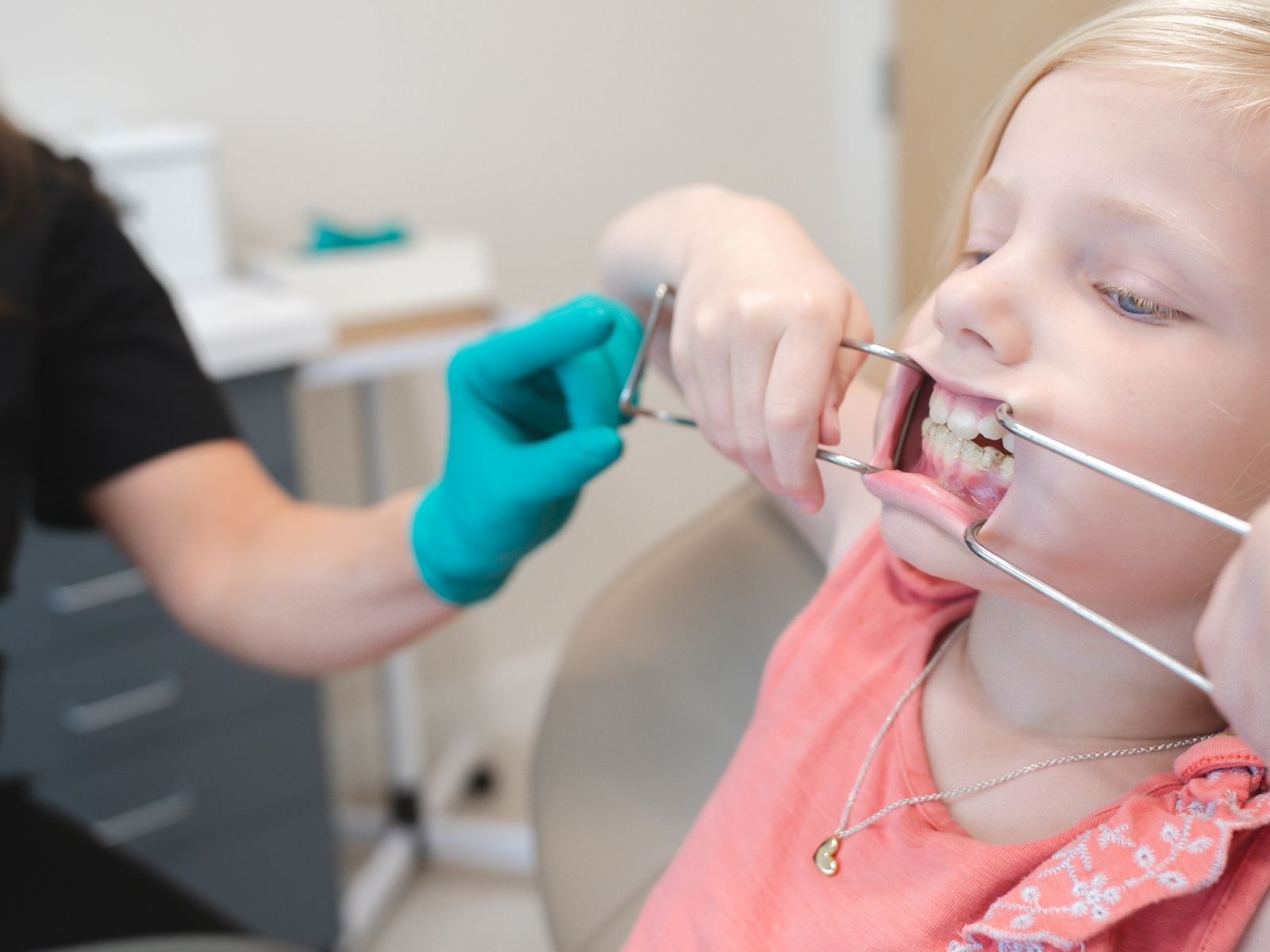

Milwaukee families often spot the signs early. Your child breathes through their mouth during cold Wisconsin winters. They suck their thumb past kindergarten. Speech feels harder than it should.
By age 4 or 5, these patterns become clear—and that’s when myofunctional therapy for children Milwaukee families trust can make the biggest difference.
This therapy retrains how your child’s tongue rests, how they swallow, and how they breathe. It’s not about forcing habits to stop. It’s about teaching better patterns while those habits are still forming.
Early intervention prevents what comes later: crowded teeth, facial changes, sleep problems. Children in East Side neighborhoods, Shorewood, and Wauwatosa come to our Webster Place location for assessment. Most start therapy between ages 4 and 10, when change happens fastest and easiest.
We’re open Monday through Thursday, 8am to 3pm, with Friday appointments available. Because we know Milwaukee families juggle school, work, and everything else that fills the day.
Signs Your Milwaukee Child Needs Myofunctional Therapy
You notice it during Wisconsin’s long winter months. Your child’s mouth hangs open. Their lips stay dry and chapped no matter how much lip balm you apply.
It’s not just seasonal allergies. It’s often a restricted airway—and poor oral muscle function.
Watch for these patterns:
- Constant open mouth, even when sitting still
- Dark circles under the eyes (every morning)
- Snoring at night or restless sleep
- Dry, cracked lips that never seem to heal
Parents often catch these signs when children start kindergarten or first grade. Teachers mention it. Pediatricians sometimes brush it off as “just a phase.”
But there’s more. Thumb sucking past age 5 signals something deeper. So does tongue thrust during speech—when the tongue pushes forward between teeth. Messy eating, drooling past toddler years, or difficulty chewing properly all point to muscle pattern issues.
Speech therapists sometimes recommend myofunctional therapy when they see tongue thrust or articulation problems. They understand the connection.
And here’s what surprises parents most: bedwetting, poor focus at school, restless sleep—these connect to breathing, too.
Early assessment catches these issues while they’re still forming. Before dental problems develop. Before facial growth patterns set.
The signs are there. The question is whether we address them now or wait until they’re harder to fix.
How Myofunctional Therapy Corrects Breathing and Oral Habits in Children
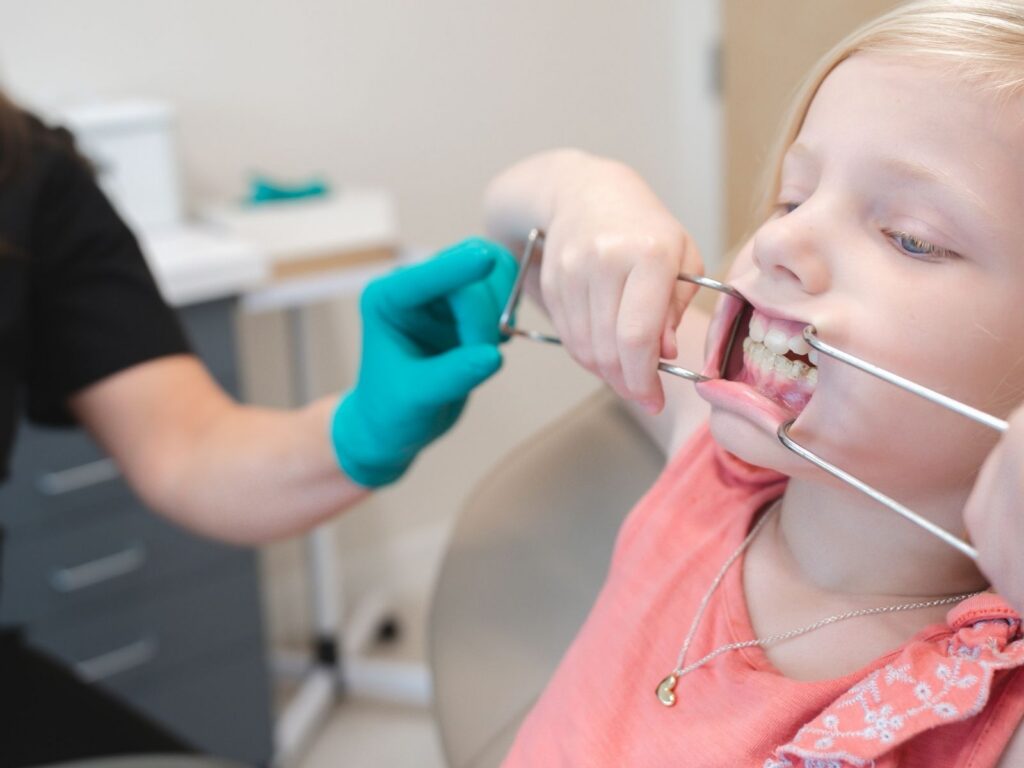
Think of it as physical therapy for the mouth. Except instead of strengthening a knee or shoulder, we’re retraining tongue position, lip seal, and swallowing patterns.
The therapy teaches children where their tongue should rest: on the roof of the mouth, not pushing forward or sitting low. This sounds simple. But that tongue position affects everything—how they breathe, how their jaw develops, how their teeth come in.
Here’s what children actually practice:
Exercises that strengthen the lip seal. So they breathe through their nose during the day instead of letting their mouth hang open. Swallowing pattern retraining—because when children swallow incorrectly, the tongue pushes against front teeth. Over and over. Thousands of times a day.
The exercises take 10-15 minutes daily at home. Between appointments at our Webster Place office, children practice. Parents supervise. It becomes part of the routine, like brushing teeth.
Most families see habit changes within 6-8 weeks when exercises are done consistently. The mouth-breathing eases. The thumb stops going to the mouth as often. Speech gets clearer.
And here’s the part that matters most for parents worried about thumb sucking: therapy addresses the root cause by improving oral stability and airway function naturally. Children stop seeking oral comfort because they don’t need it anymore.
Some children combine therapy with HealthyStart or Myobrace appliances. For comprehensive airway treatment when the palate needs expansion too. The therapy and appliance work together—exercises strengthen the muscles while the appliance guides growth.
It’s not quick. But it’s thorough. And it prevents bigger problems down the road.
Best Age to Start Myofunctional Therapy for Milwaukee Kids

Age 4 to 5 is the sweet spot. That’s when children can follow simple instructions and practice exercises without getting frustrated.
Younger children—ages 4 to 6—respond incredibly fast. Their oral habits are still forming. Still flexible. They haven’t been breathing through their mouth or sucking their thumb for a decade yet. Change happens easier.
Children ages 7 to 10 still benefit greatly. Especially before permanent teeth fully erupt and facial growth patterns become set. This is often when orthodontists mention early intervention—around age 7 or 8. Parents hear “narrow palate” or “crowded teeth” and start looking for root-cause solutions.
Pre-teens can still improve breathing and facial development. But it requires more commitment. More time. The habits have been there longer, so retraining takes patience.
Here’s what most parents don’t realize: starting therapy before traditional braces—before age 12—prevents the need for tooth extractions in many cases. Because we’re correcting the muscle patterns that cause crowding in the first place, not just straightening teeth that don’t have room.
The Academy of Orofacial Myofunctional Therapy recognizes that developmental readiness varies by child, but most children ages 4 and up can participate effectively when exercises are presented appropriately. Children coordinate therapy around school schedules. We work with families to make appointments fit. Because the earlier we start, the more we can prevent.
What Milwaukee Children Experience During Myofunctional Therapy Sessions
The first visit lasts about 60 minutes. At our Downer Lakeview Commons office, we evaluate tongue tie, breathing patterns, and oral habits. We watch how your child swallows. Where their tongue rests. How their lips close (or don’t).
Then the real work begins—except it doesn’t feel like work to children.
They play “tongue games.” They practice fun exercises that feel like activities, not medical treatment. Touch the roof of your mouth. Hold it there. Now try to smile. These become challenges, not chores.
Sessions happen every 2 to 4 weeks. So families don’t have to make the trip weekly. Between visits, children practice at home. The therapist demonstrates exercises parents can supervise—10 to 15 minutes a day, usually before bed or after school.
Children track progress with stickers or charts. It makes daily practice engaging. Turns it into something they want to do.
Most children complete therapy in 6 to 12 months. That timeline depends on age, which habits need correcting, and how consistently exercises get done at home. Younger children often finish faster. Older children with more ingrained patterns take a bit longer.
Parents receive photo guides and video demonstrations. So during Wisconsin winter months, when everyone’s stuck indoors anyway, children have clear instructions for their exercises.
The process is gentle. Gradual. And it works because we’re teaching the body a better way—not forcing it.
Reaching Our East Side Milwaukee Location from Your Neighborhood
We’re located at 2524 E Webster Pl #201a, in the Downer Lakeview Commons building near the UWM campus.
Free parking is available in the Downer Lakeview Commons lot. The entrance is off Webster Place, between Downer and Stowell. You’ll see the building on your right.
From Shorewood, take Lake Drive south or Oakland Avenue through the residential areas. About 10 to 12 minutes in normal traffic.
From Wauwatosa, use I-94 East to the North Avenue exit, then head east to Downer Avenue. It’s roughly 20 minutes off-peak.
If you’re taking the bus, MCTS routes 30 and 31 stop on North Avenue, just two blocks west of our office.
We’re open Monday through Thursday, 8am to 3pm. Friday appointments are available by request—helpful for working parents who need flexibility.
The location is worth the trip. Specialized children’s airway expertise isn’t something you find everywhere. And when it comes to your child’s breathing, development, and long-term health, the drive matters less than the outcome.
Milwaukee Schools and Myofunctional Therapy: Helping Children Focus and Thrive

Teachers notice the difference first, sometimes before parents do.
Children who used to zone out in class suddenly participate more. The kid who couldn’t sit still starts focusing. Behavior improves.
Better oxygen intake from nasal breathing helps children stay alert. Research on how mouth breathing affects cognitive function shows that proper breathing mechanics directly impact focus and learning capacity. This matters especially during Wisconsin winter’s short daylight hours, when everyone feels a bit sluggish. When breathing mechanics correct, children arrive at school ready to learn instead of groggy and unfocused.
Speech improvements help children participate confidently in class. They’re not self-conscious about how words sound anymore. They raise their hands. They read aloud without hesitation.
Athletic performance improves too. Children in youth sports breathe better during games. They have more endurance. Faster recovery between plays.
And here’s the practical part: therapy schedules work around school hours. Children miss minimal class time. Sessions happen after school or on weekends by request. Because we understand education matters just as much as airway health.
When breathing improves, everything else follows. Sleep gets better. Focus sharpens. Behavior evens out. And suddenly, the child struggling in second grade starts thriving in third.
Frequently Asked Questions
How long does it take to drive from Shorewood to the myofunctional therapy office in Milwaukee?
About 10 to 12 minutes via Lake Drive or Oakland Avenue through the East Side neighborhoods. Free parking is available at Downer Lakeview Commons, so you won’t be circling the block looking for a spot.
Can my 4-year-old really do myofunctional therapy exercises?
Yes. Children age 4 and up can follow simple tongue and breathing exercises when they’re presented as games. Younger children often respond faster than older kids because their habits are still forming and easier to reshape.
Will myofunctional therapy help my child stop thumb sucking at night?
Yes. The therapy improves oral stability and airway function, so children naturally stop seeking oral comfort. We’re addressing the root cause—not just forcing the habit to stop through punishment or shame.
Does my Milwaukee child need myofunctional therapy if they’re getting braces later?
Therapy before braces prevents tooth extractions and relapses by correcting the muscle patterns that cause crowding in the first place. Ideally, start around age 7 or 8, before permanent teeth fully erupt. It makes orthodontics easier and more effective.
Can myofunctional therapy help my child’s sleep apnea??
Yes—myofunctional therapy is a key component of treating pediatric sleep apnea. The exercises retrain tongue posture, breathing patterns, and oral muscle function that contribute to airway restriction. When combined with palatal expansion, myofunctional therapy helps maintain treatment results long-term and prevents sleep breathing problems from returning. If your child shows signs of sleep apnea like snoring, mouth breathing, or bedwetting, our pediatric sleep apnea treatment for Silver Spring and Capitol Heights families explains how we address the root cause of these symptoms.
Can myofunctional therapy help my child who mouth breathes every Wisconsin winter?
Yes. The therapy retrains nasal breathing patterns and strengthens the lip seal. It addresses restricted airways that are often mistaken for seasonal allergies during Milwaukee winters—fixing the actual

