



If you live in the Bay, you already hold your family to a high standard. Top-rated schools. A safe, walkable village. Health care that actually gets to the bottom of things. So when your child snores night after night, you don’t just want someone to shrug and say they’ll outgrow it. You want answers.
This page is for Whitefish Bay families looking for pediatric snoring evaluation and airway treatment close to home. Because here’s the thing most parents aren’t told — childhood snoring isn’t normal. It’s often a signal that something structural is going on. A narrow palate. A restricted tongue. A mouth-breathing habit that quietly reshapes how your child’s face and teeth develop.
A snoring specialist Whitefish Bay Milwaukee parents can rely on should do more than listen to the noise. They should find out what’s causing it. That means imaging, airway assessment, and a clear explanation you can actually act on.
Our East Side office on Downer Avenue is about 10 minutes south of Silver Spring Drive — straight down Lake Drive through Shorewood. We see patients Monday through Thursday, and same-week appointments are available for parents who are ready to stop waiting and start getting real answers.
What Childhood Snoring Tells You About Your Child’s Airway
A child who snores most nights isn’t just a noisy sleeper. Something is blocking airflow. It could be a narrow palate, enlarged tonsils, or a tongue tie that keeps the tongue from resting where it should. Any of these can shrink the airway enough to make breathing loud and labored.
A lot of Whitefish Bay parents chalk it up to seasonal allergies or assume it’s just a phase. That’s understandable — especially during Wisconsin winters when every kid seems congested. But nightly snoring in a child is different from the occasional stuffy nose. It’s a pattern, and patterns like this have a cause.
When a child breathes through their mouth during sleep, the jaw drops open. Over time, that changes how the face grows and how the teeth come in. Kids at Cumberland Elementary, Richards Elementary, or Whitefish Bay Middle School who snore may also have trouble focusing during the day — and the connection isn’t always obvious.
If your pediatrician said “they’ll grow out of it” but the snoring hasn’t stopped, an airway evaluation can show what’s actually happening. A 3D scan reveals palate width, tongue position, and airway volume — things a standard checkup simply can’t measure.
How Pediatric Airway Treatment Stops Snoring at the Source
The goal isn’t to muffle the snoring. It’s to figure out why it’s happening and fix that.
Airway-focused treatment starts with identifying the structural issue. For many children, the palate is too narrow. That means the airway behind the nose is cramped, and air has to squeeze through. Appliances like HealthyStart® or Myobrace® gently widen the palate over time — working with your child’s natural growth instead of against it.
If a tongue tie is involved, a CO2 laser release frees the tongue so it can rest against the roof of the mouth. That tongue position matters more than most people realize. It supports the palate from underneath and helps keep the airway open during sleep.
Then there’s the habit side. Myofunctional therapy retrains how your child breathes and swallows. It’s like physical therapy for the mouth — teaching the muscles to default to nasal breathing instead of mouth breathing. This is what keeps results lasting after treatment wraps up.
Here’s what makes this different from the “wait until age 12 for braces” approach:
- Early airway treatment works with your child’s growth window, not after it closes
- It addresses the structure (narrow palate, tongue restriction) and the habits (mouth breathing, tongue posture) together
- The snoring stops because the airway opens — not because you masked a symptom
According to the American Academy of Pediatrics, snoring associated with sleep-disordered breathing in children can affect behavior, learning, and cardiovascular health. And the American Academy of Sleep Medicine recommends evaluation when snoring is frequent and accompanied by other signs like gasping or restless sleep.
Common Signs Whitefish Bay Parents Notice Alongside Snoring
Snoring rarely shows up alone. Once you know what to look for, the other signs tend to click into place. Whitefish Bay parents often describe a cluster of things they’d been noticing separately — without connecting them.
Watch for these alongside the snoring:
- Dark circles under the eyes, even after 10 or more hours of sleep
- Mouth hanging open during the day — at school, while watching TV, or on a drive down Lake Drive
- Bedwetting past age 6, which research links strongly to sleep-disordered breathing
- Difficulty focusing in class — sometimes teachers suggest an ADHD evaluation before anyone checks the airway
- Restless sleep, frequent waking, or sleeping in odd positions to keep the throat open
- Thumb-sucking that hangs on past age 4 — often the body’s way of compensating for a narrow palate
- Chronic ear infections and congestion that flare up every Wisconsin winter
- Crowded teeth and a narrow smile, even before the permanent teeth come in
None of these things on their own might seem alarming. But together, they paint a picture. And the picture usually points back to the airway.
What to Expect at Your Child’s First Airway Evaluation
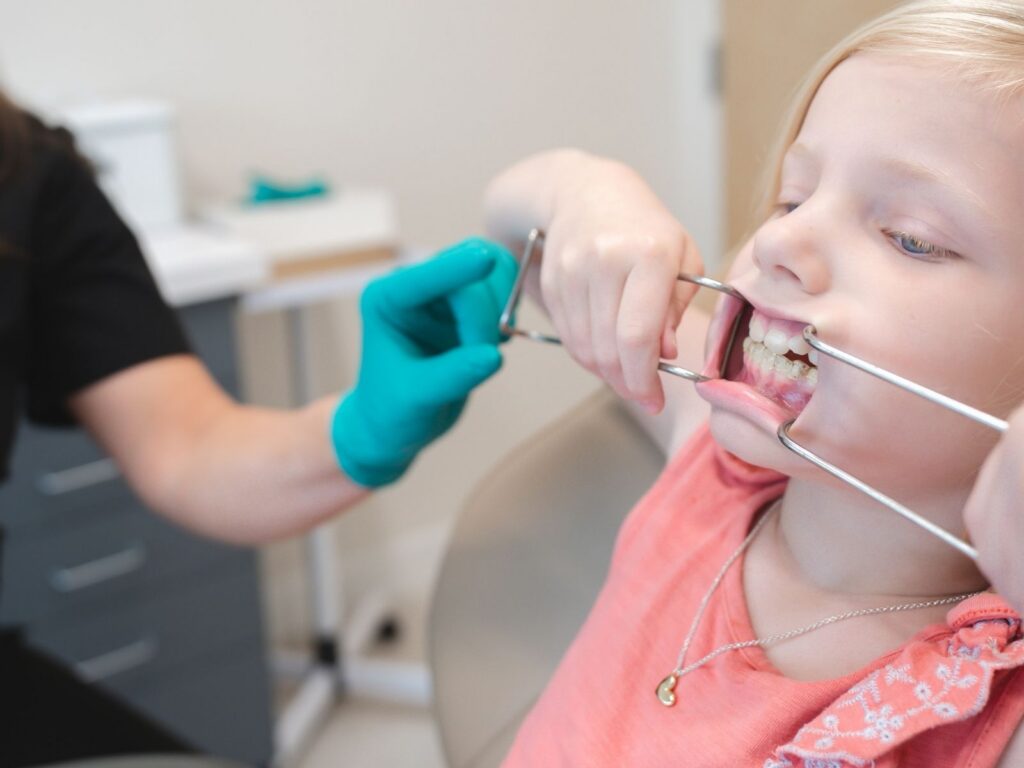
Your child’s first visit happens at our office inside Downer Lakeview Commons at 2524 E. Webster Place. It starts with a full airway assessment, including a 3D CBCT scan that shows the palate, airway volume, and tongue position in detail you won’t get from a standard X-ray.
We review those results with you the same day. You’ll see exactly what’s going on — where the restriction is, how narrow the airway looks, and what’s contributing to the snoring. No waiting weeks for results or getting passed between specialists.
If we need a closer look at how your child actually sleeps, we may recommend a home sleep study. Your child wears a small device in their own bed, in their own room. No hospital lab. No unfamiliar environment making everything harder.
The whole evaluation takes about an hour. Our team works with kids from age 2 through the preteen years, including the nervous ones. We go slow when we need to.
You’ll leave with a clear picture of what’s causing the snoring and a treatment path based on your child’s age and anatomy. No guesswork. No “let’s wait and see.”
Appointments run Monday through Thursday, 8 AM to 3 PM — designed to fit around Whitefish Bay school drop-off and pickup schedules.
How Early Treatment Shapes Better Sleep and Development
Kids who stop snoring through airway treatment don’t just sleep quieter. They sleep deeper. And deeper sleep changes almost everything.
Parents in Whitefish Bay and neighboring Shorewood frequently tell us the same thing — within a few months, their child is calmer, more focused, and actually waking up rested. Teachers notice it. Coaches notice it. The kid notices it.
Expanding the palate between ages 5 and 10 takes advantage of your child’s natural growth. The bones are still pliable. The jaw is still forming. Guiding that growth now often reduces or eliminates the need for extractions or traditional braces later. That’s not just a health win — it’s a financial one too.
And for parents dealing with bedwetting alongside the snoring, here’s what most doctors don’t mention: when a child can’t reach deep sleep, their body doesn’t produce enough antidiuretic hormone overnight. The bladder fills. The child wets the bed. It’s not behavioral. It’s physiological. Treat the airway, improve the sleep, and the bedwetting often resolves on its own.
Proper nasal breathing also supports the kind of facial development you want to see — a wider jaw, straighter teeth, and a balanced profile. These aren’t cosmetic concerns. They’re structural ones that affect breathing for life.
We track progress with follow-up imaging so you can see the airway changes for yourself. Measurable results. Not just “it seems better.”
Driving from Whitefish Bay to Our Downer Avenue Office
Our office is inside Downer Lakeview Commons at 2524 E. Webster Place, Suite 201A. From most spots in Whitefish Bay, you’re looking at about a 10-minute drive.
The most direct route is Lake Drive south. It takes you through Shorewood and into Milwaukee’s Upper East Side, right along the lakefront. Turn west on Webster Place, and you’re there. It’s a straight shot — and honestly one of the prettier drives in the area.
Parking options near the office:
- The Downer Garage at 2584 N. Downer Ave. has covered parking with mobile pay — one block from our front door
- Metered street parking is available along Downer Avenue and Webster Place
If you’re coming from Bayshore or the west side of the Bay, take I-43 south to Capitol Drive and head east to Downer Avenue. Either way, it’s a shorter trip than driving to Children’s Hospital — and you’ll get specialized airway care you won’t find at a general pediatric dentist.
Frequently Asked Questions
How long does it take to drive from Whitefish Bay to your office? About 10 minutes. Head south on Lake Drive through Shorewood, then turn west on Webster Place near Downer Avenue. The office is inside Downer Lakeview Commons.
Is parking available for parents with young children? Yes. The Downer Garage at 2584 N. Downer Ave. has covered parking one block from our door and accepts mobile pay. Metered street spots are also available on Downer Avenue and Webster Place.
At what age should I have my child’s snoring evaluated? Any child who snores most nights should be evaluated. Children as young as 2 can be assessed at our office, and early airway intervention between ages 5 and 10 is ideal — that’s when the palate responds best to guided expansion.
Could my child’s snoring be causing their bedwetting? Yes. Sleep-disordered breathing prevents deep sleep, which disrupts the hormone production needed to concentrate urine overnight. Many families find that treating the airway resolves bedwetting without any behavioral interventions.
Will my child need braces if they get early airway treatment? Early palatal expansion often reduces or eliminates the need for traditional braces. By guiding jaw growth while your child is still developing, we can create the space their teeth need naturally — instead of correcting crowding later with brackets and wires.
Our pediatrician said snoring is normal for kids. Should we still get an evaluation? Occasional snoring can happen with a cold or during allergy season. But nightly snoring paired with mouth breathing, dark circles, or restless sleep is not typical. A pediatric airway evaluation can identify structural issues that a standard well-child visit isn’t designed to catch. If your gut says something’s off, it’s worth checking.

