


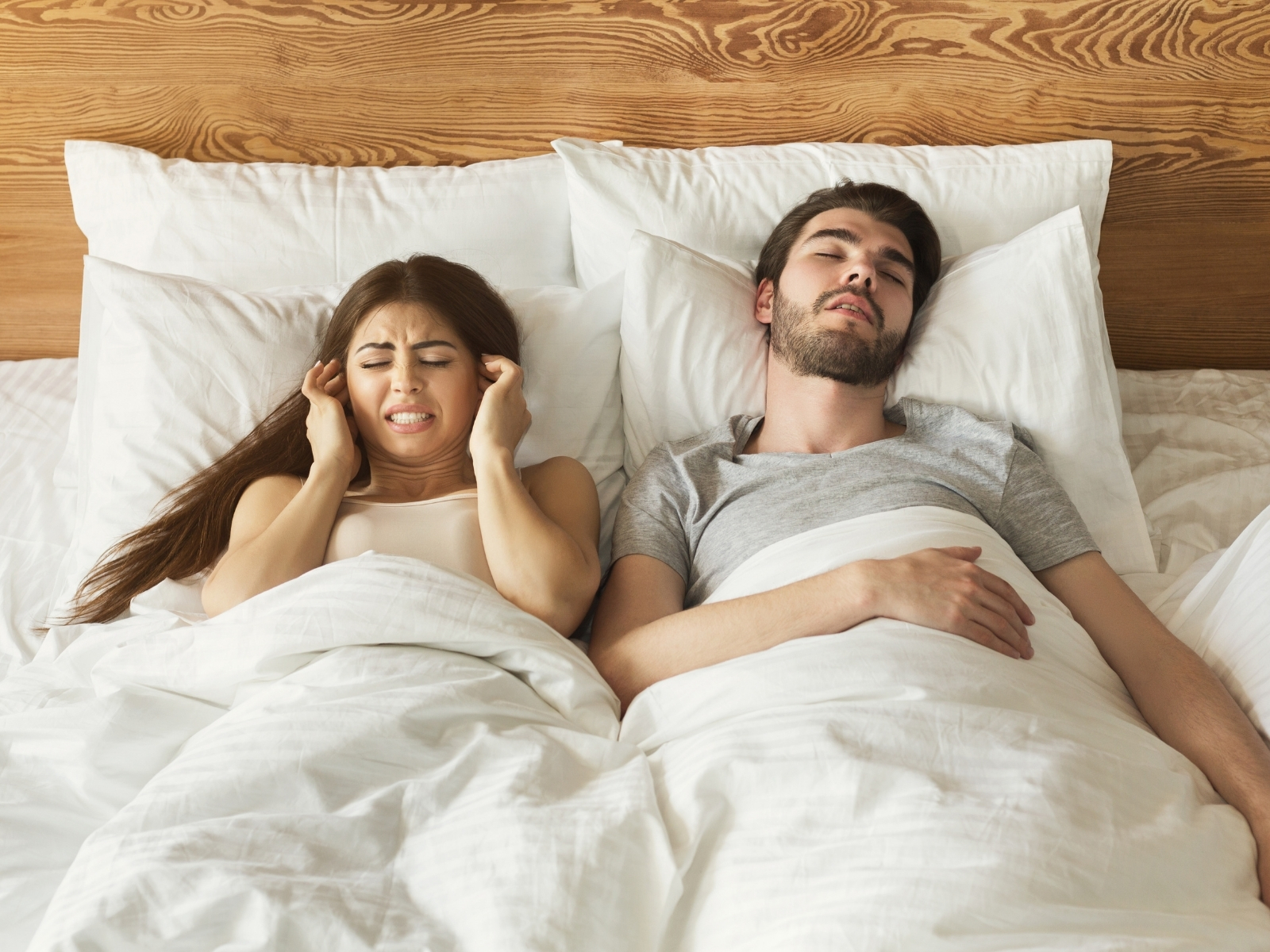

You’ve tried the nasal strips. You’ve slept on your side until your shoulder ached. Your partner still ends up in the other room by 2 AM. And every morning you wake up with a dry mouth, a dull headache, and the feeling that eight hours of sleep gave you nothing.
If you’re searching for snoring treatment East Side Milwaukee, this is the page for you. We take an airway-focused approach here — which means we figure out what’s physically blocking your airflow, and we fix that. Not just the noise.
Our office sits inside Downer Lakeview Commons on E. Webster Place, right off Downer Avenue. If you live on the East Side — whether that’s a Brady Street apartment, a Murray Hill bungalow, or a Prospect Avenue high-rise — you’re minutes from our door. We see patients Monday through Thursday, 8 AM to 3 PM, with Friday appointments available by request. Same-week openings are common.
Snoring affects more than your nights. It fragments your partner’s sleep, drains your energy, and puts real strain on your health over time. If loud snoring or a partner’s ultimatum brought you to this page, you’re where you need to be.
Signs Your Snoring Points to an Airway Problem
Snoring is easy to brush off. Everybody knows somebody who snores, right? But there’s a difference between the occasional rumble after a long day and the kind of snoring that shakes the walls of an East Side duplex every single night.
Here’s what to pay attention to:
- Loud snoring that happens most nights, not just after a few beers at a Brady Street bar
- Morning headaches that hit within 30 minutes of waking
- Dry mouth and sore throat first thing every day
- Daytime fatigue that coffee can’t fix — the kind that makes your I-43 commute feel dangerous
- Your partner recording you on their phone, or moving to the guest room
These aren’t quirks. They’re signs that air ishttps://untetheredairwayhealthcenter.com/milwaukee/milwaukee-childrens-health/milwaukee-airway-orthodontics-children/ forcing its way through a tight space while you sleep. Something is narrowing your airway — your tongue position, your jaw structure, your soft palate tissue, or sometimes all three.
And left alone, nightly snoring can progress to obstructive sleep apnea. That’s not a scare tactic. The American Academy of Sleep Medicine has been clear about the connection for years.
If your partner has stopped complaining and just quietly moved to another room, that’s not the problem getting better. That’s the problem getting ignored.
How Airway-Focused Snoring Treatment Differs from Over-the-Counter Fixes
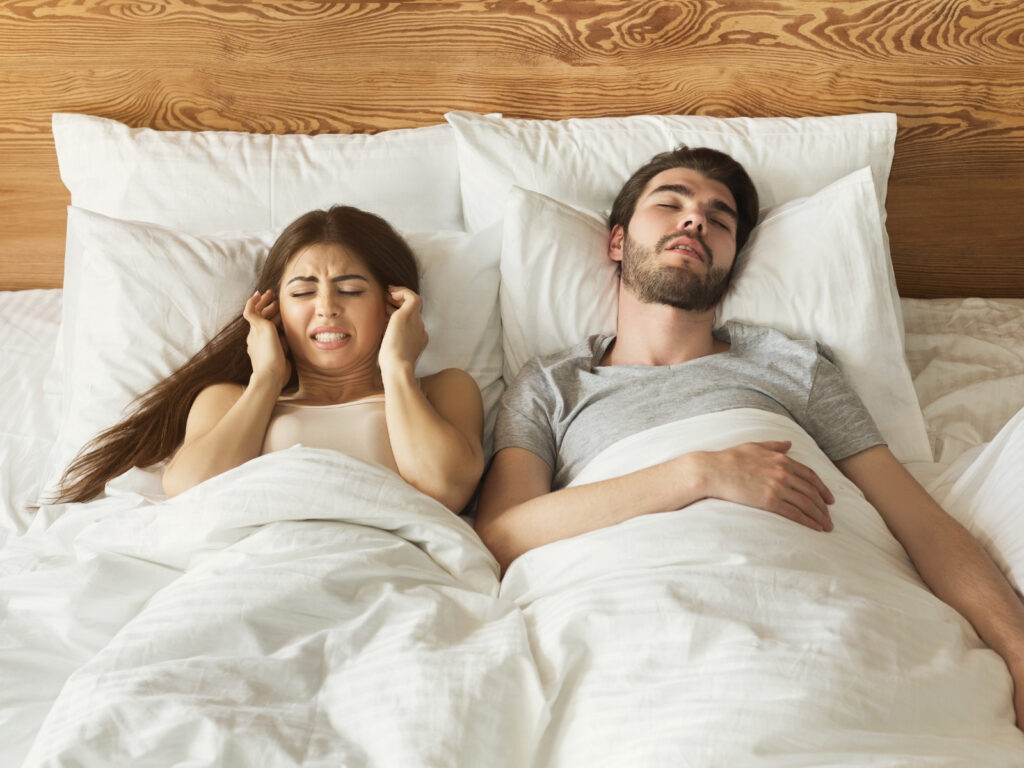
You’ve probably already spent money on this problem. Nasal strips from Walgreens. A throat spray someone recommended. One of those anti-snoring mouthpieces from Amazon with 4,000 reviews and a 3-star rating. Maybe a wedge pillow too.
None of it worked. And there’s a reason for that.
Those products try to manage the symptom — the sound. They don’t touch the restricted airway that’s actually causing it. It’s like putting tape over a check engine light.
An airway-focused approach starts with figuring out where your airway narrows and why. We use 3D imaging (called CBCT) to map your jaw, palate, and airway in detail. You can see the restriction on screen, right there in our Downer Avenue office. It’s not a guess.
From there, treatment depends on what we find. Options can include:
- Tongue-tie release if restricted tissue is pulling the tongue back into the airway
- Myofunctional therapy to retrain tongue posture and breathing patterns
- Oral appliance therapy to reposition the jaw and open the airway during sleep
- Laser soft palate treatment to reduce the tissue vibration that creates the snoring sound — no invasive surgery involved
This isn’t a nightguard. It’s not a CPAP prescription. And it’s not another thing you shove in your mouth at bedtime and hope for the best.
A lot of East Side patients who walk through our door on Webster Place have already been through the cycle — strips, sprays, devices, maybe even an ENT visit that didn’t lead anywhere. Airway-focused care is usually what they find after everything else falls short.
What Happens During a Snoring Evaluation at Our East Side Office
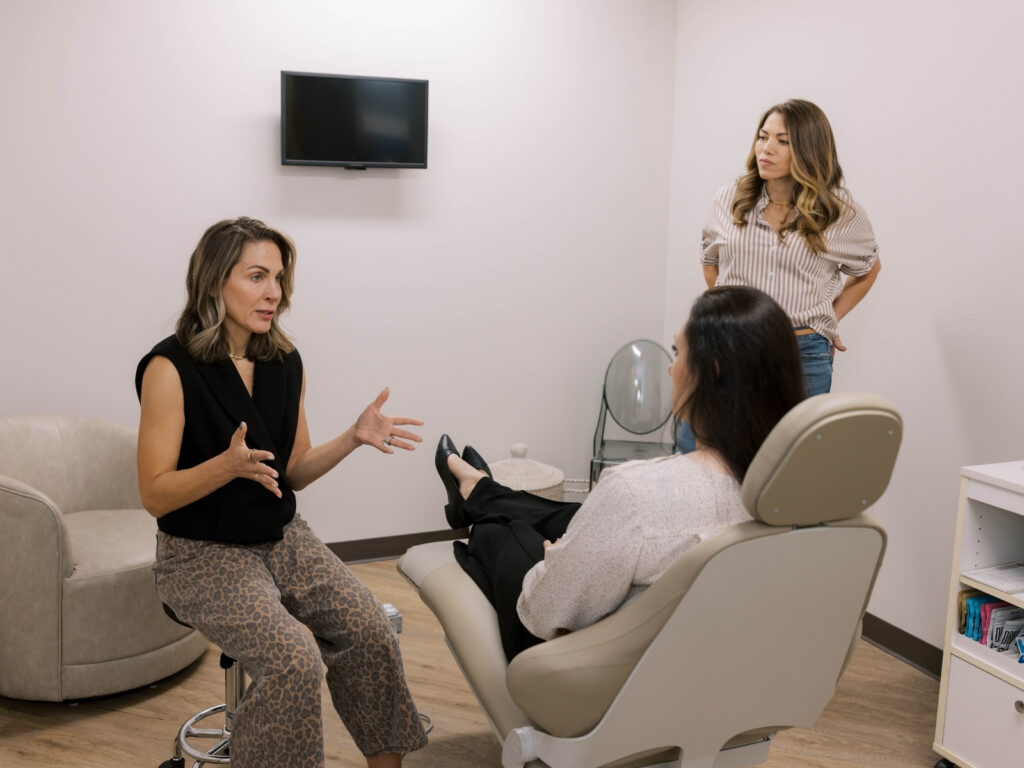
Your first visit happens inside our office at Downer Lakeview Commons, 2524 E. Webster Place, Suite 201A. No hospital. No sleep lab. Just a straightforward appointment that fits into your workday.
We start with a full airway assessment. That includes 3D imaging of your jaw, palate, and airway — and we review the results with you the same day. You’ll actually see what’s going on. Most patients say that’s the first time anyone has shown them why they snore instead of just telling them to lose weight or try a different pillow.
If we need more data, we may recommend a home sleep study. You take a small device home, wear it overnight in your own bed, and bring it back. No wires. No strange hospital room. No co-pay for a sleep lab you didn’t need.
Your treatment plan gets built around your anatomy. Your airway. Your specific restriction. Not a one-size protocol pulled off a shelf.
Appointments run Monday through Thursday, 8 AM to 3 PM. If you work at Northwestern Mutual, Froedtert, or on the UWM campus, you can schedule during a lunch break or before your shift starts. Friday appointments are available by request.
Results East Side Patients Can Expect After Treatment
Here’s what usually happens first: your partner notices before you do.
The snoring gets quieter. Then it stops waking them up. Then you’re back in the same bed again. That alone changes the temperature of a relationship in ways people don’t expect.
But it goes beyond the bedroom. Many patients report fewer morning headaches within the first few weeks. The dry mouth fades. Energy comes back — real energy, not the caffeine-fueled version you’ve been running on.
Myofunctional therapy retrains your tongue posture and breathing habits over time. That’s what makes the results stick. You’re not just wearing ahttps://untetheredairwayhealthcenter.com/milwaukee/milwaukee-childrens-health/milwaukee-airway-orthodontics-children/ device at night and hoping — you’re actually changing how your body works during sleep. The Sleep Foundation notes that addressing the root cause of airway restriction can meaningfully improve sleep-disordered breathing outcomes.
For some patients, treating the airway reduces or eliminates the need for CPAP. That’s not a guarantee for everyone, but it happens often enough that it’s worth mentioning.
And if you’ve already tried nasal strips, positional therapy, or throat sprays with nothing to show for it — that’s actually a good sign. It means the problem was never about your nose or your sleeping position. It was about your airway. And that’s exactly what we treat.
Follow-up imaging can confirm measurable changes in airway volume, so you’re not just going on feel. You can see the difference.
Getting to Our Downer Avenue Office from the East Side
Our office is at 2524 E. Webster Place, Suite 201A, inside Downer Lakeview Commons. If you know the Downer Avenue shopping strip — the Downer Theatre, the bookshops, the restaurants — you’re practically here.
[PLACEHOLDER: Driving directions from East Side neighborhoods to be inserted]
Parking options:
- Downer Garage at 2584 N. Downer Ave. — covered parking, 24/7 access, mobile payment. It’s a one-block walk to our front door.
- Metered street parking along Downer Avenue and Webster Place. Meters run $0.50/hour during the day.
- Overnight permit note: If you’re coming early, be aware that December through March, the East Side has alternate-side parking rules.
Without a car:
- MCTS bus routes run along Oakland Avenue and Downer Avenue with stops near UWM.
- Bublr Bike stations near UWM and Downer Avenue work well in warmer months.
Brady Street, Murray Hill, Upper East Side, and Northpoint are all a 5-to-10-minute drive. Most of the East Side is closer than that.
Frequently Asked Questions
How long does it take to drive from Brady Street to your Downer Avenue office?
About 5 to 7 minutes heading north on Prospect or Farwell Avenue. Even with East Side traffic, it’s a quick trip.
Is there parking near the office for early-morning appointments?
Yes. The Downer Garage at 2584 N. Downer Ave. has covered parking with 24/7 access and mobile pay. Metered street spots are also available along Downer Avenue and Webster Place.
Can snoring be treated without a CPAP machine?
Yes. Airway-focused snoring treatment targets the physical restriction causing the sound — which can eliminate the need for CPAP entirely in some patients. Treatment options include oral appliances, myofunctional therapy, laser soft palate treatment, and tongue-tie release.
Do I need a sleep study before starting snoring treatment?
A home sleep study is often recommended and can be done in your own bed. There’s no overnight hospital visit. You wear a small device while you sleep and return it at your next appointment.
My partner snores loudly but says it’s not a big deal. When should we be concerned?
Loud nightly snoring paired with gasping, morning headaches, or daytime fatigue points to an airway restriction that should be evaluated. Untreated snoring can progress to obstructive sleep apnea, which carries real cardiovascular risk. If your partner’s snoring is loud enough to move you to another room, it’s time for an evaluation.

