


Seeing what standard X-rays miss
Adult CBCT 3D Airway Imaging in Lakewood, CO
A flat dental X-ray was built to find cavities, not to show how you breathe. A 3D scan lets us see your airway, palate, and jaw joints the way they actually sit.
A flat picture hides the airway
What CBCT Shows That a Standard X-Ray Can’t
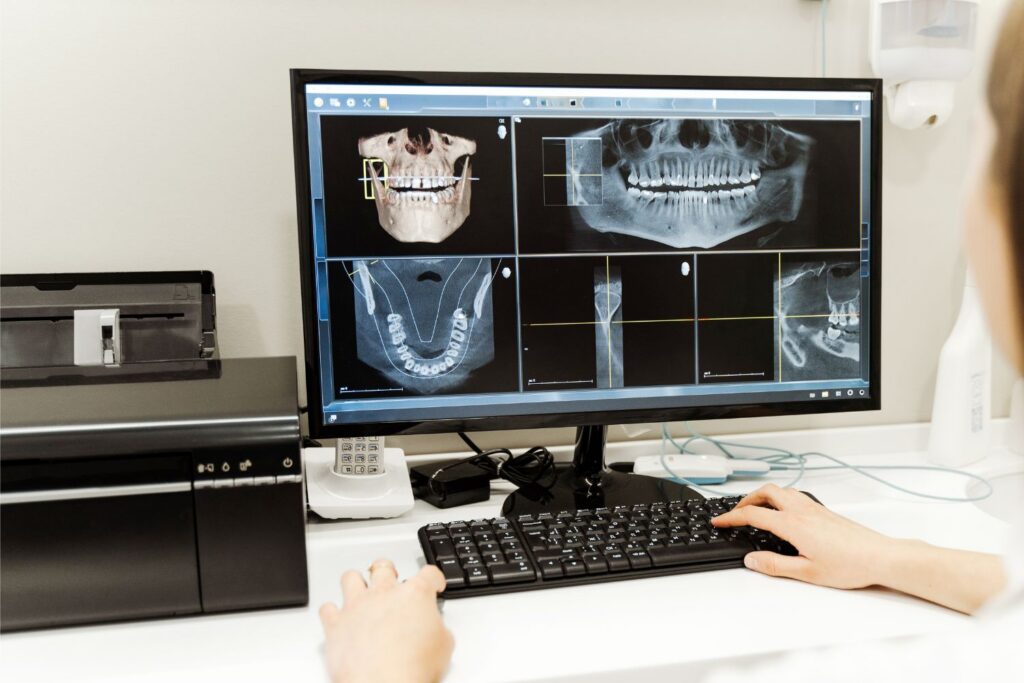
Picture your last checkup. You bit down on a little tab, the machine clicked, and someone said your teeth look great. That’s probably true, but that picture was built to find cavities, not to show how you breathe. A regular dental X-ray is flat: it presses a three-dimensional head into one sheet, like a shadow on a wall, so bone, soft tissue, and open space all pile on top of each other. Your airway sits in the middle of that pile, so it’s easy to miss. CBCT, or cone beam computed tomography, works differently. The scanner circles your head, takes many images from different angles, and software stacks them into a 3D model we can rotate, zoom into, and slice front to back or side to side.
So what does that let us see that a flat film can’t? The airway as a tube rather than a line, so we can see where it narrows behind the tongue or soft palate. Your nasal passages and sinuses, where crowding can push you toward mouth breathing at night. The width and shape of your upper jaw, since a narrow, high palate can leave less room for the tongue and the airway above it. Your jaw joints, viewed on both sides and compared, which a flat image blurs together. And where your tongue rests, since a tongue that sits low and back can crowd the space you breathe through. None of these show up on a cavity check, which is why so many adults hear their scans are normal. The scans were normal. They just weren’t looking at the airway. One honest limit: a CBCT scan is taken while you’re awake and still, so it shows your anatomy, not what happens when your muscles relax at 2 a.m. That’s why we pair it with a home sleep study when nighttime breathing is the question. The scan shows the space; the sleep study shows how you use it.
Why We Pair the Scan With Sleep and Hands-On Testing
Say your scan shows a tight spot behind your tongue, and your partner swears you stop breathing some nights. Is that enough to build a plan? Not quite. A narrow spot shows where trouble could happen, not whether it does. You’ve probably done a test or two already: maybe a sleep doctor called your results borderline, maybe a dentist said your jaw looks fine. Each test answered its own small question, and nobody put the answers side by side. The CBCT scan shows the space. The home sleep study shows the night. The hands-on assessment shows the function, including where your tongue rests, how you swallow, and whether a tight tongue-tie holds your tongue down. That last piece gets skipped a lot, because a scan can’t tell how your tongue moves, and neither can a sleep study.
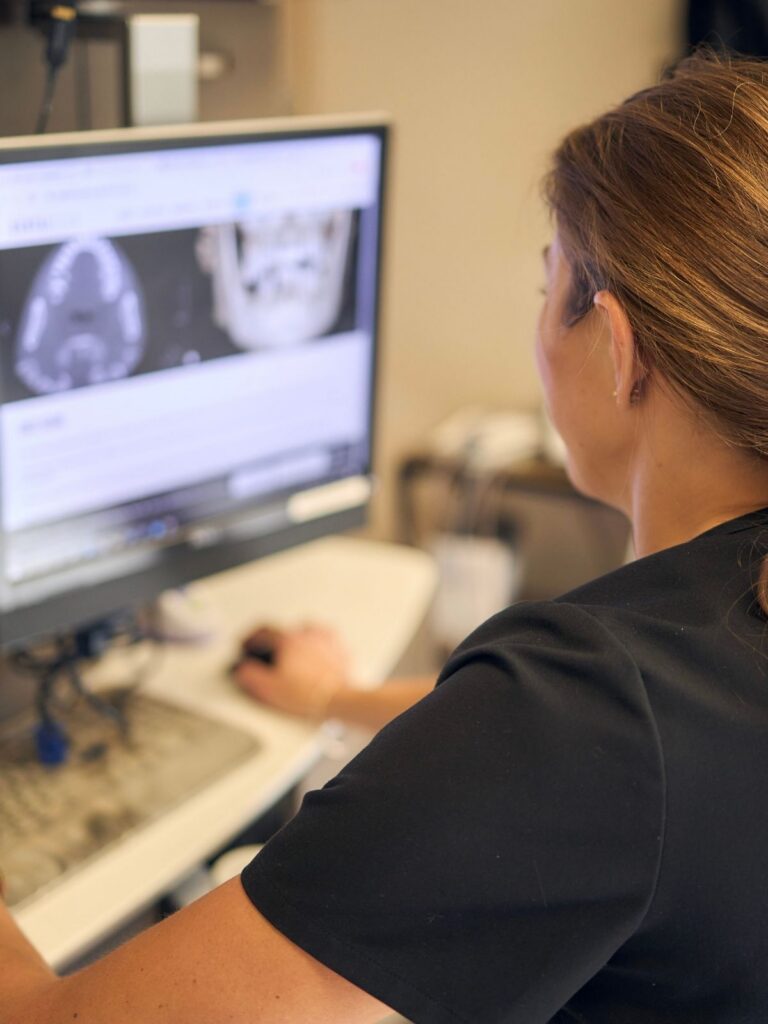
Here’s how the three results start to line up. Picture a narrow palate on the scan, frequent pauses on the sleep study, and a restricted tongue on the exam. That points to a very different plan than snoring alone would. It might mean MARPE to widen the upper jaw, an adult tongue-tie release done with a laser, or laser soft palate treatment, with adult myofunctional therapy as part of most plans, because a tongue that’s rested low for decades needs retraining that doesn’t happen in one appointment. Sometimes the three results don’t point at your airway at all: a clean sleep study with clear jaw-joint changes might steer us toward TMJ care, and sometimes the answer is that your breathing isn’t the problem, which is still worth knowing because it saves you from treatment aimed at the wrong thing. Adults across West Denver and Jefferson County come to us as a fee-for-service practice; dental and medical insurance often don’t cover much of this work, so many patients use HSA or FSA funds, and we provide out-of-network documentation you can submit yourself.
What Happens During Your Scan
Open, Quick, Nothing Closes In
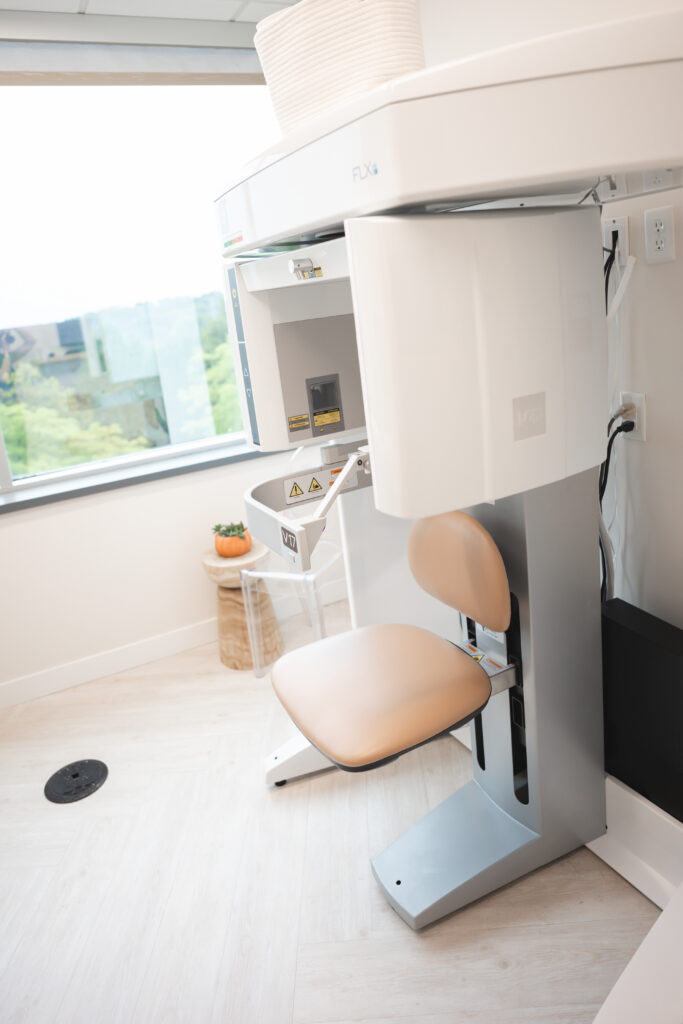
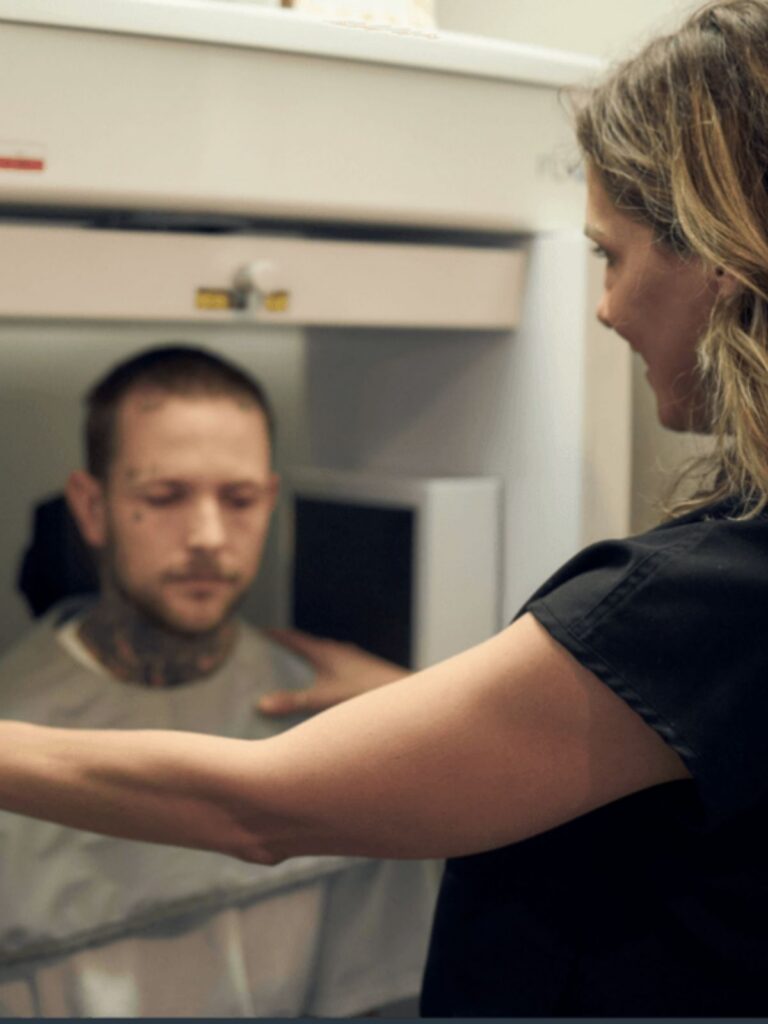
You might expect a noisy tube like an MRI. Most CBCT units are open, so nothing closes around your head, with no loud banging, no needles, and no dye. We keep imaging on site on S Wadsworth Blvd, so there’s no separate trip across town and no second wait for results to travel back.
- Wear a top without metal snaps or a zipper near the collar
- Leave earrings, necklaces, and metal hair clips at home
- Plan to remove glasses, hearing aids, and removable dentures or retainers
- Bring any past sleep study results or prior 3D scans
Which Adults Actually Need This Scan
It’s 6 a.m. Your jaw aches, your head pounds, and your partner already moved to the couch because of the snoring. You’ve mentioned it at checkups, everyone said you look healthy, and you started to wonder if it’s all in your head. It isn’t, and you’re not alone. The adults who benefit most from a 3D airway scan usually share one thing: several problems that seem unrelated keep showing up together, and nobody has looked at the airway behind them. You may be a good fit if you snore most nights or someone has noticed you stop breathing, if you tried CPAP and gave up on the mask, if you grind or clench and have worn through a night guard or two, if your jaw clicks or aches and TMJ care alone hasn’t helped, if you wake with headaches or a dry mouth after a full night, if you feel foggy through the afternoon, or if you breathe through your mouth most of the day and can’t seem to stop.
Some adults come for a different reason: you’re planning treatment and want it built on real measurements, whether that’s adult airway orthodontics, Invisalign, MARPE, or an adult tongue-tie release. Knowing the shape of your palate and airway first helps us plan for breathing, not just straight teeth. And since airway patterns often run in families, a parent’s scan can happen in the same place as their child’s HealthyStart or Myobrace care, which is part of why families across West Denver and Jefferson County make us their one stop for airway care. That said, if you sleep well, wake rested, breathe through your nose, and have no jaw pain, a scan likely won’t tell you much, and curiosity alone isn’t a good reason for extra imaging. A CBCT scan uses more radiation than a single flat dental X-ray, generally less than a medical CT of the head, but more is still more, so the scan has to earn its place. Two fair questions before any scan: what will this show that we don’t already know, and will the answer change what we do next? If both are fuzzy, it’s fine to wait.
See more adult solutions from Untethered Airway Health Center
Frequently Asked Questions About CBCT Imaging in Lakewood
How long does it take to get results from a CBCT scan?
We review your scan and talk through it with you as part of putting your results together with your home sleep study and hands-on exam. We don’t hand you images alone and send you home to guess. We walk through what we found, what it means for your snoring or jaw, and what to check next, so you leave with an actual answer, not just a picture.
Can I see my own CBCT images during the appointment?
Yes. The scan builds a 3D model we can turn, zoom into, and slice right in front of you. Many adults bring a partner who has heard the snoring or grinding for years, and seeing the images together often makes the conversation at home much easier.
Do I need to do anything special before a CBCT scan?
Mainly, avoid wearing metal near your head and bring any past sleep study results or prior scans. Skip necklaces, earrings, and metal hair clips, since they can leave streaks on the image, and plan to remove glasses, hearing aids, and any removable dentures or retainers. There’s nothing to fast for, and you can take your usual medicines unless your doctor says otherwise.
Will my insurance cover this type of imaging?
We’re a fee-for-service practice, so dental and medical insurance often don’t cover much of this work. Many patients use HSA or FSA funds instead, and we provide out-of-network documentation you can submit yourself if your plan allows it.
Is a 3D scan always necessary, or is a regular X-ray enough?
Often a flat X-ray is the right tool. For a routine checkup, a cavity, a single sore tooth, or a planned filling or crown where nobody is asking about breathing or the jaw, a standard X-ray answers the question with a smaller dose. A CBCT scan earns its place when the question is about your airway, your jaw joints, or a treatment plan, not for everyday dental work.

The Appointment
An open scanner, no dye or needles, and a single slow spin usually done in under a minute. The hard part is just holding still.
All Under One Roof
Imaging is on site on S Wadsworth Blvd, and we see infants, kids, and adults in one place, so a parent’s scan can sit alongside a child’s care.
Investment
Fee-for-service, with HSA/FSA accepted and out-of-network documentation provided. A scan should answer a real question, not add to the pile.
Ready to Begin?
If snoring, grinding, and jaw pain have been treated as three separate problems for years, a 3D look at your airway may connect them. Call (720) 783-5424 or request an appointment online to ask about an airway scan at our office on S Wadsworth Blvd.

