


A real look at the why
Adult CBCT 3D Airway Imaging in Brookfield, WI
A 3D scan shows your airway, palate, and jaw joints the way a flat X-ray can’t, so we can look for a structural reason behind your sleep, jaw, or breathing trouble.
When something hasn’t added up
Why Adults Get Referred for 3D Airway Imaging
Maybe you’ve used a CPAP for a year and still wake up tired. Or your dentist keeps pointing at worn-down teeth. Maybe your partner has slept in the guest room since spring because the snoring never stops. A lot of adults hear the same advice, lose some weight, try a night guard, wear the mask, and those things help some people, but nobody stopped to ask why your airway is tight in the first place. A CBCT scan helps answer that. CBCT stands for cone beam computed tomography, a 3D X-ray of your head and face, and where a regular dental X-ray is flat, this one lets us turn the image and see your airway from every side. Common reasons adults end up needing one include snoring or waking tired, morning headaches or a sore jaw, night grinding or clenching, TMJ pain or clicking, a narrow high palate or crowded teeth, a tongue-tie found later in life, or planning for MARPE, oral appliance therapy, or adult airway orthodontics.
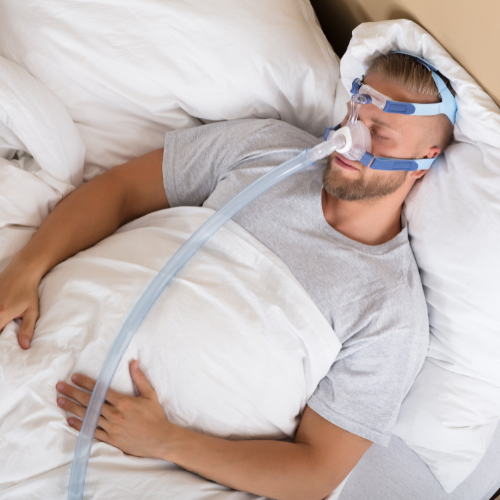
So why are grinding and headaches on a breathing list? When the airway narrows at night, your body works harder to keep air moving, and for some people clenching may be part of that effort, which can mean worn teeth and a pounding head by morning. A scan shows things you can’t see in a mirror: how wide your upper jaw is, how much room your tongue has, where the airway gets tight, and how your jaw joints sit, which matters if TMJ pain is part of your story. Here’s what a scan can’t do, though: it’s a still picture of you awake and sitting up, so it can’t show what happens while you sleep. That’s where a home sleep study comes in, and we offer those too. The scan shows the shape of your airway; the sleep study shows how that airway acts at night, and together they give a fuller answer than either alone. Imaging also matters before treatment, since MARPE widens the upper jaw in adults without surgery and planning it well means knowing the bone it’s working with. Our CBCT imaging is in-house at our Brookfield office on Water Tower Blvd, so the scan isn’t a separate trip to an outside imaging center.
What a Scan Shows That a Dental X-Ray Can’t
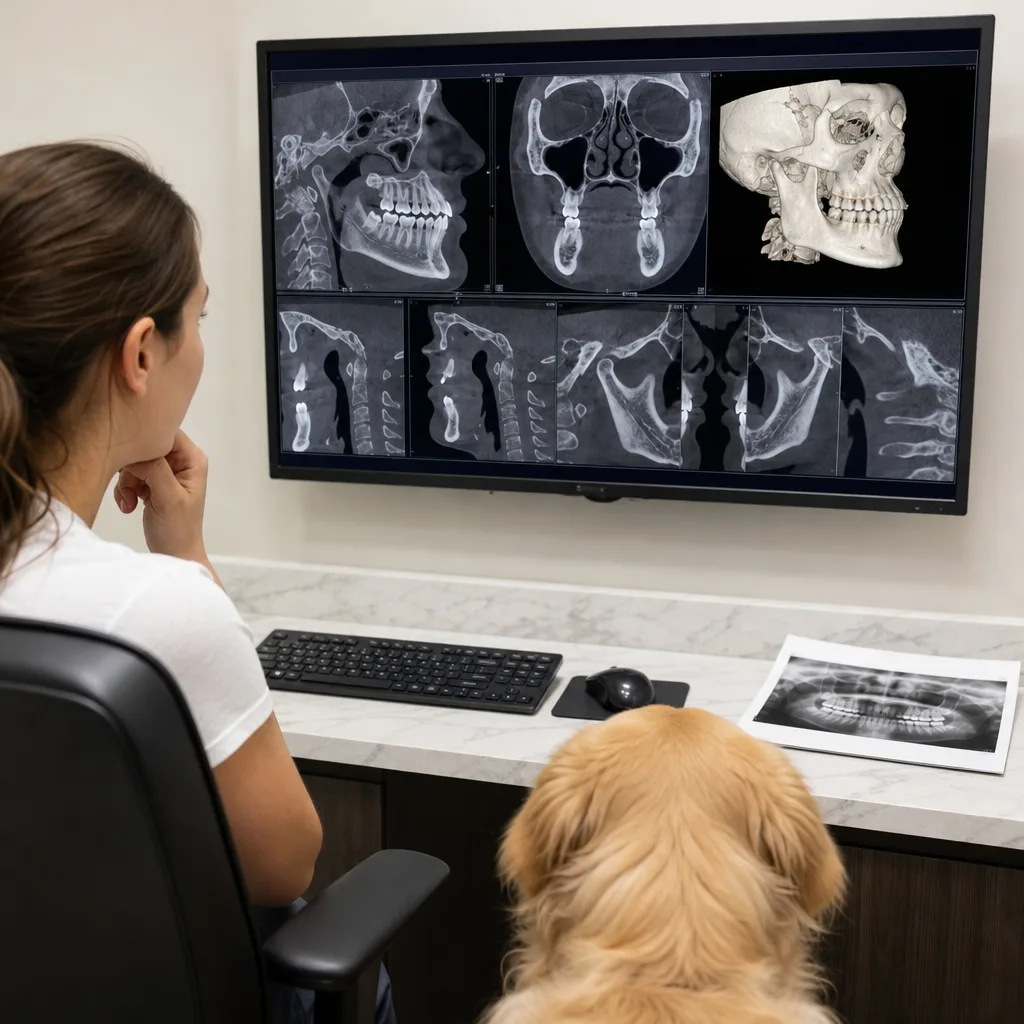
You’ve probably had a lot of dental X-rays, the bitewings at every cleaning, maybe a panoramic one, and nobody ever said a word about your airway. That’s not because anyone ignored you; those X-rays were made to find cavities and check tooth roots, and they do that well, but they flatten everything into one layer, so bone, soft tissue, and open space all stack on top of each other. Picture holding your hand up to a lamp and looking at the shadow: you see the outline, but not how thick your hand is or what’s behind your fingers. A flat X-ray works like that shadow. A 3D scan can be viewed in thin slices, front to back and side to side, which changes what can be measured: the narrowest point of your airway and how far back it sits, the airway’s shape looking straight down it, your nasal passages and sinuses, the seam down the middle of your palate and the bone on each side, how thick the bone is where MARPE miniscrews would go, and where each jaw joint sits, left compared to right.
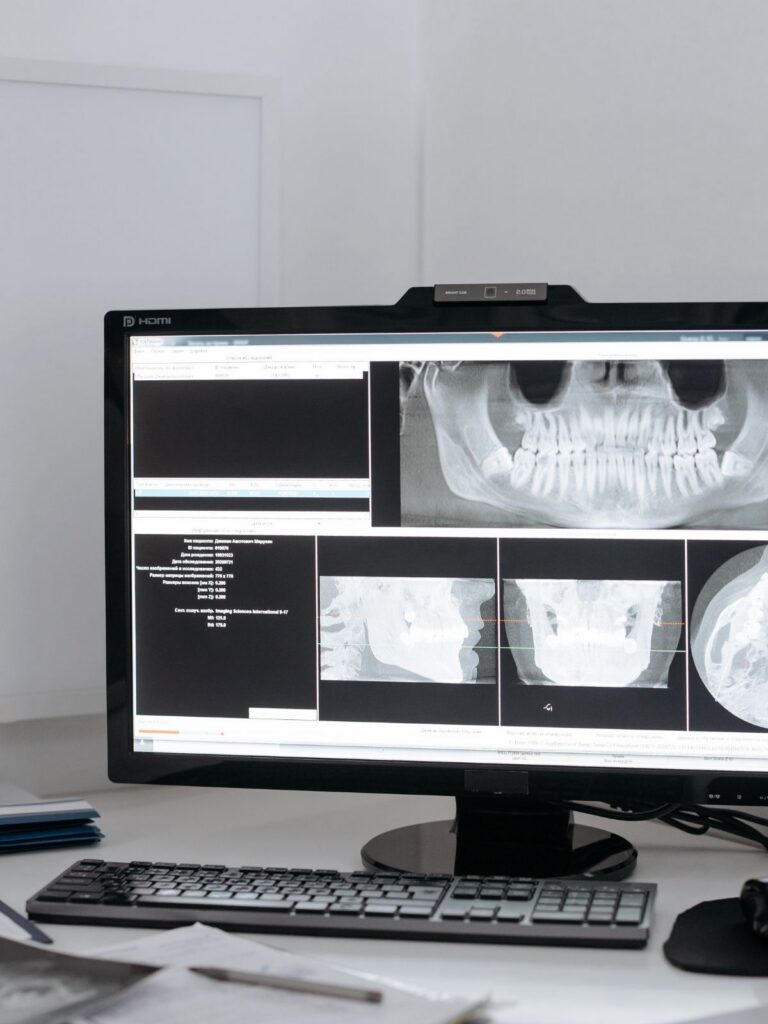
Each one matters for a different reason. If your nasal passages are tight, your mouth may drop open at night to pull in air, and mouth breathing lets the tongue fall down and back, crowding the airway behind it. On a flat image one jaw joint can blur over the other, but in 3D the left and right can be compared directly, which helps when clicking or soreness is worse on one side. The palate is where 3D matters most for adults: MARPE works on the bone of the upper jaw and the seam in the middle, so planning where the anchors go means knowing how much bone is there, and a shadow can’t give you that number. Here’s an honest limit: a scan shows structure, not every symptom. Some airways look narrow and cause no trouble; others look fine and still matter at night. That’s why a scan is best read alongside how you feel, what your partner hears, and what a sleep study shows. For many Brookfield adults, the scan becomes the starting map for airway care, whether that means MARPE, oral appliance therapy, or myofunctional therapy, and seeing that image can be the first time the grinding, the headaches, and the tired mornings finally connect to a shape you can point to.
What Happens During Your Scan
Open, Quick, No Tube
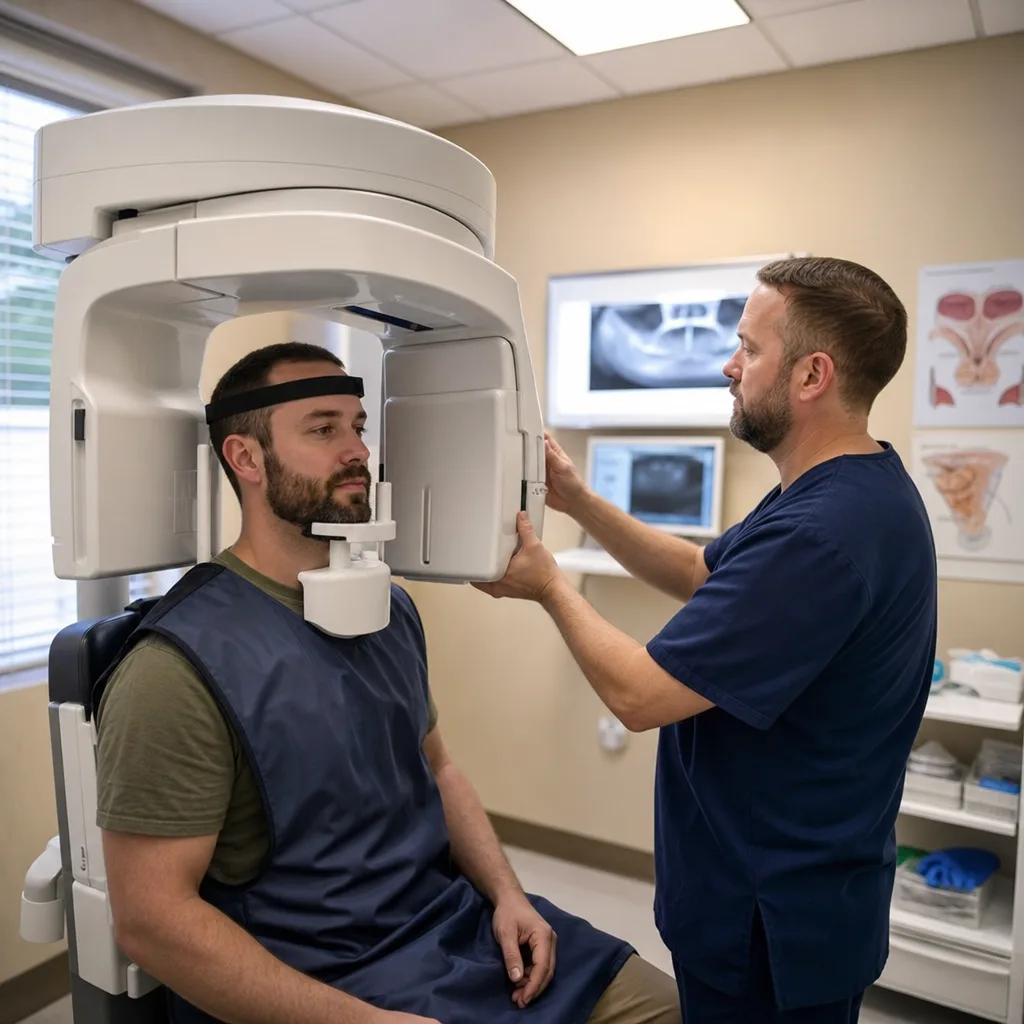
You might picture a long MRI tube and loud banging. A CBCT machine is open, nothing closes around your body, and you sit or stand while a small arm circles your head once. No needles, no dye, nothing down your throat. For many adults, the worst part is the few seconds of trying not to swallow.
- Wear comfortable clothes; there’s no fasting or special prep
- Remove earrings, glasses, hairpins, and removable dental pieces, since metal blurs the image
- Tell us if you’re pregnant or might be
- Bring sleep study results, CPAP data, past imaging, or notes on what your partner hears
How the Scan Connects to TMJ, MARPE, and Treatment Planning
Maybe you’ve chewed through two night guards and your jaw still aches by lunch, and someone told you it’s stress. Stress can play a part, but a night guard protects your teeth without asking why you’re clenching. Here’s the link many adults never hear: when you sleep, your lower jaw can slide back and your tongue goes with it, narrowing the space you breathe through, and some people push the jaw forward or clench to hold that space open, with the strain landing on the jaw joints night after night. So jaw pain and breathing aren’t always two separate problems; they can be one problem showing up in two places, which is why we look at the joints and the airway in the same image, not in two different offices. The scan doesn’t pick a treatment for you, but it helps sort which options suit your anatomy, whether that’s TMJ care, oral appliance therapy, MARPE, myofunctional therapy, adult tongue-tie release, or adult airway orthodontics. Because our CBCT imaging and myofunctional therapy are both in-house here in Brookfield, and we also offer tongue-tie release, MARPE, and oral appliance therapy, the plan can follow the same picture from start to finish.
CBCT matters most before MARPE, because expansion isn’t a simple yes for every adult. In kids, the seam down the middle of the palate is still soft and flexible; as we age it slowly knits together, staying fairly open in some adults and fused tight in others, and you can’t tell which by looking in someone’s mouth, only on a 3D scan. So before anyone talks about expansion, the scan gets read for how mature the palate seam looks, bone thickness where each miniscrew would anchor, how much bone covers the outside of the upper back teeth, where tooth roots sit, and how wide your nasal floor is, since widening the upper jaw also widens the floor of the nose. An honest answer: sometimes the scan shows MARPE isn’t a good fit, with the seam too fused or the bone too thin, and when that happens you deserve to hear it plainly, because other paths like oral appliance therapy, myofunctional therapy, or a surgical opinion may make more sense. One fair note on radiation: CBCT uses X-rays, and the dose is higher than a single bitewing, which is why a scan should answer a real question about your airway, jaw, or palate rather than being routine. You’re always welcome to ask why it’s being taken and what it might change.
See more adult solutions from Untethered Airway Health Center
Frequently Asked Questions About CBCT Imaging in Brookfield
Can I get a CBCT scan without a referral from my doctor or dentist?
Yes, you can come in directly if you have symptoms like snoring, jaw pain, or tired mornings that haven’t been explained. Many adults book after years of being told to just try another night guard or lose weight. The scan gives us a structural starting point even without an outside referral.
Will my regular dentist be able to use the results of this scan?
Yes, you can share your CBCT results with your regular dentist or doctor. The scan creates a 3D model of your airway, palate, and jaw joints that adds detail beyond a standard dental X-ray. That extra detail can help any provider involved in your care see the same picture we do.
How do I know if I need a CBCT scan instead of just a sleep study?
You likely need both, since each one answers a different question. A sleep study shows how your airway behaves while you’re asleep, while a CBCT scan shows the actual shape and width of your airway, palate, and jaw joints while you’re awake. Together they give a fuller picture than either test alone.
What should I bring to help the scan answer my specific questions?
Bring anything that tells your story, like sleep study results, CPAP data, old imaging reports, or notes on what your partner hears at night. That information helps connect what the scan shows to what you’re experiencing. It also helps guide which questions we focus on when reviewing your images together.

In-House Imaging
The scan happens on site at our Water Tower Blvd office, so it’s already part of your airway workup, not a separate trip across town.
The Whole Picture
We read the scan alongside a home sleep study and your own story, so structure and symptoms are weighed together, not in isolation.
Investment
A scan should answer a real question about your airway, jaw, or palate rather than being routine. We explain what it will and won’t tell you first.

Ready to Begin?
If the grinding, the headaches, and the tired mornings have never added up, a 3D look at your airway can finally show the why. Call (414) 935-8460 or request an appointment online at our Brookfield office on Water Tower Blvd.

