


Seeing the airway clearly
CBCT Imaging for Children in Brookfield, WI
A flat X-ray can’t show the airway’s true shape. A 3D scan shows where it narrows and why, so we can look for the root cause behind symptoms that seem unrelated.
What a flat picture leaves out
What a 3D Scan Shows That a Flat X-Ray Can’t
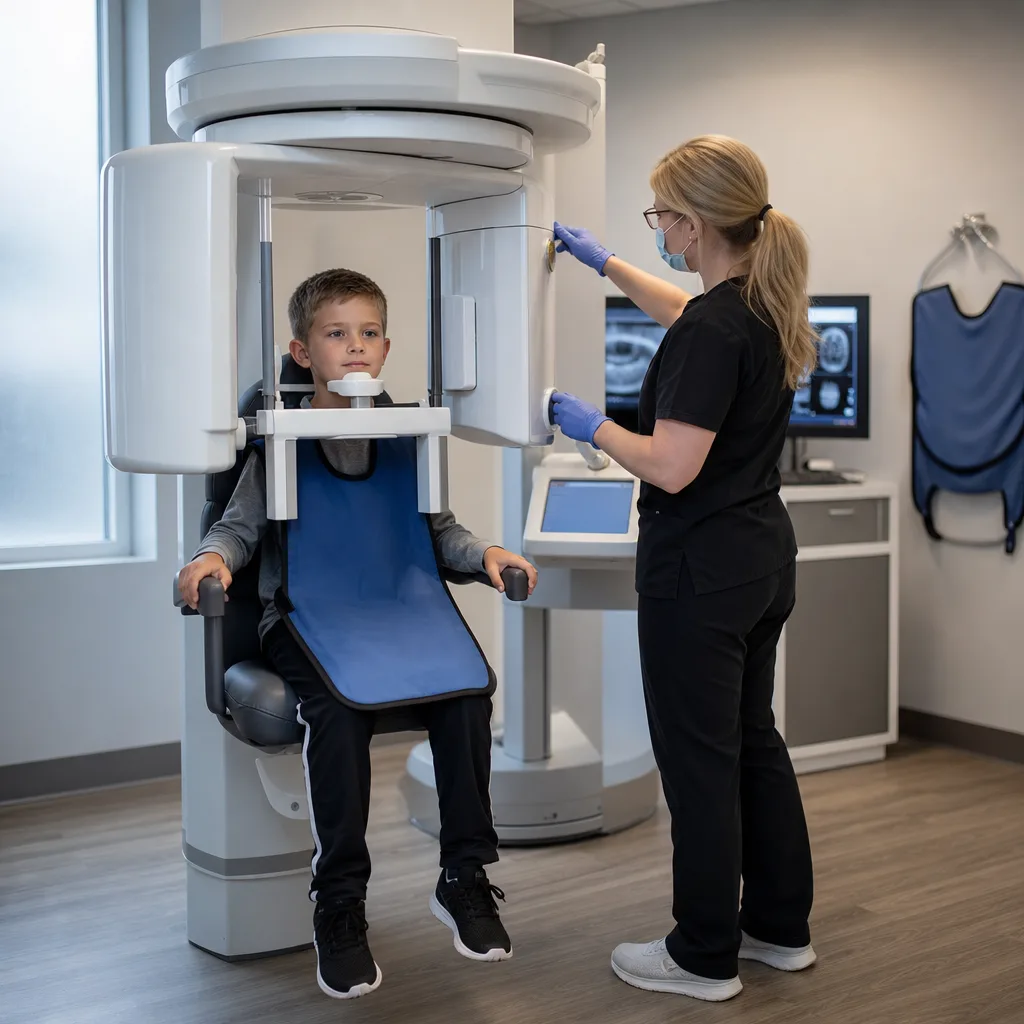
Maybe you’ve already seen your child’s dental X-rays, someone looked them over and said everything looks fine, but your kid still snores, sleeps with their mouth open, and wakes up cranky. That gap is frustrating, and it makes more sense once you know what a flat picture leaves out. A standard X-ray squeezes a three-dimensional head onto a flat sheet, so bones, teeth, and soft tissue stack on top of each other. The airway is a tube running from the nose to the throat, and it can look roomy from the side and still be tight from front to back. CBCT, or cone beam computed tomography, is a 3D scan of the face, jaws, and airway, building a model we can rotate and view in slices from any angle. That lets us see the airway as one whole tube, the narrowest spot and exactly where it sits, the width and shape of the palate, how the lower jaw sits, and teeth still growing in under the gums.

Why does the palate matter so much? The roof of the mouth is also the floor of the nose, so a narrow, high palate can leave less space for air to move through the nose, and a child may breathe through the mouth even after tonsils come out. That’s the part parents rarely hear: mouth breathing, restless sleep, bedwetting, dark circles, and teeth grinding can look like five separate problems, but a 3D view helps us check whether they trace back to one cause, a tight airway that makes breathing harder every single night. A scan has limits you should know, though. It shows structure, not how your child breathes while asleep, and it doesn’t diagnose a sleep problem on its own, which is why a home sleep study can sit alongside the images. We have in-house CBCT 3D imaging at our Brookfield office on Water Tower Blvd, used for airway analysis and treatment planning, so the images that show your child’s airway also guide what comes next, which might mean guided growth with HealthyStart, Myobrace, or Vivos Guided Growth, since we’re certified in all three. For you, that means fewer guesses, and many parents find real relief in finally seeing a reason that matches what they’ve watched at bedtime for years.
Why We Order CBCT for Airway, Tongue-Tie, and TMJ Cases
Maybe your child’s story has more than one thread: nursing hurt as a baby, the snoring started by preschool, and now a teacher calls about a kid who can’t focus while the dentist mentions worn-down teeth from grinding. Each provider looked at one piece, and nobody asked if the pieces connect. We treat tongue-ties, sleep-disordered breathing, and TMJ pain under one roof, because they can share a root in how the tongue, palate, and jaw shape the airway. When a child snores or breathes through the mouth, we want to know where the air gets squeezed, and our in-house CBCT gives us a starting picture to plan from, which helps us weigh HealthyStart, Myobrace, or Vivos Guided Growth. A scan doesn’t diagnose a tongue-tie, though, since that comes from checking how the tongue lifts and rests, but a tongue that can’t rest against the palate may not help it widen as a child grows, so when a tie shows up alongside mouth breathing or a narrow arch, imaging can show whether the airway has felt the effects too.
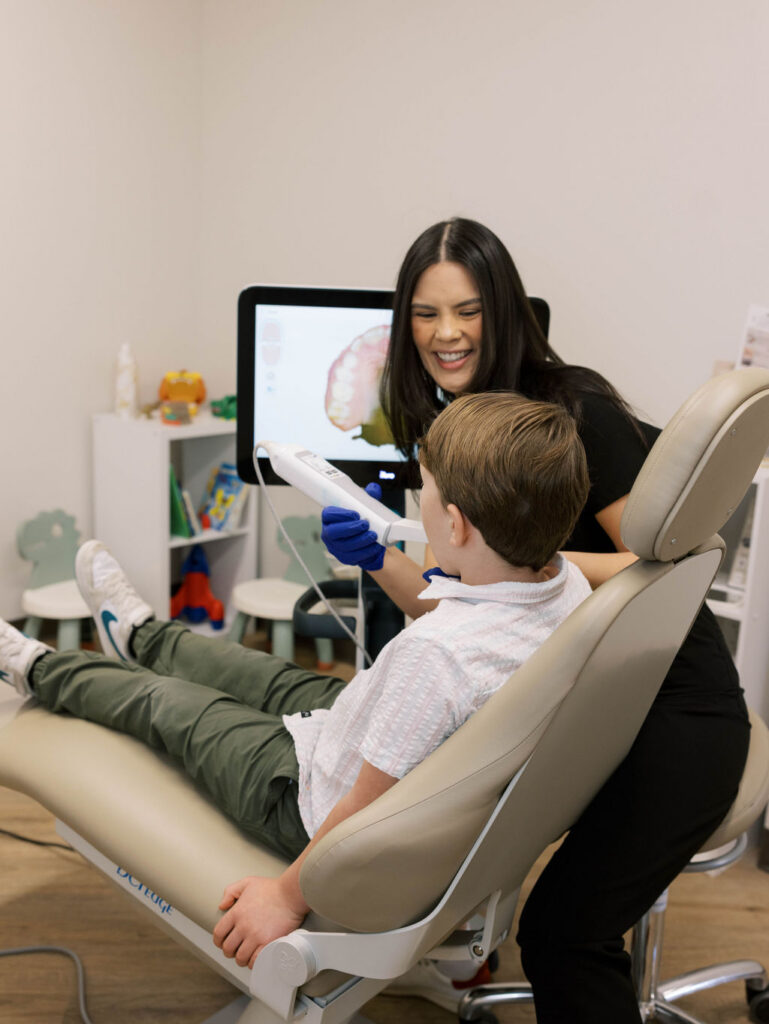
That bigger picture shapes the plan, which may include laser frenectomy for a gentle release plus in-house myofunctional therapy, exercises that retrain the tongue and face muscles. Jaw pain in a child is easy to brush off as growing pains, but clenching and grinding at night can sometimes trace back to a body working hard to keep the airway open; CBCT shows the bony parts of the jaw joint clearly, though it doesn’t show soft tissue like the joint disc well, so it’s one piece of the answer, not the whole thing. A scan should earn its place, since it’s still radiation even at a small dose, and you have every right to ask why it’s needed first. Fair questions for any provider: what question will this scan answer that an exam can’t, how will the results change my child’s plan, can the scan cover only the area you need to see, and can recent images from another office be used instead? If the honest answer is that a scan won’t change anything, it can wait. Families drive in from Elm Grove, Pewaukee, and Waukesha for that kind of clear answer, tired of hearing their child will grow out of it.

What to Expect During the Scan
No Tube, No Needles
A CBCT scan looks nothing like a hospital tube. Your child sits or stands in place while a small arm circles the head once, humming softly, often for less than a minute. No needles, no dye, nothing to swallow, and your child stays awake and comfortable the whole time.
- Practice “statue” at home, holding still for a slow count to 20
- Dress them without metal near the neck, and leave earrings and clips at home
- Bring a favorite toy to hold before and after
- Share any recent images and notes on sleep, snoring, or grinding
When a Child Doesn’t Need a Scan
Maybe you came in ready for a scan because another office suggested one, or you read about CBCT late one night. A scan isn’t the right first step for every child, and we’d rather tell you that plainly. A 3D image answers questions about structure, so if nobody is asking a structural question yet, the scan has nothing to answer. Skipping it, or waiting, makes more sense when your baby is struggling to nurse (a tongue-tie in an infant is checked by watching how the tongue lifts and how feeding goes, which an infant feeding assessment fits far better than a picture of bone); when your child has no airway signs and routine X-rays already cover cavities; when recent images already exist from another provider; when the next step is the same either way, like starting myofunctional therapy; when the real question is about sleep rather than shape, which a home sleep study tracks; or when your child isn’t ready to hold still, since a scared or wiggly child may end up with a blurry image.
Waiting isn’t the same as ignoring it. You know your child better than anyone, and if the snoring gets louder, the bedwetting comes back, or the teacher calls again, that’s new information, so a scan that didn’t make sense this spring might make sense by fall. We also don’t want you to feel brushed off a second time: many parents have heard “they’ll grow out of it” for years, and hearing that a scan isn’t needed right now is different, because it means the exam, your child’s history, and what you’ve noticed at home already gave us enough to go on. Not needing a scan can be good news; sometimes a child’s palate has room, the tongue moves freely, and sleep is quiet, and if that’s your child, you should hear it clearly without a test attached. One fair note on cost: a CBCT uses X-rays and is handled as a medical image, with the guiding rule being the smallest dose that still gets a useful picture, and since the same scan can be billed as dental or medical depending on your plan, calling your insurance before the visit is the surest way to know. We can’t promise what your plan will do, and you shouldn’t feel rushed into any of it.
See more children’s care from Untethered Airway Health Center
Frequently Asked Questions About Children’s CBCT Imaging in Brookfield
Is a CBCT scan safe for my child’s radiation exposure?
A CBCT scan uses a small dose of radiation, and the guiding rule in dental imaging is to use the smallest dose that still gets a useful picture. For kids, that matters even more since they’re still growing, which is why scan size and settings can change from child to child. A scan should only happen when the answer will change your child’s plan, so it’s fair to ask what question the scan will answer before your child sits for one.
How long does a CBCT scan take for a child?
The scan itself runs for a short time, often less than a minute, while a small arm circles your child’s head. Your child sits or stands in place and stays awake the whole time, with no tube, needles, or dye involved. The hardest part is usually holding still, since any wiggle can blur the image and mean a repeat scan.
Can I get a copy of my child’s CBCT images for other doctors?
Yes, you can request a copy of the images for your child’s other providers, like a pediatrician, ENT, or speech-language pathologist. Having those images on hand can help avoid a repeat scan somewhere else, which means less radiation and less money spent twice. It’s worth asking for a copy before you leave your child’s visit.
In-House Imaging
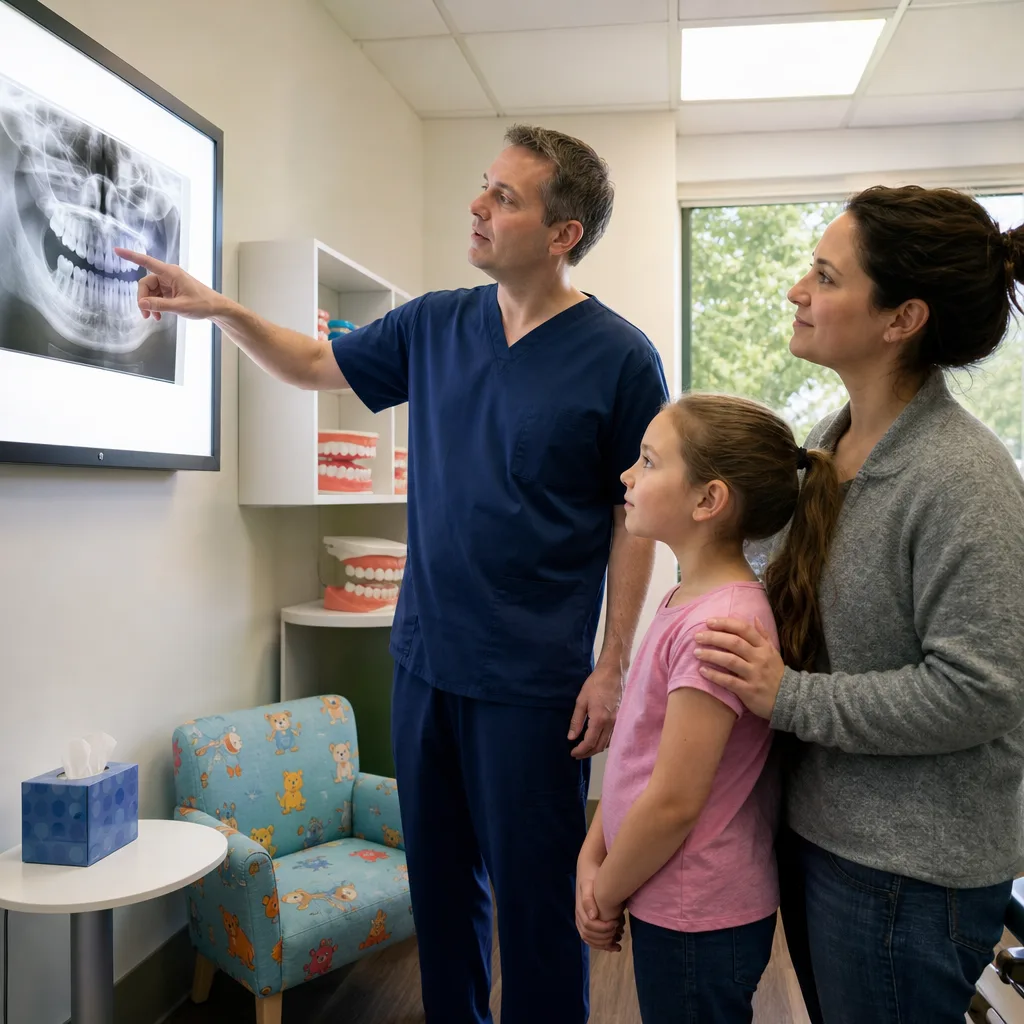
The scan happens on site at our Water Tower Blvd office and guides the plan directly, from guided growth to a tongue-tie release.
The Lowest Dose
We use the smallest dose that still gets a useful picture and only scan when the answer will change your child’s plan.
Investment
Costs vary by scan size and your plan, which may treat it as dental or medical. We explain what’s included before anything happens.
Ready to Begin?
If the snoring, mouth breathing, and rough mornings have looked like separate problems for years, a 3D look at your child’s airway can show whether they share one cause. Call (414) 935-8460 or request an appointment online at our Brookfield office on Water Tower Blvd.

