


Crowded teeth are often the last sign, not the first
Children’s Airway Orthodontics in Brookfield, WI
Snoring, mouth breathing, bedwetting, and trouble focusing can all point to a narrow palate or a low-resting tongue. It’s worth checking the airway, not just the bite.
The airway, not just the teeth
Signs a Child’s Airway Needs a Look
It’s 11pm and you can hear your child snoring from the hallway, their mouth hanging open on the pillow, and in the morning the dark circles are back and they’re cranky before breakfast. Maybe you’ve brought it up and been told they’ll grow out of it, or that braces can wait until all the adult teeth come in. That advice is common and isn’t meant badly, but it looks at the teeth and skips the breathing. Here’s the link: when a child breathes through their mouth, the tongue drops low instead of resting on the roof of the mouth, and that resting tongue helps shape the upper jaw as a child grows. Without it there, the palate can grow narrow and high, which leaves less room for teeth and less room for air through the nose, so the crowding and the snoring may share one cause. Parents often notice snoring or pauses in sleep, sleeping with the mouth open, bedwetting after being dry, grinding, dark circles, morning headaches, a teacher’s call about focus, crowded teeth or a narrow smile, picky or slow eating, and lips that rest apart during the day.
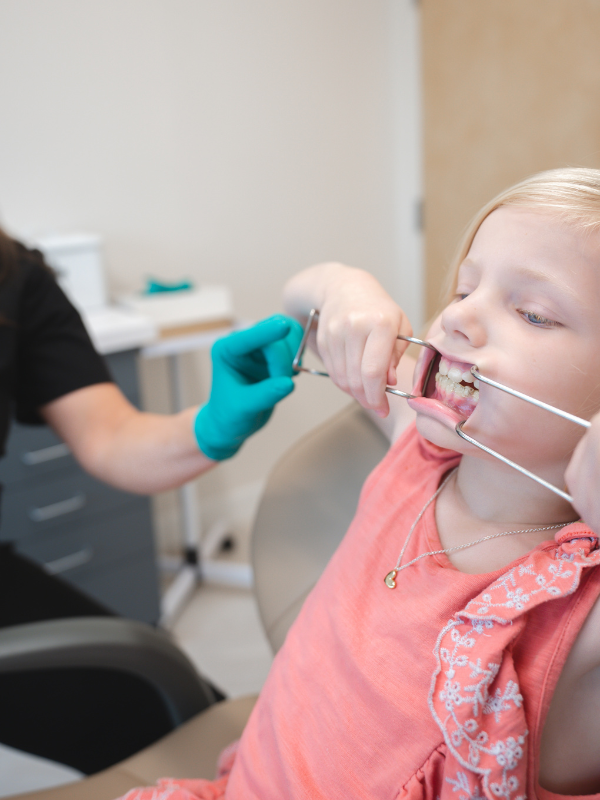
One sign on its own doesn’t mean something’s wrong. Kids snore with a cold, and plenty wet the bed for a while then stop. It’s the pattern that matters, especially when several signs show up together and stick around. Some families have already been through tonsil surgery and still hear mouth breathing at night; that’s hard, and it’s not your fault. Tonsils can be one piece of the puzzle, but they don’t change the shape of the palate or where the tongue rests. That’s why we look past the teeth. Our in-house CBCT imaging, a 3D X-ray scan, shows us the airway rather than just a flat picture of the bite, so we can see whether a narrow palate or a low tongue might be part of the story. And if tongue posture turns out to matter, help is right here in our Brookfield office: myofunctional therapy, simple exercises that retrain the tongue, lips, and face, is something we provide in-house rather than referring out.
Why Grinding and Bedwetting Point Back to Breathing
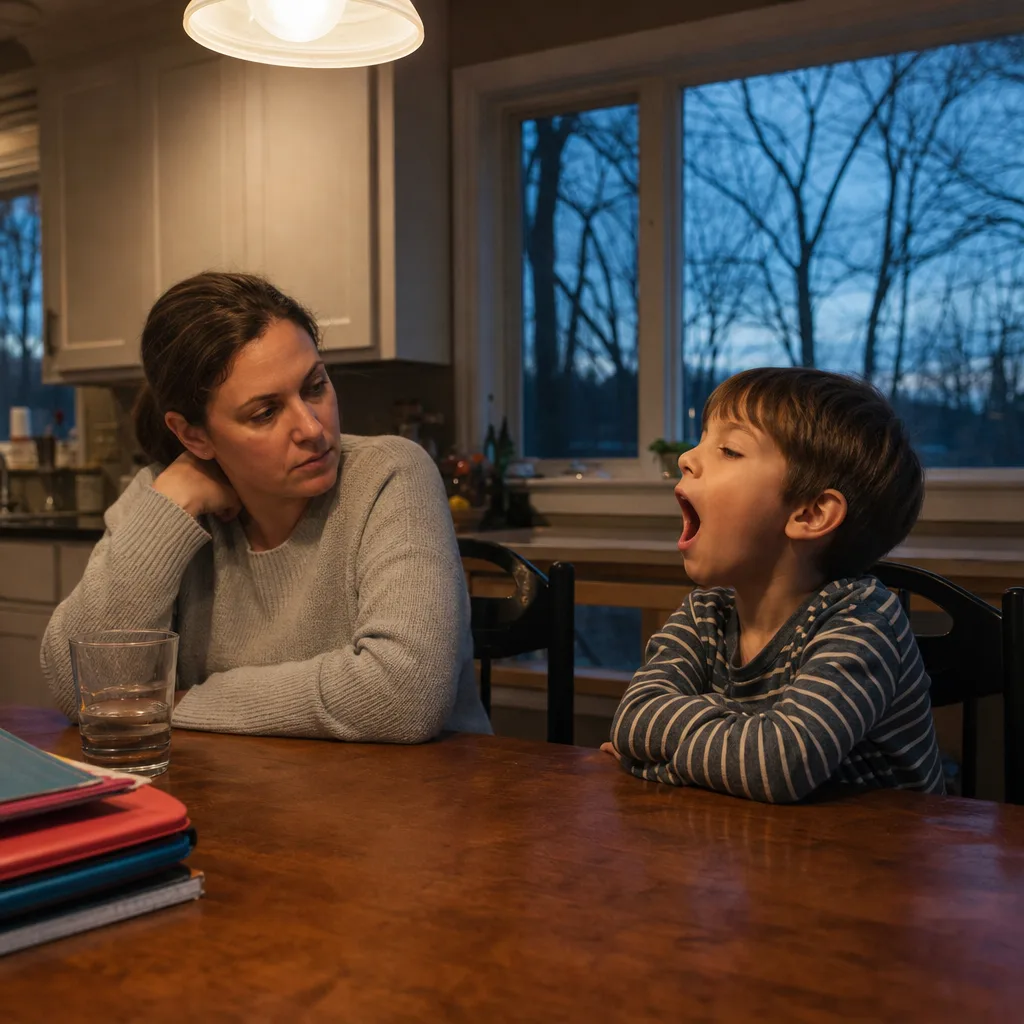
The teacher calls again, your child can’t sit still after lunch, that night you hear grinding through the wall, and by morning the sheets are wet. You’ve probably taken each problem to someone different, a sticker chart for the bedwetting, a mouth-guard talk for the grinding, maybe an attention screening, and each answer made sense on its own, but nobody asked how your child breathes at night. Here’s the thread: a child who struggles to breathe in sleep doesn’t get deep, steady rest, and their body keeps working all night just to keep air moving, which shows up in ways that look unrelated during the day. Grinding may be the body’s way of pushing the jaw forward to open the airway a little, so the clenching can be a response to the problem, not the problem itself. Broken, shallow sleep can make it harder for a child’s brain to notice a full bladder. And tired kids don’t always look sleepy; many get wiggly, short-tempered, or distracted instead, which can look a lot like a behavior problem.
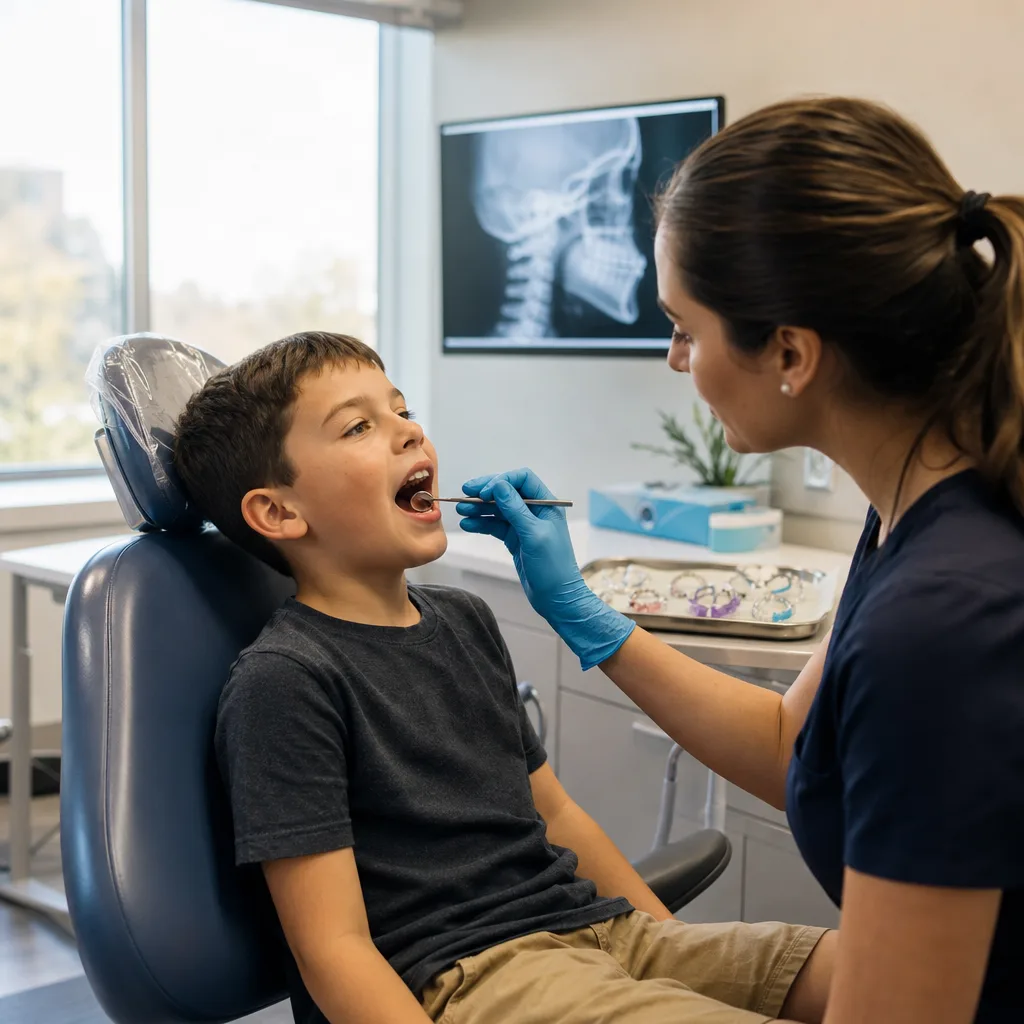
None of these signs alone proves an airway problem, since kids grind and wet the bed for lots of reasons, but when several show up together it makes sense to rule breathing in or out first rather than treating each symptom one at a time. That’s where a home sleep study helps: your child sleeps in their own bed while the test tracks their breathing, and paired with the CBCT scan it gives a much fuller picture than looking at teeth alone. If breathing turns out to be part of the story, we aim treatment at the cause while your child is still growing. We’re certified providers of HealthyStart, Myobrace, and Vivos Guided Growth, guided-growth appliances that work with a child’s natural development, and our in-house myofunctional therapy can support them when tongue habits need retraining. We can’t promise which symptoms will change, since every child is different, but looking at the airway first means you’re no longer chasing the same problems in circles.
What an Airway Evaluation Looks At
The Whole Child at Once
The goal isn’t to find something to fix. It’s to find out whether breathing is driving what you’re seeing, and where things might be tight. Some of this we can see from the chair; some we can’t, which is where the in-house CBCT scan and a home sleep study turn a parent’s hunch into something we can measure.
- How your child breathes at rest, and whether air moves through the nose or mouth
- Where the tongue rests and how far it lifts, and the shape of the palate
- How the jaws are growing, plus chewing, swallowing, and head posture
- Sleep and daytime clues, and past care like tonsils, allergies, or therapy
When a Child Doesn’t Need Airway Orthodontics Yet
Not every snore or crooked tooth means a child needs airway orthodontics, and we’d rather tell you that plainly. Some things look like airway signs but often have a simpler reason. Waiting, or calling someone else first, makes more sense when snoring only shows up with a cold or allergies and clears once your child is well, when your child breathes through the nose during the day and wakes rested (crowded teeth alone don’t mean an airway problem), when bedwetting is the only sign with no snoring or daytime tiredness, when there are just gaps or a crooked baby tooth here and there (spacing in baby teeth is normal), when something came on fast like a fever or ear pain (your pediatrician is the first call), or when your family can’t take on daily practice right now. On that last point, guided growth isn’t something that just happens to a child: appliances get worn and exercises get practiced at home, so if a new baby, a move, or a hard season has everyone stretched thin, it’s okay to wait, because starting when you can follow through beats starting and stopping.
Season matters too. Long Wisconsin winters bring a lot of colds and stuffy noses, so snoring that shows up in January and fades by spring may be tracking the season, not the shape of the jaw. A simple way to sort it out at home: pick two weeks when your child is healthy, and each morning note whether they snored, slept with their mouth open, or woke rested. Mostly quiet nights and good mornings means you can likely keep watching; the same signs night after night is worth a closer look. It’s also fine if an evaluation comes back clear, since if your child’s tongue lifts well, their palate has room, and their nights are quiet, they may not need us at all, and regular checkups plus maybe a traditional orthodontist later could be all they need for straight teeth. If you were told to wait it out, that advice isn’t always wrong, just incomplete when the signs keep stacking up; the real question is whether anyone checked the breathing before saying so. We work alongside speech-language pathologists, occupational therapists, and bodyworkers throughout Southeast Wisconsin, so if your child already sees one, their notes help fill in the picture, and families drive in from Pewaukee, Waukesha, and New Berlin, with Friday visits available by appointment.
See more children’s care from Untethered Airway Health Center
Common Questions About Children’s Airway Orthodontics in Brookfield
What age should my child be for an airway evaluation?
There isn’t one fixed age that’s right for every child, since guided growth works by using the years your child is still growing; evaluation around age 7 often captures Wisconsin children during an ideal growth phase. The earlier a narrow palate or low tongue posture is caught, the more those natural growth years can work in your child’s favor. Many Brookfield parents first come to us after noticing restless sleep, mouth breathing, or bedwetting linked to airway problems. If you’re noticing these signs now, it’s worth having the airway checked rather than waiting for all the adult teeth to come in.
Is this different from regular braces?
Yes. Traditional orthodontics focuses on tooth position, while airway orthodontics develops proper jaw dimensions that support breathing. We aim to create a healthy smile by establishing the right foundation, not by forcing teeth into a restricted space.
Will my child need a tongue-tie release before starting treatment?
Not always. During your evaluation we check whether the tongue can lift and rest on the roof of the mouth. If a tight band of tissue is holding it down, our team can perform a laser frenectomy, but many children do fine starting with myofunctional therapy instead. The right starting point depends on what the evaluation shows, not a one-size-fits-all rule.
How long does treatment take?
Children typically complete Phase 1 expansion within 12 to 24 months, with breathing improvements often noticeable within 8 to 12 weeks. Treatment length depends on your child’s individual growth pattern and the severity of any airway restriction.
Will my child need regular braces later?
Children who receive early airway orthodontics often avoid comprehensive braces entirely, or need only minor refinement during the teenage years. Proper jaw development creates natural space for permanent teeth to align.
Is treatment comfortable?
Modern expansion appliances cause minimal discomfort, with most kids adjusting within three to five days. Our gentle protocols respect natural growth rather than forcing rapid changes, keeping children comfortable throughout treatment.
Can my child keep seeing their speech or occupational therapist during treatment?
Yes, and we encourage it. We already work alongside speech-language pathologists, occupational therapists, and bodyworkers across Southeast Wisconsin. If your child has notes from a provider they already see, bring those along so we can fold them into the full picture of your child’s care.

Airway First
We check how your child breathes with in-house 3D imaging and a home sleep study, so treatment aims at the cause, not just the crowding.
Guided Growth
Certified in HealthyStart, Myobrace, and Vivos Guided Growth, with in-house myofunctional therapy to retrain tongue habits.
Scheduling
Appointments scheduled around school, with Friday visits available by appointment for families driving in from Pewaukee, Waukesha, and New Berlin.

Ready to Begin?
If the snoring, the grinding, and the rough mornings keep stacking up, the real question is whether anyone has checked your child’s breathing. Call (414) 935-8460 or request an appointment online at our Brookfield office on Water Tower Blvd.

