


Finding the real cause
Pre-Orthodontic Treatment for Kids in Brookfield, WI
Crowded teeth and noisy breathing often grow from one root: an upper jaw that didn’t get enough room to develop. We start with breathing, not just the teeth.
One cause, two symptoms
Crowded Teeth and Noisy Breathing Share One Cause
Maybe it started at a routine cleaning. The hygienist said your son’s teeth look crowded and to come back for braces when he’s older. Then that night you heard him snoring through his bedroom door. Two separate problems, or so it seemed. Most parents are told to wait for the adult teeth to come in, and that advice isn’t careless, it just looks at the teeth and not at how your child breathes, and breathing is where the story often starts. Here’s the why: your child’s tongue is meant to rest up against the roof of the mouth, gently pressing outward while the face grows, and that steady pressure helps the upper jaw grow wide. But when the nose is stuffy or the tongue is tied down, the mouth falls open, the tongue drops to the floor, and without its pressure the upper jaw can grow narrow and high. The roof of the mouth is also the floor of the nose, so a narrow palate can mean less room for teeth and less room for air: same root, two symptoms.
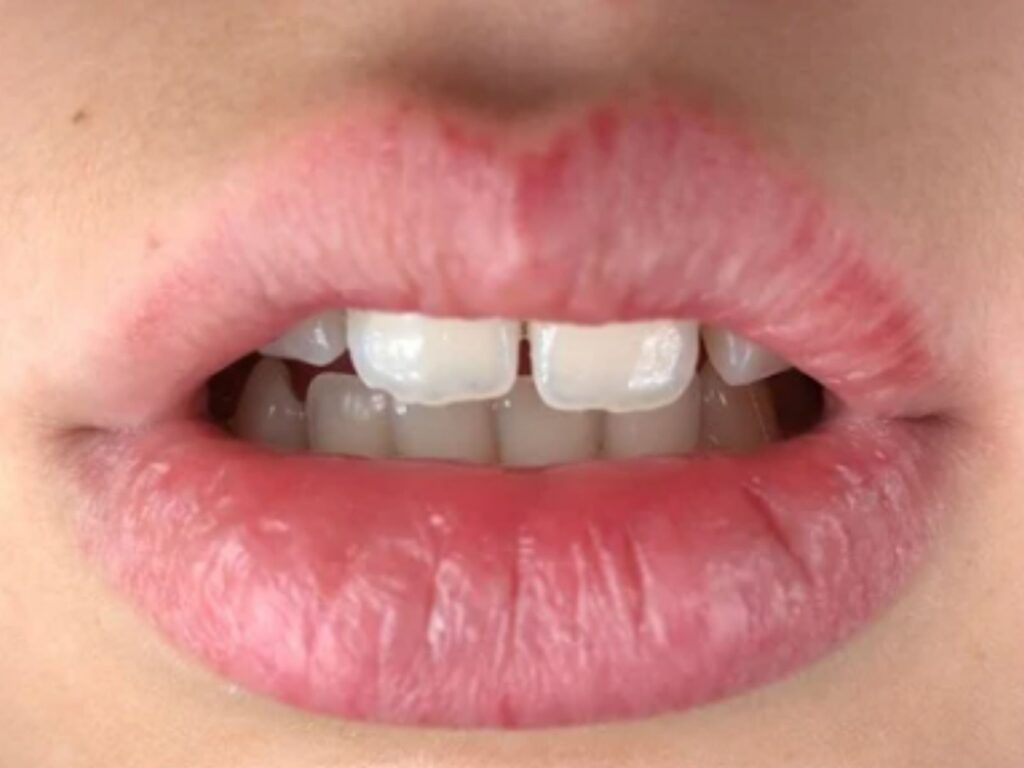
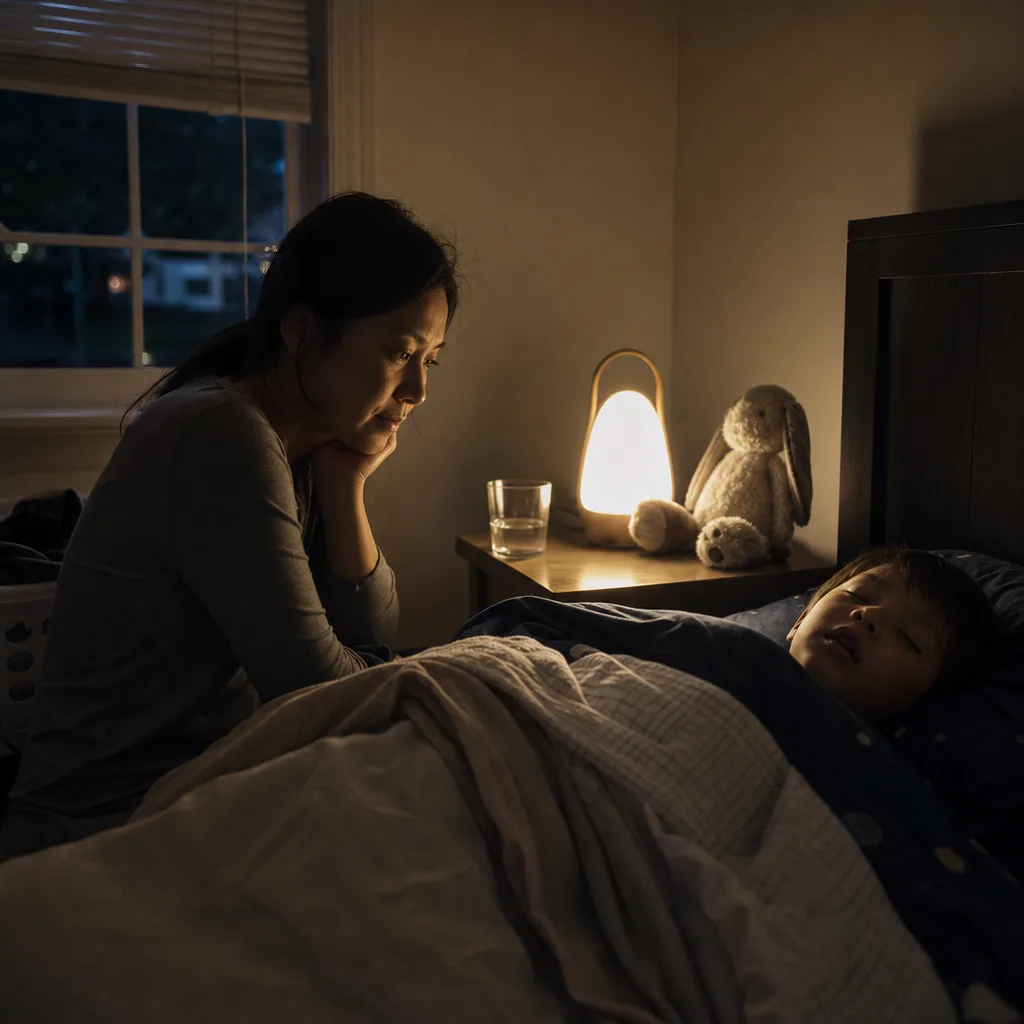
That’s why crowding often travels with signs that don’t look dental at all: snoring or heavy breathing at night, sleeping with the mouth open or a damp pillow, night grinding, bedwetting that hangs on, dark circles, waking cranky or hard to get moving, and a teacher’s call about focus. None of these prove an airway problem alone, but when two or three show up next to crowded teeth, it’s worth looking deeper, because your child isn’t being difficult, their body may be working hard just to breathe at night. This is also why braces alone can’t always finish the job: braces line teeth up, but they don’t change where the tongue rests or how your child breathes asleep, so if the pattern that narrowed the jaw keeps going, teeth can drift again later. So we start with breathing, not just teeth. Our in-house CBCT imaging gives us a 3D view of your child’s airway and jaw, showing how wide the palate is and how much room there is for air, which tells us whether crowding is the whole story or a sign of something underneath.
Signs a Child May Need an Evaluation Now
You’re watching cartoons on a Saturday morning, your daughter’s lips hang open, and you can hear her breathing from across the couch. She isn’t asleep, just sitting there, and you start to wonder if this is something more. Maybe you’ve already asked and been told she’ll grow out of it, or to come back when more adult teeth are in, but you know your child and you’re allowed to want a closer look. Alongside the nighttime signs, daytime and history clues can tip the decision: lips apart while awake, a slow messy eater who avoids chewy foods, the tongue pushing forward when swallowing, thumb sucking or pacifier use well past the toddler years, lisping or sounds a speech therapist flagged, a tongue-tie in the past whether released or not, tonsils or adenoids already removed but mouth breathing that never stopped, and a crossbite where upper back teeth sit inside the lower ones.
That point about tonsils deserves a word. Many parents tell us surgery was supposed to fix the breathing, and when it didn’t, they felt stuck. If that’s you, it may mean the tongue or the shape of the palate is part of the picture. So why not just wait? Pre-orthodontic care works with growth, not against it: a child’s upper jaw is still growing, and that growth is what guided-growth appliances work with, so once growth slows the options change, and looking early simply keeps more doors open. Waiting is reasonable when your child breathes through the nose day and night, sleeps quietly, wakes rested, has steady energy, and only a tooth or two is a little crooked; not every crooked tooth points to an airway problem. If you’re on the fence, an evaluation isn’t a commitment to treatment, it’s a way to get real answers instead of guessing. If treatment makes sense, we’re certified HealthyStart, Myobrace, and Vivos Guided Growth providers and offer myofunctional therapy in-house, so you won’t need to find a separate therapist across town. We also work with speech-language pathologists, occupational therapists, and bodyworkers across Southeast Wisconsin, so your child’s care can stay connected.
How an Evaluation Finds the Cause
It Asks Why, Not Just What
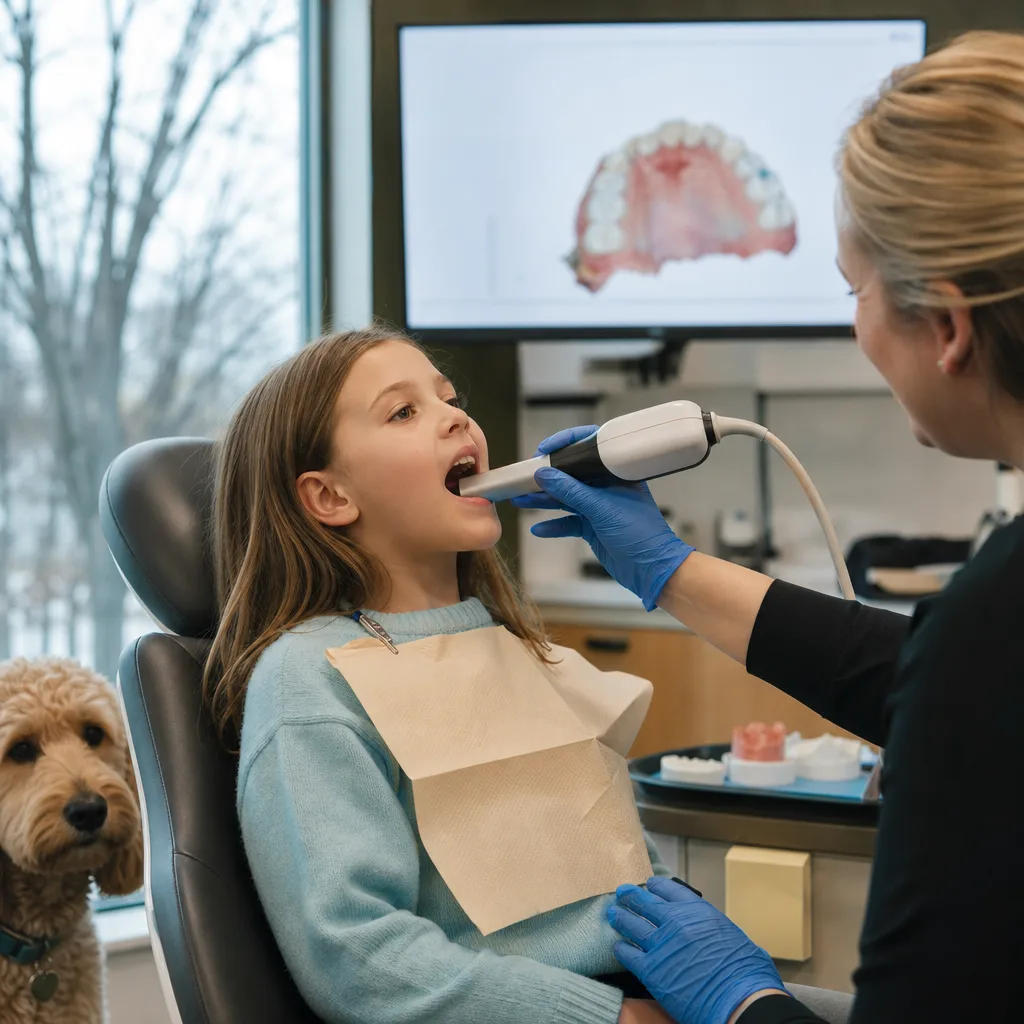
An airway evaluation doesn’t ask “are the teeth crooked?” It asks why the jaw is narrow, why the lips are apart, and why your child is tired after a full night in bed. Our in-house CBCT 3D imaging gives us a picture to point to, so you’re not left with a hunch, and home sleep testing is available when sleep is part of the story.
- The airway itself, and the width of the palate and jaw
- Where the tongue rests, and whether a tongue or lip tie holds it down
- Swallowing and lip seal, and whether the tongue pushes forward
- Sleep, tested in your child’s own bed when needed
When to Watch and Wait
It’s a gray week in March. Your son has had a runny nose for days, and now he’s snoring, and you lie awake wondering if this is the thing you’ve been reading about. Maybe not. A cold, a sinus bug, or a rough allergy season can make any child snore and breathe through the mouth for a while, and if the quiet nights come back once the stuffy nose clears, that points to a passing problem, not a pattern. The same goes for teeth that look odd for a season, since new adult front teeth often come in big, gappy, or crooked next to small baby teeth, which can look alarming in school photos but is a normal part of growing up. Watching and waiting usually makes sense when snoring showed up with a cold and faded, when crooked teeth are the only thing you’ve noticed and nights are quiet, when your dentist has checked the bite and isn’t worried about the jaw, or when your child isn’t ready to wear something yet, since appliances only help when worn and a nightly power struggle helps no one.
Watching isn’t the same as ignoring; it means paying attention in a way that gives you real answers later. Take a short phone video of your child sleeping now and then, peek in after they fall asleep to note whether the lips are closed or open, check the pillow for drool, jot down how they wake up, and notice whether snoring comes back after the cold is long gone. Bring those notes to your next dental checkup, because a few weeks of real observations can tell a provider more than one short visit. Waiting stops making sense when the signs stack up and stay, like snoring that outlasts the cold, lips that hang open all day, or new signs like bedwetting or a teacher’s note joining the old ones. Your pediatrician is still the right first call for a fever or sudden illness; airway care doesn’t replace that, it asks a different question about how your child’s face and jaw are growing around the way they breathe. There’s no shame in waiting and no shame in asking; what matters is deciding from what you see at home. Families drive in from Elm Grove, Pewaukee, and across Waukesha County, and when a tight tongue-tie is part of the picture, our team is trained in laser frenectomy, with therapy before and after to help the tongue use its new freedom.
See more children’s care from Untethered Airway Health Center
Common Questions About Pre-Orthodontic Treatment in Brookfield
Does my child really need an expander if her teeth look crowded?
Not always, and an evaluation is the only way to know for sure. Crowding alone does not mean your child needs an expander. We look at the airway, the palate width, and how your child breathes before recommending any appliance. Sometimes the teeth are crowded but the jaw and breathing are fine, and a regular dental checkup is all that’s needed. Other times the crowding is tied to a narrow palate that is also limiting the airway, and a guided-growth appliance makes sense. The only way to tell the difference is to look at the whole picture, not just the teeth.
At what age should I bring my child in for a pre-orthodontic check?
Bring your child in as soon as you notice crowded teeth alongside breathing signs like snoring or mouth breathing, even before all the adult teeth arrive. Pre-orthodontic care works best while the upper jaw is still growing, since guided-growth appliances rely on that growth to widen the palate. Once growth slows later in childhood, the options narrow. Looking early does not commit you to treatment; it simply keeps more paths open while your child’s jaw still has room to respond.
How do the appliance and the exercises work together?
They do different jobs and are meant to be paired. A guided-growth appliance shapes how the jaw and teeth grow while it’s in the mouth, but it can’t teach your child where to rest the tongue; that’s the job of myofunctional therapy, short exercises like tongue lifts and swallowing drills practiced at home. Together they target the breathing pattern that narrowed the jaw in the first place, and because we offer therapy in-house, the person coaching your child’s tongue talks with the team watching the jaw grow.
What does the daily routine ask of our family?
Steady nightly wear, a few minutes of exercises most days, and patience with the slow pace of growth. It’s not a quick fix, and results depend on your child’s growth and how consistently the plan is followed, so we can’t promise a specific outcome or timeline. What we can do is explain each step and why it’s there, and adjust the plan if it doesn’t fit your real evenings.

Airway First
We use in-house 3D imaging to see the airway, palate, and jaw before recommending anything, so we treat the cause, not just the crowding.
Guided Growth
Certified in HealthyStart, Myobrace, and Vivos Guided Growth, with palatal expansion and the Myo Munchee available when they fit.
In-House Therapy
Myofunctional therapy and laser frenectomy are done here, so the tongue work and the jaw work stay under one roof.
Ready to Begin?
If the crowding and the snoring keep showing up together, an airway evaluation can tell you whether they share one cause, while your child’s jaw still has room to respond. Call (414) 935-8460 or request an appointment online at our Brookfield office on Water Tower Blvd.

