


The missing night, filled in
At-Home Sleep Testing in Brookfield, WI
A home sleep study shows what your airway does at night, in your own bed. Paired with a 3D look at the airway itself, it helps explain why you wake up feeling the way you do.
What you can’t see while you sleep
What a Home Sleep Study Checks and Why It Matters
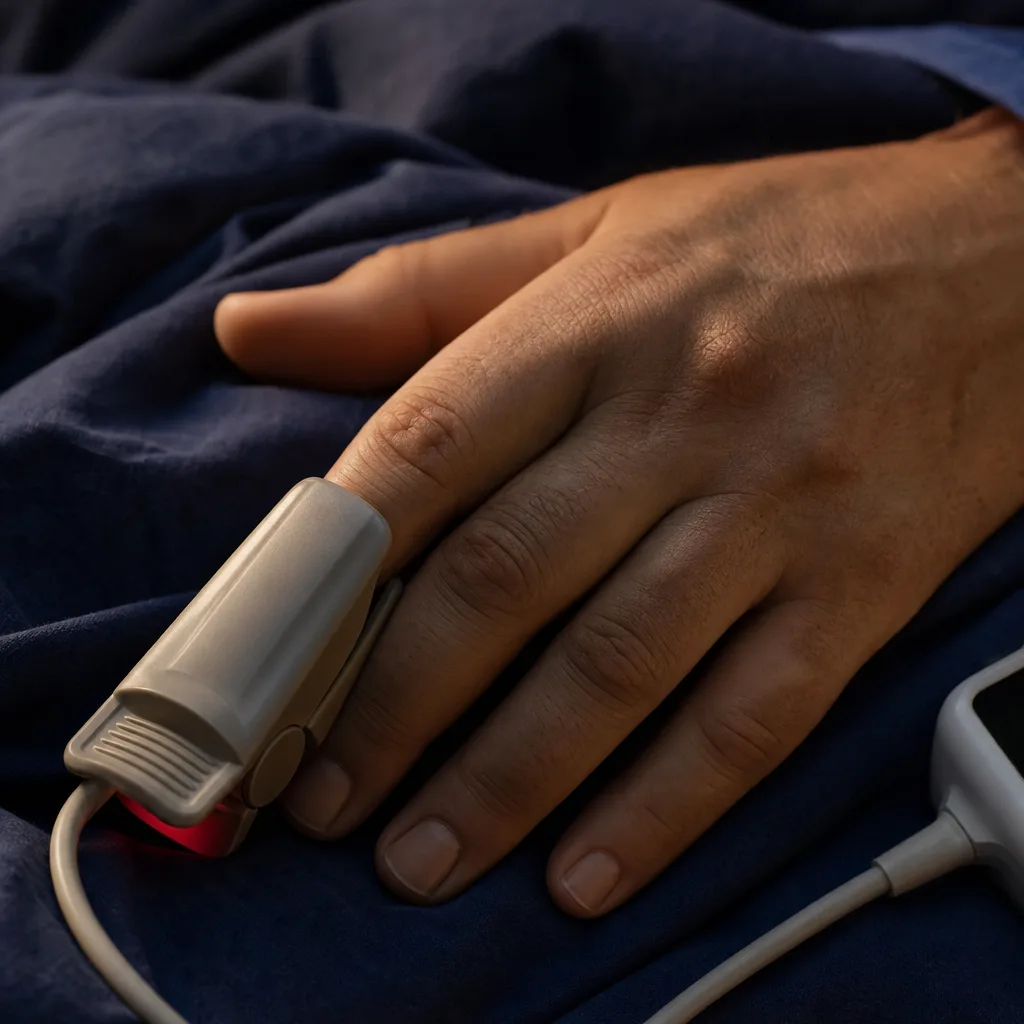
You wake up with a headache again. Your jaw aches. Your partner says you stopped breathing for a while, then gasped, but you don’t remember any of it. That’s the hard part about nighttime breathing problems: they happen while you’re asleep, so you only feel what’s left over in the morning. A home sleep study fills in that missing night. You wear a small set of sensors at bedtime, sleep in your own bed, and in the morning the recording shows what your body was doing for all those hours. Most tests look at a handful of signals, each answering a different question: airflow (is air moving freely, or does it slow and stop), breathing effort (is your chest still working even when little gets through), blood oxygen (does your level dip when breathing pauses), heart rate (does it speed up as your body catches its breath), and snoring and body position (is breathing worse on your back than your side).
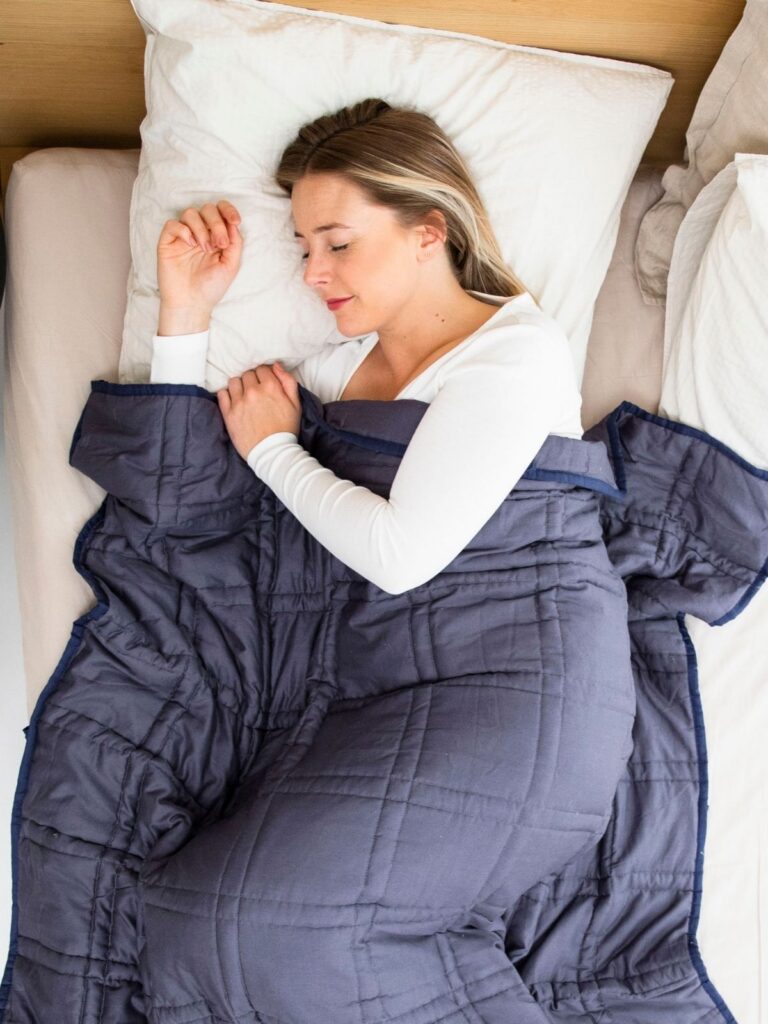
Those signals add up to a few key terms. An apnea is a pause in breathing; a hypopnea is breathing that gets very shallow, often with a drop in oxygen; and the AHI, or apnea-hypopnea index, counts how many of those events happen per hour. Here’s why it matters: every pause is a small emergency for your body, and your brain pulls you out of deep sleep just enough to start breathing again. You don’t wake all the way, so you don’t remember it, but you lose the deep, restful sleep you needed. That’s how so many “unrelated” problems trace back to breathing, the morning headaches, the grinding, the dark circles, the fog at work no matter how early you went to bed. A sleep study tells you what is happening, but not always why, and that’s where we look further. Our in-house CBCT imaging, a 3D scan of your airway and jaws, shows the shape and size of the space you breathe through. Put the two together and the picture gets much clearer: a narrow palate, a tongue that rests too low, or a jaw that sits too far back can all crowd the airway at night, and knowing which one is in play changes what makes sense next.
Signs Worth Testing For
Your partner has been sleeping in the guest room for months and you tell yourself it’s fine, but you still wake with a dry mouth and a dull headache, and coffee barely touches it. Maybe someone told you to lose a few pounds or sleep on your side, or a doctor said it’s normal to snore as you get older. If that never felt like a real answer, trust that feeling. For adults, we listen for loud snoring or a partner who notices pauses and gasps, waking with headaches or a sore jaw or worn-down teeth, a dry mouth or sore throat most mornings, getting up to use the bathroom more than once a night, and feeling foggy or drowsy in the afternoon even after a full night in bed. None of these alone proves anything, but they share one thread: when the airway gets crowded at night, your body keeps working to pull in air, and that effort shows up as clenching, broken sleep, and heavy mornings.
Kids show it differently. The phone call from a teacher says your child can’t sit still or focus; at home you hear snoring through the bedroom door and notice their mouth hangs open while they sleep. You may have been told they’ll grow out of it, or that the tonsils came out so the problem should be gone, yet the mouth breathing is still there. Watch for snoring most nights, sleeping with the mouth open or the head tipped back, bedwetting past the usual age, dark circles that don’t fade, night grinding, and trouble focusing or acting wired instead of tired. A tired child doesn’t always look sleepy; many look restless. For adults, testing is often the first step toward a real plan, and if results and imaging point to a narrow palate, our Brookfield airway options include MARPE, a way to widen the palate without jaw surgery, along with an oral appliance or in-house myofunctional therapy. You don’t need every sign on these lists to ask questions; two or three that keep coming back is enough reason to find out what’s happening at night, and knowing is a lot easier than guessing.
How the Test Night Works
In Your Own Bed
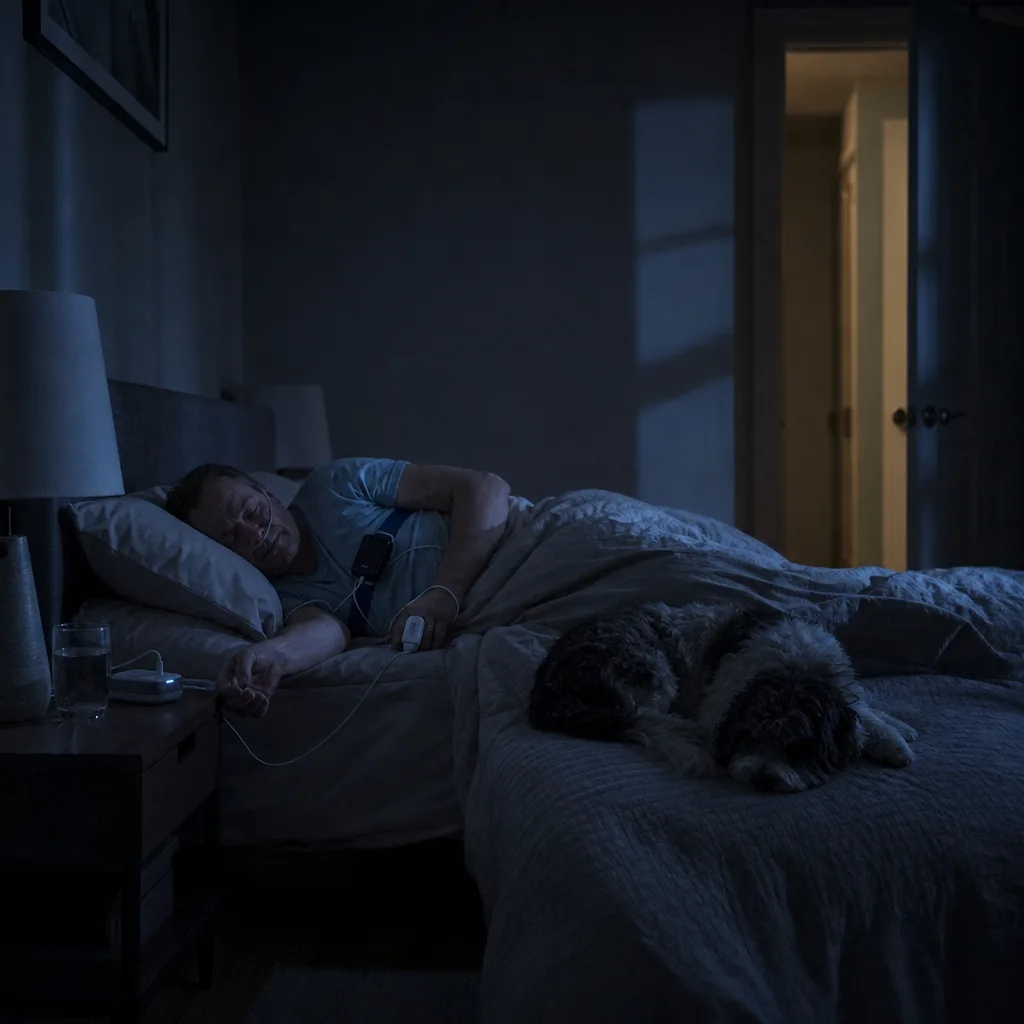
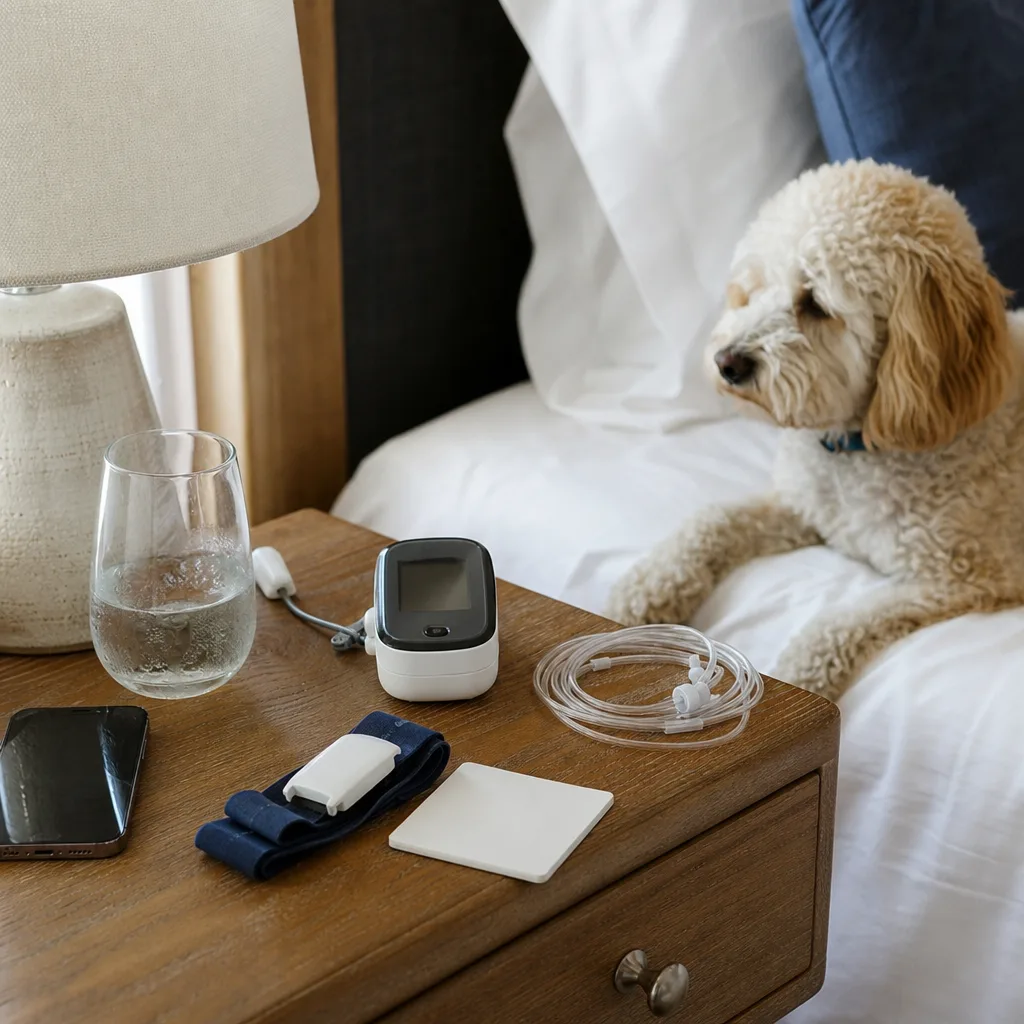
You sleep in your own bed, with your own pillow, in your own quiet room, so the night you record looks more like your real nights. You put the sensors on yourself before bed, with no needles and no gel on your scalp. If you can put on a watch and a seatbelt, you can do this.
- A soft tube under your nose to track airflow
- A clip on your fingertip that reads oxygen and heart rate
- A stretchy belt around your chest that tracks each breath
- A small recorder that holds the data while you sleep
When a Home Study Fits, and When It Doesn’t
A home sleep study is a great tool for one job: looking for breathing that slows or stops at night. It tends to make sense when you’re an adult with loud snoring or witnessed pauses, you wake with headaches or a dry mouth most mornings, you feel worn out despite a full night in bed, you’d sleep better in your own bed than in a lab, or you want to know if your airway is part of the problem before choosing a treatment. It’s also used later to show how well an oral appliance is working once you’ve worn it a while. But it isn’t the right fit for everyone, and we’d rather tell you now than have you spend a night on the wrong test. A home study may not be your best first step if you have serious heart or lung disease or a muscle-weakening condition, since a full lab study sorts those out better; if your main problem is something other than breathing, like insomnia, restless legs, acting out dreams, or daytime sleep attacks, which need a sleep physician; or if the test is for a young child, since overnight studies for kids are usually done in a sleep lab.
If one of those sounds like you, a sleep lab or your physician is the right call, and that’s not a brush-off, it’s the test that fits the question. For kids, a lab study doesn’t close the door on the airway, since our in-house CBCT imaging can still show the palate shape and the space behind the tongue. There’s one more case worth knowing: a home test measures the time you’re in bed, not just the time you’re asleep, so it can sometimes undercount what’s happening. If your results come back normal but you still wake tired and achy, don’t let that be the end of it, because you aren’t imagining it, and a lab study or a closer look at your airway may be the next step. In the morning you take everything off and return the device, and the recording is read and interpreted by a physician. But a report alone isn’t the end of the story, since numbers show how often your breathing struggled, not the shape of the space you breathe through, which is why we pair sleep testing with our in-house CBCT imaging to look at your palate, jaw, and airway side by side with your results.
When the results come back, there may finally be a name for it, maybe obstructive sleep apnea, and for a moment it feels like relief because you weren’t imagining things. Then someone hands you a CPAP mask, and that’s the whole conversation. If that’s happened to you, it makes sense to feel let down. CPAP, a machine that pushes air through a mask to hold the airway open, helps many people and some truly need it, but it keeps the airway open without ever asking why it closes. That “why” is what we care about most, because the cause is what decides which options make sense. An airway can get crowded by a narrow palate that also narrows the floor of the nose, a lower jaw that sits too far back, a tongue that rests low, a tongue-tie that keeps it from lifting, or mouth breathing that’s become the default. Each points down a different path, which is why we read your sleep results next to your CBCT scan. Once we know the cause, the choices get personal, from oral appliance therapy to MARPE to in-house myofunctional therapy, and you’ll hear the reason behind each before you decide anything.
See more adult solutions from Untethered Airway Health Center
Frequently Asked Questions About At-Home Sleep Testing in Brookfield
Can I fail a home sleep test by not sleeping well?
A restless night can affect your results, but it usually still gives useful information. The device tracks your airflow, oxygen, and heart rate for however long you sleep, even if you wake up a few times. If your night felt especially rough, tell us when you go over the results. We can decide together if the data is clear enough or if another night makes sense.
Do I need a doctor’s referral to get a home sleep test?
That depends on your situation, which is why we start with a conversation about your nights and mornings first. We listen to your symptoms, review them alongside your airway, and help you understand whether a home test or a lab study fits your case. Call us at (414) 935-8460 and we’ll walk through the right next step with you.
What if my results come back normal but I still feel exhausted?
A normal result doesn’t always mean nothing is wrong. Home sleep tests measure time in bed, not just time asleep, so they can sometimes undercount what’s really happening at night. If you still wake up tired, achy, or foggy after a normal result, a lab study or a closer look at your airway with our in-house CBCT imaging may explain what the home test missed.
How soon can my child be seen if a teacher mentions focus problems at school?
We encourage you to reach out as soon as you notice signs like snoring, open-mouth sleep, or trouble focusing, since these often point to the same underlying airway issue. Call (414) 935-8460 to talk through what you’re seeing at home and school, and we’ll help you figure out whether imaging or a sleep study makes sense for your child.
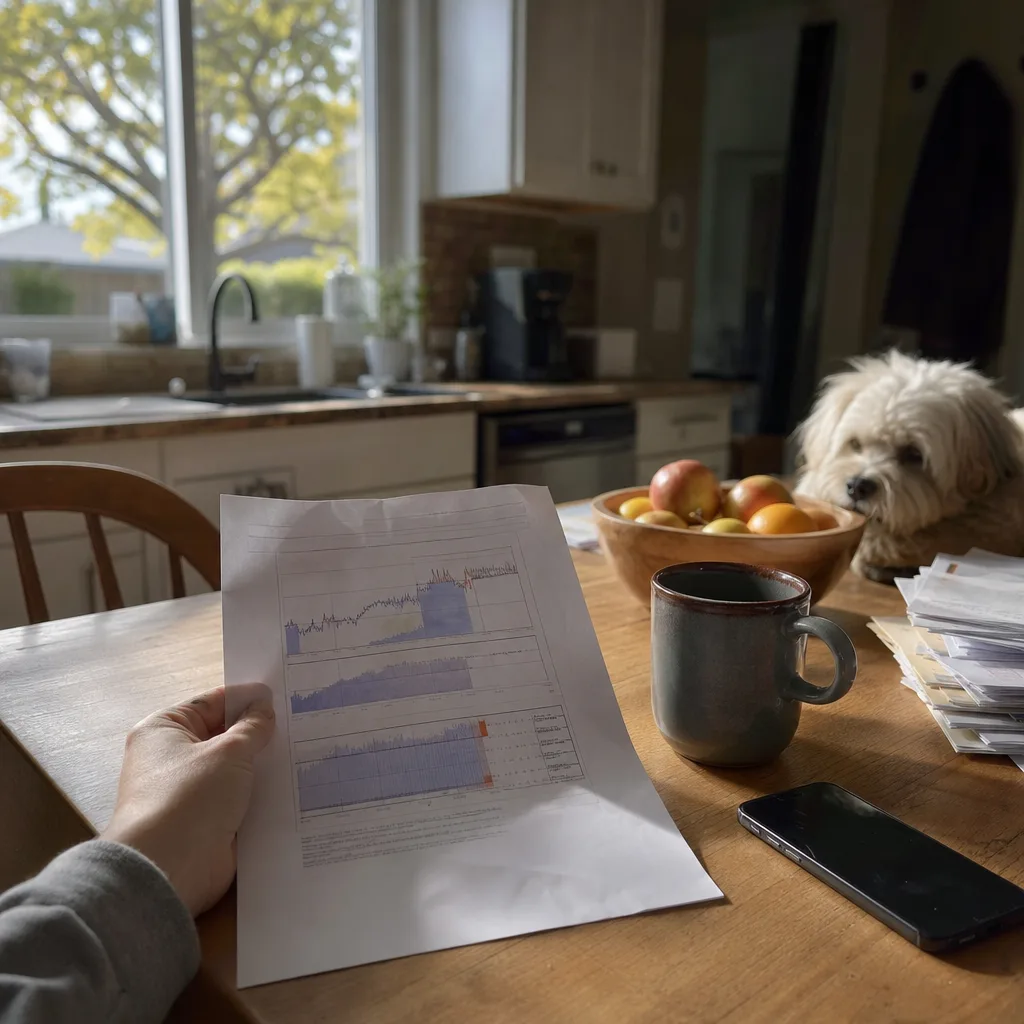
Tested at Home
You sleep in your own bed with a few light sensors, so the night you record looks like your real nights, not a lab.
Read With Imaging
We pair your results with in-house CBCT imaging at our Water Tower Blvd office, so the numbers and the shape of your airway tell one story.
A Plan, Not a Label
A positive result is a starting point. We find the cause first, then talk through options from oral appliances to MARPE to myofunctional therapy.
Ready to Begin?
If the headaches, the clenched jaw, and the guest room have never been explained, a home sleep study read against a 3D look at your airway can show the why. Call (414) 935-8460 or request an appointment online at our Brookfield office on Water Tower Blvd.

