


Airway-first care for growing kids
HealthyStart for Children in Brookfield, WI
Crowded teeth are often a sign of a narrow palate and a mouth-breathing habit, not just a tooth problem. We look at the airway first, then decide whether HealthyStart fits.
Not just crowded teeth
HealthyStart Treats the Airway, Not Just the Teeth
Maybe you’ve stood in your child’s doorway at night and heard the snoring, their mouth hanging open, and in the morning there are dark circles again and the front teeth are starting to overlap. Maybe someone told you to wait, to come back when the adult teeth are in and braces will straighten everything out. That advice isn’t wrong about the teeth, but it skips the bigger question of why the teeth are crowding in the first place. Here’s the why: a child’s tongue is meant to rest up against the roof of the mouth, and that gentle, steady pressure helps the upper jaw grow wide. When a child breathes through the mouth, the tongue drops low, and the palate can grow narrow and high, which leaves less room for teeth and less room for air, since the roof of the mouth is the floor of the nose. So the crowding you can see and the snoring you can hear often come from the same place. Signs that seem unrelated can trace back to how your child breathes: snoring, sleeping with the mouth open, night grinding, bedwetting past the usual age, dark circles, restless sleep, and crowded teeth.

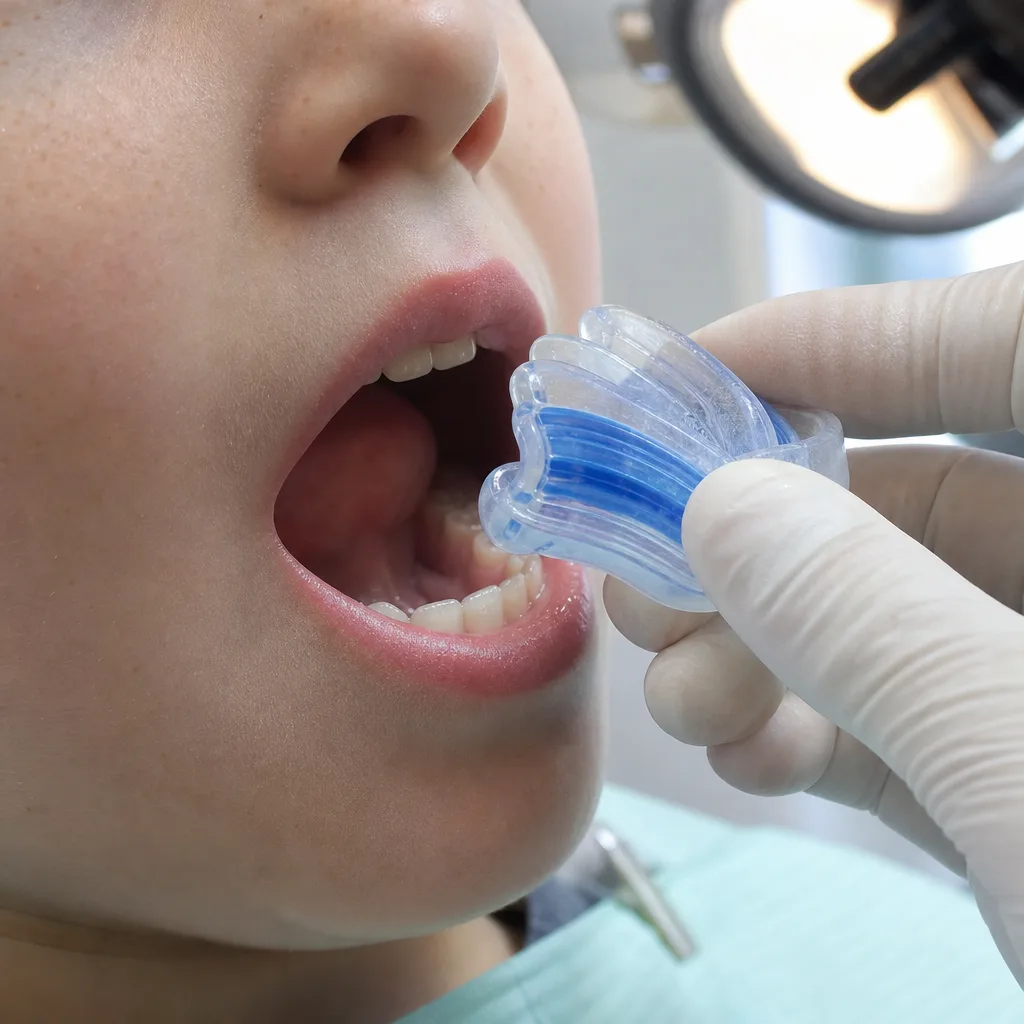
HealthyStart is a system of soft, removable oral appliances made for growing children, designed to encourage breathing through the nose and to train the tongue toward its proper resting spot. Straighter teeth can follow from that, but the main goal is the airway. That’s a different starting point from traditional braces, which move teeth that have already come in; HealthyStart works earlier, while the jaws are still growing and habits can still be shaped. We’re a certified HealthyStart provider at our Brookfield office on Water Tower Blvd, and before we suggest any appliance we want to see what’s going on, so our in-house CBCT 3D imaging gives us a clear look at the airway, and home sleep testing is available when sleep is part of the picture. An appliance is only one piece, since tongue and breathing habits matter just as much, which is why we provide myofunctional therapy in-house, simple exercises that retrain the muscles of the tongue, lips, and face. We can’t promise how any one child will respond, since every airway is different, but we’ll take your concerns seriously, look for the reason behind them, and give you an honest answer about whether HealthyStart makes sense.
Signs a Child May Need Early Palate Treatment
The teacher calls: your child is zoning out in class, cranky by mid-morning, and can’t sit still, and someone gently brings up attention. Before you go down that road, it’s fair to ask a simpler question: how is your child sleeping? Poor sleep in kids doesn’t always look like yawning; it can look like trouble focusing, short tempers, or a child who’s wound up instead of tired. Alongside the nighttime signs, here’s the daytime half you might notice at the dinner table or in the car: lips hanging apart while watching TV, chapped lips or a stuffy-sounding voice much of the year, chewing with the mouth open or slow messy eating, the tongue pushing forward when swallowing, trouble with sounds like s or th, being hard to wake on school mornings, and upper teeth that look tucked in with a narrow smile or high arch. One sign alone doesn’t mean much, but a pattern does, like open lips during the day, snoring at night, and teeth starting to crowd.
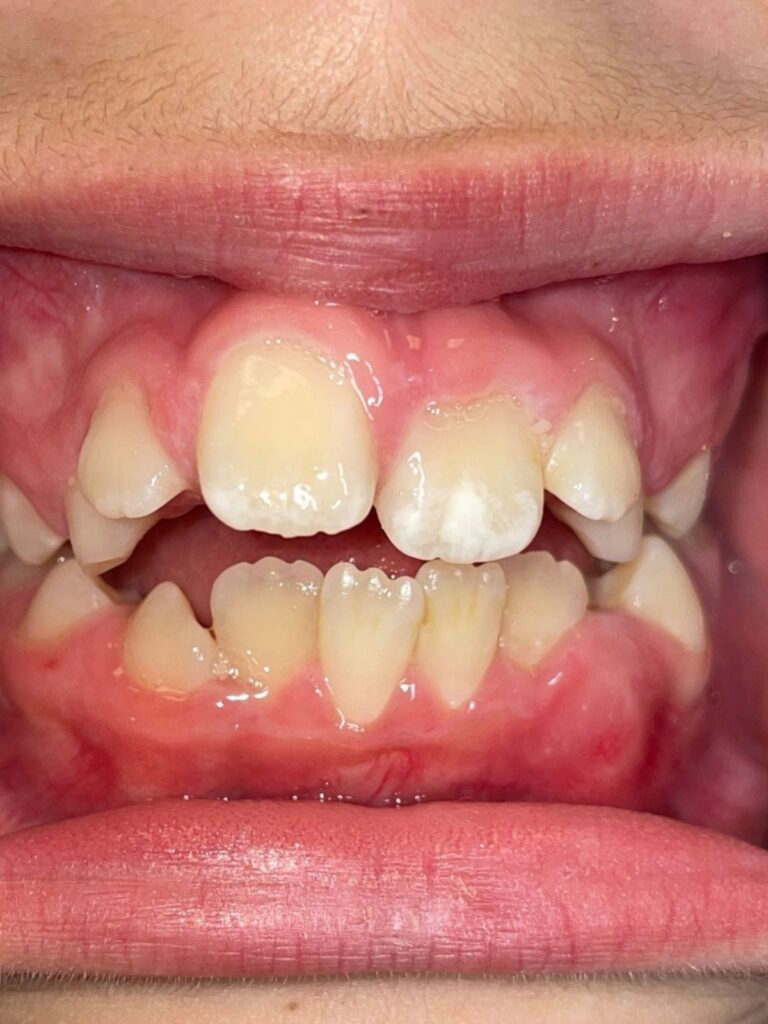
A stuffy nose during a Wisconsin winter cold is normal; mouth breathing that hangs on long after the cold clears up is different, and a sign your child may have gotten used to breathing through the mouth. Sometimes the tongue can’t reach the palate because it’s tied down by a tight band of tissue, and if we see that, we may talk about children’s tongue-tie release as part of the plan. Why look now instead of later? A young child’s palate is still growing, and it’s easier to guide growth while it’s happening than to make up for it once it’s done, which is the whole reason early palate treatment exists. When early treatment may not be needed: if your child breathes through the nose, keeps the lips closed at rest, sleeps quietly, and has room for incoming teeth, you may not need to do anything right now, and we’ll tell you that plainly. If enlarged tonsils or allergies are blocking the nose, your child may need a visit with your pediatrician or an ENT as well. An airway evaluation gives you a clear answer about what’s going on and whether HealthyStart makes sense.

How the Evaluation Works
We Look Before We Fit
An airway evaluation is where we slow down and listen, then look, learning why your child breathes the way they do before anyone talks about an appliance. Our in-house CBCT imaging shows the palate and airway in 3D, so we’re not guessing from an open mouth, and home sleep testing is available when sleep is a big part of the story.
- Is your child breathing through the mouth, and how much of the day and night?
- Can the tongue lift and rest on the roof of the mouth, or is it held down?
- How wide is the palate, and is there room for the teeth still coming in?
- Is something in the nose or throat getting in the way, and how much jaw growth is ahead?
When a Child Doesn’t Need HealthyStart
Maybe you’re reading this while your child sleeps quietly down the hall, lips closed, teeth looking fine, and you still want to be sure you’re not missing something. The honest answer is that plenty of kids don’t need HealthyStart at all, and we’d rather tell you no than fit your child with an appliance they don’t need. We’d likely say it isn’t the right step when the crowding is only about tooth size (some kids have large adult teeth and a wide, healthy palate, and regular braces later may be all they need), when something in the nose or throat has to come first (an appliance can’t clear a blocked nose, so your pediatrician or an ENT should look), when the tongue is tied down (a release and myofunctional therapy may need to happen first), when most of the jaw growth is already done (a different approach may fit better), or when your family isn’t ready right now (an appliance only helps when it’s worn).
That point about missing the window matters to a lot of parents. You probably didn’t miss anything that can’t be addressed; for older kids, we may talk about Myobrace or Vivos Guided Growth instead, since we’re certified in both along with HealthyStart, so the choice comes down to your child, not the one appliance we happen to have on the shelf. Waiting can be a real plan: if your child breathes well today, there’s nothing to fix, and you just keep an eye out for the signs listed earlier. “Not now” doesn’t mean “never mind”; a child who breathes through the nose, sleeps soundly, and has room for incoming teeth is doing just what we’d hope for. And if your child’s nighttime breathing worries you but the real question is a medical one, we’ll say so, because a child who stops breathing during sleep or gasps awake needs a physician involved. Dental appliances can be part of a plan, but they aren’t a stand-in for a medical diagnosis. A no is still a useful answer, letting you cross one worry off the list. Families drive in from Elm Grove, Pewaukee, and across Waukesha County for that kind of clear answer, and we work alongside speech-language pathologists, occupational therapists, and bodyworkers across Southeast Wisconsin so that care can be part of the plan too.
See more children’s care from Untethered Airway Health Center
Common Questions About HealthyStart in Brookfield
What age is best to start HealthyStart for my child?
The best age is while your child’s jaws are still growing, often when baby teeth start mixing with adult teeth. Waiting until after all adult teeth come in can mean missing the window to guide palate growth naturally. That’s why we evaluate the airway early, rather than waiting for crowding to get worse.
Can my child still play sports or eat normally while wearing the appliance?
HealthyStart is removable, so it’s meant for home and sleep hours, not during meals or sports. It’s worn mainly at night and for a set time during the day, based on the wear schedule we set for your child. That schedule is built around your family’s real routine, not a one-size-fits-all rule.
What if my child refuses to wear the appliance at night?
A few resisted nights won’t undo progress, so don’t panic if that happens. Making it part of the bedtime routine, right after brushing teeth, helps it feel normal instead of optional. If it keeps happening, tell us at a follow-up visit so we can adjust the plan instead of letting it sit unused in a drawer.
Does my child need a referral before an airway evaluation?
No referral is required to schedule an airway evaluation at our Brookfield office. That said, bringing any notes from your pediatrician, ENT, or allergist helps us build a fuller picture of your child’s breathing and sleep.
Airway First
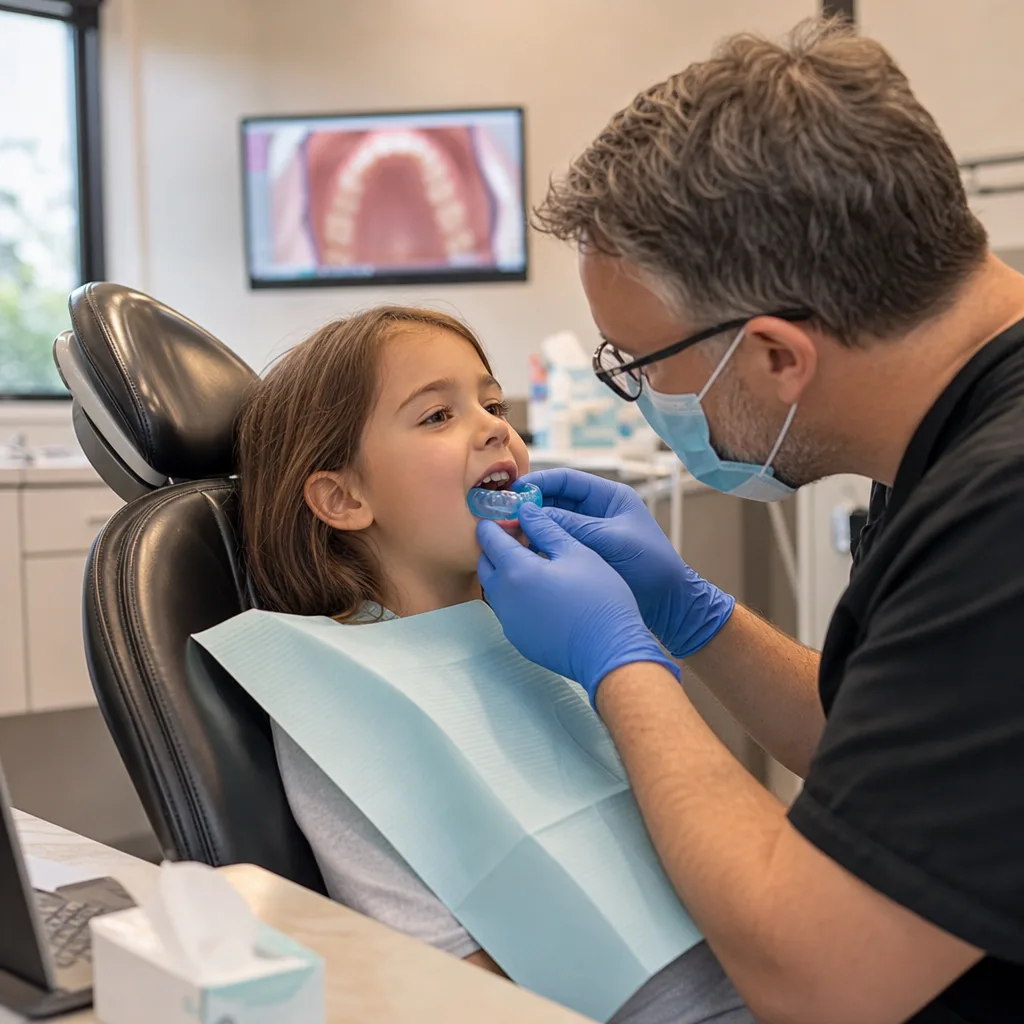
We evaluate breathing, tongue posture, and palate width with in-house 3D imaging before fitting any appliance, so HealthyStart is suggested only when it fits.
Guided Growth
Certified in HealthyStart, Myobrace, and Vivos Guided Growth, with in-house myofunctional therapy to retrain tongue and breathing habits.
Follow-Up
We set the wear schedule, walk you through it, and check fit, comfort, posture, and breathing at every visit as your child grows.

Ready to Begin?
If the snoring, the crowding, and the rough school mornings keep showing up together, an airway evaluation can tell you whether HealthyStart fits while your child is still growing. Call (414) 935-8460 or request an appointment online at our Brookfield office on Water Tower Blvd.

