


One cause behind many symptoms
Adult Tongue-Tie Release in Lakewood, CO
Your TMJ pain, snoring, and tired mornings may share one overlooked cause: where your tongue sits. We check the airway first, then treat.
A tongue problem that rarely looks like one
Signs an Adult Tongue-Tie May Be Causing Your Symptoms
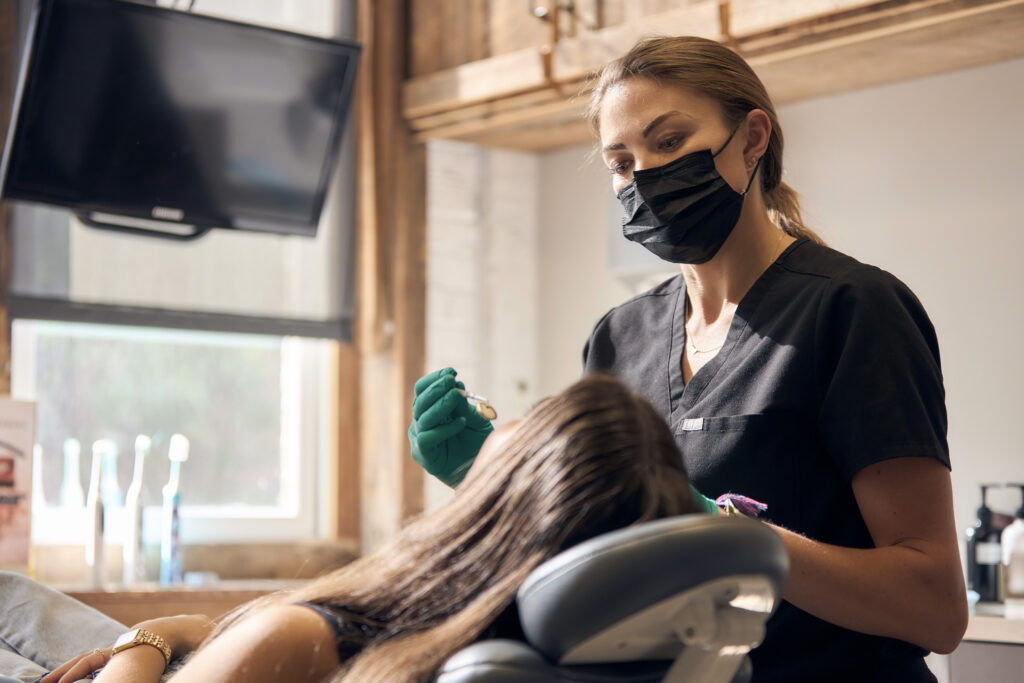
It’s 6 a.m. and your jaw already aches. Your partner says you snored again. You’ve seen a dentist about the grinding and a doctor about the headaches, and each one treated a piece, but nobody looked at where your tongue sits. A tight band under the tongue can hold it low in your mouth, and a low tongue doesn’t support your palate or airway the way it should. The strain spreads to your jaw, your neck, and your sleep. None of the signs below proves a tie on its own, but a cluster of them is worth a closer look: jaw pain or TMJ flare-ups that splints haven’t settled, night clenching or grinding, snoring or mouth breathing, morning headaches, a tight neck that keeps returning, a tongue that can’t easily reach the roof of your mouth, slow eating or trouble swallowing pills, tiring speech, and teeth that shifted again after braces.
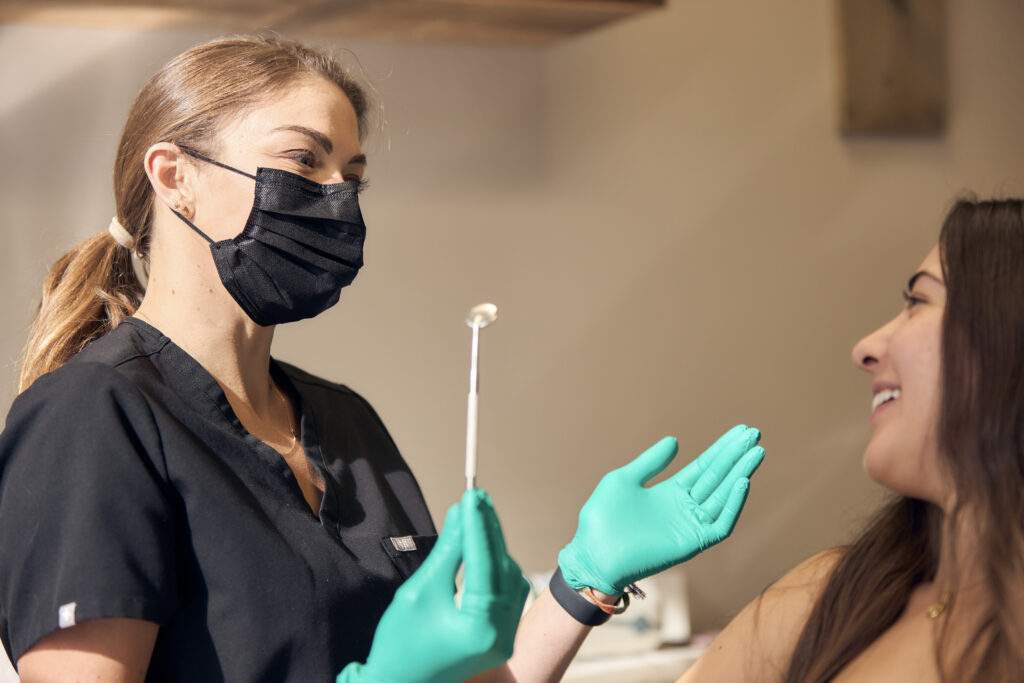
Want a quick check at home? Stand at a mirror, open wide, and lift your tongue tip to the spot just behind your top front teeth. If your mouth wants to close, or you see a tight band pulling, make a note of it. If you’ve brought this up before and been told tongue-ties only matter for babies, you’re not imagining things. Adults learn to work around a tight tongue for decades, and those workarounds, like clenching, mouth breathing, and a forward head, can become the symptoms. These signs can have other causes too, which is why we start by looking at how you breathe, not just at your tongue. We use 3D CBCT imaging and home sleep studies to see the airway itself, then tell you whether a tie is part of the story. If it is, a laser release frees the tongue to move, and myofunctional therapy retrains where it rests and how you swallow.
Why We Check TMJ and Sleep Before Treating the Tongue Alone
Picture someone who finally hears that their tongue is tied, gets it released, and goes home hopeful, then three months later the jaw still clicks and the mornings are still tired. That letdown happens when only the tongue gets treated. A tie is often one piece of a bigger airway problem, and if only that piece gets addressed, the rest keeps pulling you back. Your jaw doesn’t clench all night for no reason; for some people, clenching is the body bracing the airway open, pushing the jaw forward to keep the throat from narrowing during sleep. Snoring and heavy mornings can also come from a narrow palate, a long soft palate, or trouble breathing through the nose. A freed tongue needs room to rest up high, and if your palate is narrow, it may have nowhere to go. That’s why we check how your jaw joint moves, what your breathing does overnight, and how much room your airway leaves for your tongue before we treat.
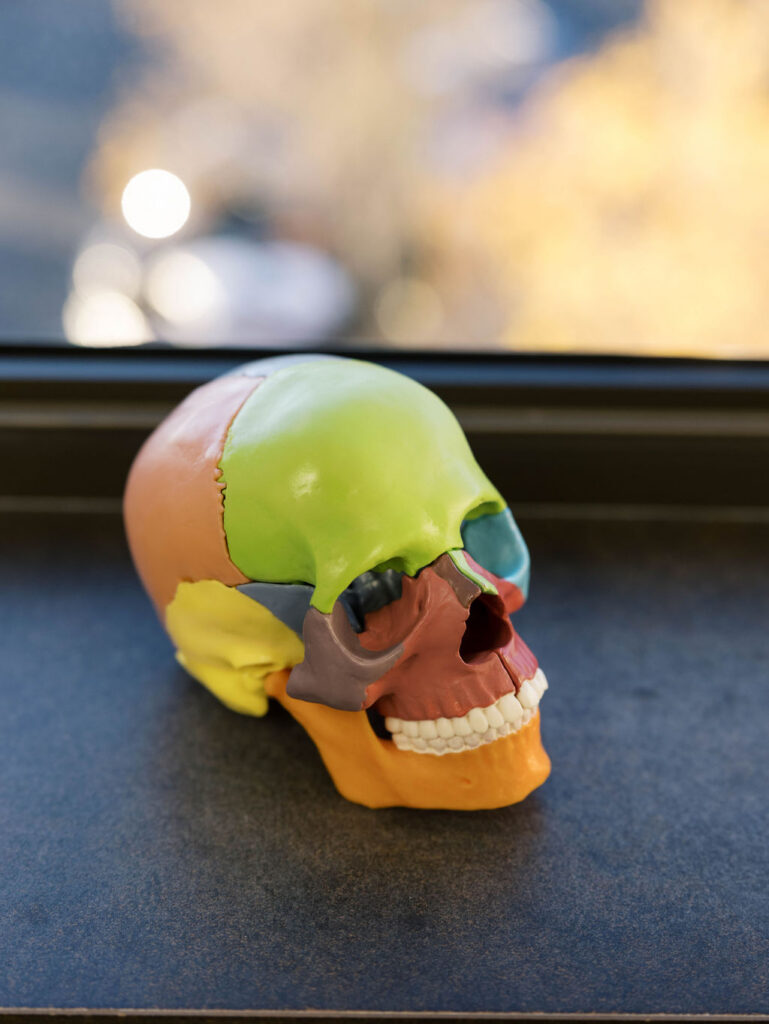
Those answers shape what comes next. Sometimes a laser release is the main step. Other times it’s one part of a plan with MARPE expansion, adult airway orthodontics, or laser soft palate treatment. Myofunctional therapy is part of most plans, because a tongue that has moved one way for decades still needs practice to rest and swallow in a new way. If you’ve bounced between a dentist, a sleep doctor, and a physical therapist who each saw a different problem, our Lakewood adult solutions serve West Denver and Jefferson County, putting TMJ pain, sleep testing, and airway care under one roof, so you don’t start over each time. Checking first also protects you: a release is a real procedure with real healing time, and if your tie turns out to be minor, it may not be the right first step.
What the Laser Release Involves
No Scissors, No Guesswork
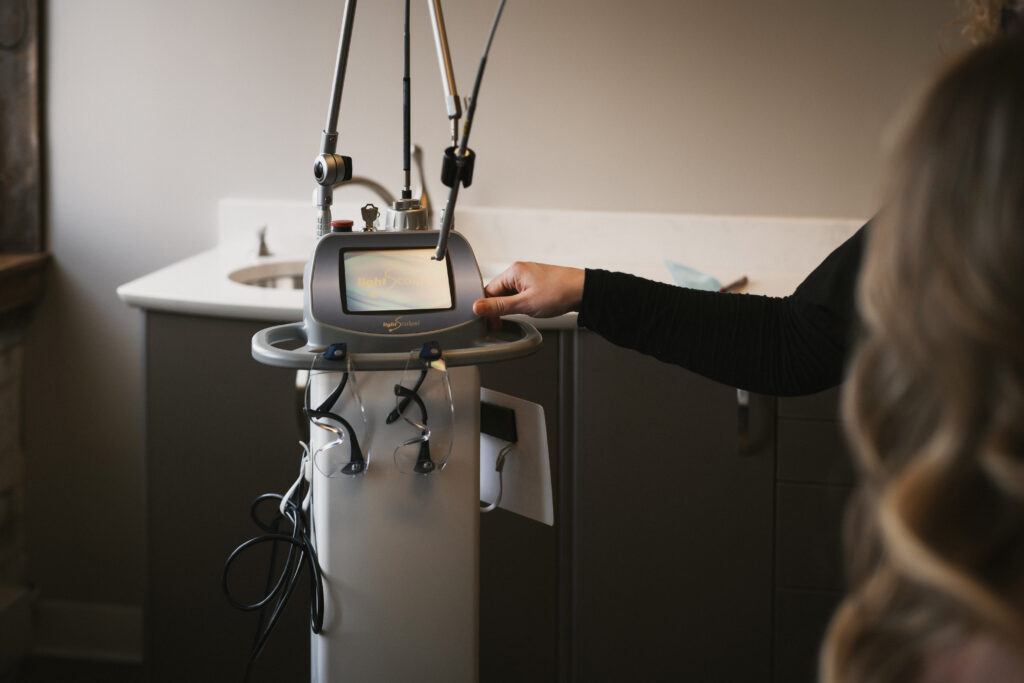
Nothing gets snipped or clipped. We use a laser to release the tight band, which makes the procedure precise and gentle with faster healing. By the time we talk about a release, we’ve already looked at your airway, jaw, and sleep, so it’s a chosen step, not a guess.
- An airway workup first, with 3D CBCT imaging and a home sleep study when it fits
- The laser release itself, freeing the tongue to lift and rest higher
- Myofunctional therapy to build new resting and swallowing habits
- Added airway care like MARPE only if your palate needs more room
When a Tongue-Tie Release Isn’t the Answer
You lift your tongue in the mirror, spot a thin band, and a friend swears by their release, so now you’re wondering if you need one too. Not always. Plenty of adults have a band they can see and never have trouble from it, because a visible frenum isn’t the same as a tongue that can’t do its job. A release probably isn’t the answer, at least not yet, if your tongue already moves freely and rests high without effort, if you don’t have symptoms like jaw pain or snoring, if your symptoms have a clearer cause like a blocked nose or an old jaw injury, if your palate is very narrow and needs room made first, or if you can’t commit to the myofunctional exercises right now.
Lakewood’s environment plays a part too. Across West Denver and Jefferson County the air is dry and sits more than a mile high, so many people wake with a dry mouth, and Front Range pollen can stuff up your nose for weeks. Those rough mornings aren’t always a tongue problem. Someone whose jaw aches after a stressful month, whose tongue lifts easily and whose sleep is fine, won’t be helped by a release. Sometimes the honest answer is to wait: for a mild restriction, myofunctional therapy alone may be worth trying first, and if your symptoms ease, you may never need a release. Timing in your life matters as well, since a release means healing time and daily exercises afterward. If your tongue isn’t the main issue, you deserve to hear that clearly, along with what might be, which for a nose that won’t clear could mean seeing an ENT.
We’re a fee-for-service practice, and most of what we do isn’t well covered by dental or medical insurance. We’d rather tell you that now than surprise you later. Many patients use HSA or FSA funds for airway treatment, and we provide out-of-network documentation you can submit to your insurer. Your total depends on what your airway needs: a release with myofunctional therapy is one scope, while adding a sleep study, expansion, or orthodontics changes it.
See more adult solutions from Untethered Airway Health Center
Frequently Asked Questions About Adult Tongue-Tie Release in Lakewood
What symptoms indicate an adult tongue-tie?
Persistent jaw discomfort, chronic neck and shoulder tightness, disrupted sleep breathing, habitual teeth grinding, swallowing challenges, and recurring headaches. Numerous Lakewood adults have carried these symptoms for decades without linking them to restricted tongue mobility.
Is the laser procedure painful?
We apply local numbing before the procedure, so you’ll sense pressure without pain. Most Jefferson County patients head back to work that same day, and any aftercare discomfort manages easily with standard pain relievers.
How long does the laser frenectomy take?
The laser release runs under 10 minutes. With assessment and aftercare guidance included, most Lakewood visits finish within an hour. Soreness afterward tends to peak on days two and three rather than the day of your appointment, and we break that down in what tongue-tie release pain actually feels like.
How long is the recovery period?
Most patients return to regular routines within a day. Full tissue repair takes roughly two weeks, during which you’ll complete daily exercises that improve outcomes and help prevent re-restriction.
What results can I expect?
Many patients notice decreased jaw tension and freer breathing in the first week. Sleep quality gains typically emerge within two to four weeks. Paired with dedicated myofunctional therapy, improvements keep developing across several months.
Can an adult tongue-tie cause chronic TMJ pain?
Yes. A restricted tongue often drives the jaw and neck muscles into chronic compensation, which over years can show up as TMJ pain, clenching, and headaches. Adult treatment usually pairs a laser release with myofunctional therapy to retrain the jaw pattern. For the full connection and what treatment involves, see our guide on adult tongue-tie and TMJ pain for West Denver residents.

The Process
An airway workup first, then a gentle laser release, then myofunctional therapy to retrain resting and swallowing. A process, not a single visit.
All Under One Roof
TMJ pain, sleep testing, and airway care in one Lakewood practice, so you don’t restart with a new provider for every symptom.
Investment
Fee-for-service, with HSA/FSA accepted and out-of-network documentation provided. Your total depends on what your airway needs.

Ready to Begin?
If your jaw pain, snoring, and tired mornings have never added up, it may be time to look at the airway as one system. Call (720) 783-5424 or book an airway evaluation online, and we’ll tell you honestly whether a tongue-tie is part of your story.

