




Your child is 7, maybe 8, maybe older. And the sheets are wet again this morning. You’ve tried the alarms. You’ve cut off water after dinner. You’ve set your own alarm to wake them at midnight. None of it has stuck.
Their pediatrician keeps saying the same thing — “they’ll outgrow it.” But it’s been years, and nothing’s changed. You’re washing sheets every day, buying pull-ups you thought you were done with, and watching your child make excuses to skip sleepovers.
Here’s what most doctors don’t mention: bedwetting in children past age 6 is often tied to how they breathe during sleep. When a child’s airway is too narrow, they can’t reach the deep sleep stages their body needs to stop producing urine overnight. It’s a structural problem — not a behavioral one.
Children’s airway orthodontics treats that structure directly. By gently widening a narrow palate, we open the airway so your child can finally sleep deeply enough for their body to do its job.
At Untethered Airway Health Center on Water Tower Blvd in Brookfield, we offer child bed wetting treatment Brookfield WI families can access without a referral. Families across Waukesha County and the greater Milwaukee metro area bring their children in for airway evaluations — and many wish they’d found this connection sooner.
Sleep-Disordered Breathing and Bedwetting Share a Hidden Connection

Here’s what’s happening inside your child’s body at night — and why no amount of fluid restriction or bedwetting alarms has worked.
When a child falls into deep sleep, the brain releases a hormone called ADH (antidiuretic hormone). ADH tells the kidneys to slow down urine production so the bladder doesn’t fill up overnight. It’s a normal, automatic process. But it only happens during deep sleep.
Children with narrow airways don’t get there. A restricted airway — usually caused by a narrow upper jaw — forces the body to work harder to breathe. That effort keeps pulling the child out of deep sleep, even if they don’t fully wake up. Without enough time in those deeper stages, ADH never releases the way it should.
So the bladder fills. And your child wets the bed. Not because they’re sleeping too deeply. Not because they drank too much water. Because their body literally can’t produce the hormone it needs to stay dry.
This is why behavioral approaches keep failing. The bedwetting alarms, the reward charts, the midnight wake-ups — they’re targeting a symptom. The actual problem is structural. A narrow upper jaw crowds the airway, and that restricted airway disrupts sleep quality every single night.
Many Waukesha County parents spend four, five, even six years cycling through these behavioral strategies before anyone connects the dots. Children’s airway orthodontics targets the narrow jaw directly — widening the palate to open the airway so deep sleep can happen on its own.
Signs That Your Child’s Bedwetting May Be a Structural Airway Problem
Bedwetting rarely shows up alone. Most children with a restricted airway carry a handful of other signs that parents notice but can’t quite connect. If your child wets the bed and you’re also seeing several of these, an airway problem may be the thread tying them together.
Watch for these alongside bedwetting:
- Snoring or audible breathing during sleep, even if it seems mild
- Mouth breathing during the day or while asleep
- Dark circles under the eyes despite 10 or more hours of sleep
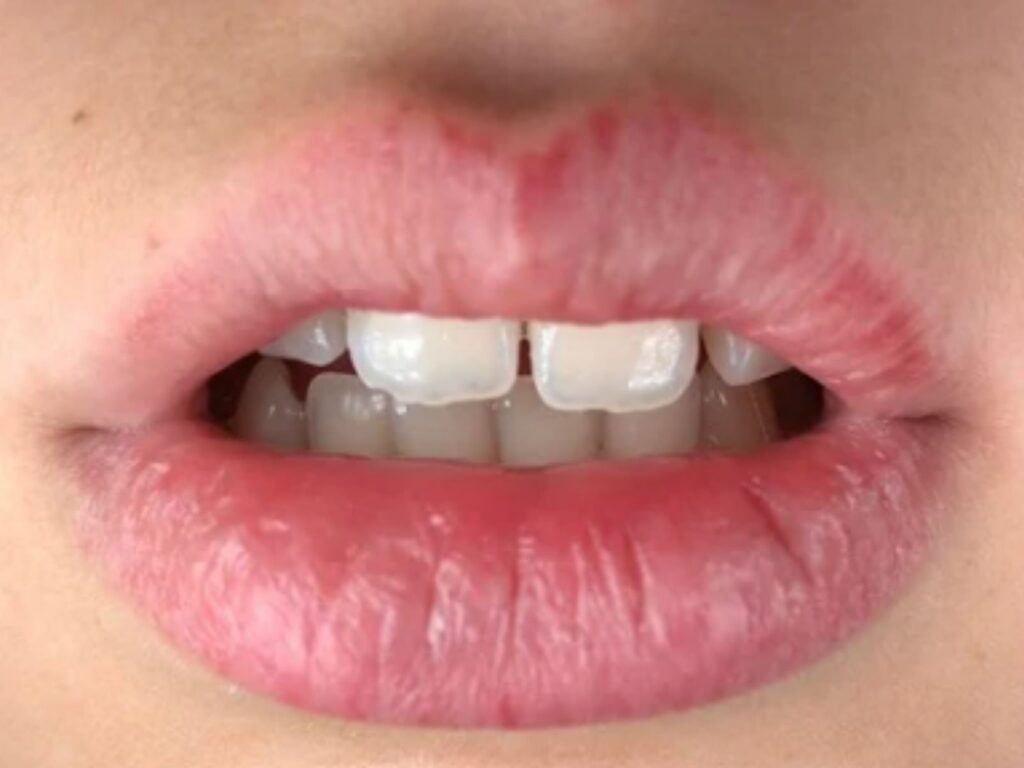
- Crowded teeth or a crossbite starting to form — both signs of a narrow palate
- Restless sleep with frequent tossing, turning, or odd sleeping positions
- Difficulty waking in the morning, followed by grogginess that lingers
- Trouble focusing at school, sometimes flagged as possible ADHD
- Repeated ear infections or chronic congestion, especially through Wisconsin’s long winters
Parents in the Brookfield Central and Brookfield East school zones often start noticing these patterns around ages 6 to 8 — right when school demands more focus and social life starts including sleepovers.
Here’s the thing most parents tell us: they’d noticed the snoring, or the mouth breathing, or the dark circles for a while. They just never had a reason to connect those signs to the wet sheets in the morning. Once you see the pattern, it’s hard to unsee.
If three or more of these signs show up alongside bedwetting, it’s worth getting an airway orthodontic evaluation. Not to rule something in or out on a guess — but to actually look at the structure of your child’s jaw and airway with imaging that shows what’s going on.
How Children’s Airway Orthodontics Corrects the Underlying Issue
Children’s airway orthodontics works differently than the braces you might remember from your own childhood. Traditional orthodontics straightens teeth. Airway orthodontics widens the jaw and opens the airway. The teeth benefit too, but breathing is the actual goal.
Here’s how it works. A narrow upper palate is gently expanded using an appliance designed for a growing child’s mouth. As the palate widens, the floor of the nasal cavity opens up. More nasal space means better airflow. Better airflow means your child can breathe through their nose during sleep instead of struggling through a restricted passage.
And that’s where bedwetting starts to resolve. With a wider airway, the body stops fighting to breathe. Sleep deepens. The brain reaches those stages where ADH is released. The bladder stays manageable overnight. The sheets stay dry.
The specific appliance depends on your child’s age and anatomy. Options we use at our Brookfield office include:
- HealthyStart® — a flexible oral appliance worn at night that guides jaw growth and encourages nasal breathing
- Myobrace® — focuses on correcting oral habits and promoting natural facial development
- Vivos Guided Growth™ — uses a custom appliance to gently guide the jaw into a wider position over time
- Rapid palatal expansion — a fixed appliance that widens the upper jaw more quickly, often used for children closer to age 9 or 10
Each of these approaches treats the structural root cause rather than managing the bedwetting itself. You’re not training your child to wake up. You’re giving their body the airway it needs to sleep properly.
Many Elmbrook School District families begin treatment between ages 6 and 10. That’s the window when the jaw is still growing and responds best to guided expansion. Earlier in that range tends to mean simpler treatment and shorter timelines.
What Happens During an Airway Orthodontic Evaluation in Brookfield
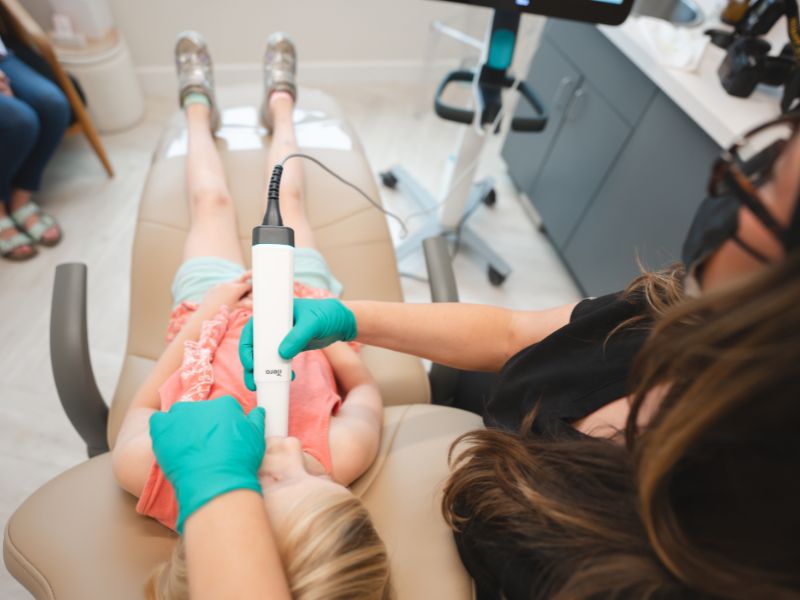
The evaluation starts with a CBCT scan — a 3D image that shows the width of your child’s palate, the size of their airway, and the structure of their jaw. It’s not like a traditional dental X-ray. This scan captures the full picture in seconds, and it’s done right at our Brookfield office on Water Tower Blvd.
From that single scan, we can see whether the palate is narrow, how much the airway is restricted, and what’s happening structurally that a regular exam would miss.
In some cases, we’ll also recommend a home sleep study. Your child wears a small portable device while sleeping in their own bed — no hospital visit, no wires, no unfamiliar room. The study measures breathing patterns, oxygen levels, and sleep quality overnight. It’s one of the most useful pieces of data we can get, and kids tolerate it well because they’re in their own space.
Results from the CBCT scan and the sleep study together give us a clear map. We can see exactly what’s restricting the airway, how it’s affecting sleep, and which appliance is the best fit for your child’s specific anatomy.
You’ll leave the evaluation knowing what’s going on and what the next steps look like. No vague “let’s wait and see.” No referral runaround. Just a clear picture and a plan.
And you don’t need a referral from a pediatrician or dentist to schedule. Families book directly.
What Brookfield Families Can Expect During and After Treatment
Treatment looks different than most people expect. There’s no monthly tightening appointment like traditional braces. Most children visit us a few times during the course of treatment, and the appliance takes just a couple of days to adjust to. It becomes part of the routine pretty quickly.
Palatal expansion happens gradually — over weeks to months, not overnight. It’s gentle. Most kids adjust within the first few days, and parents are often surprised at how little fuss there is. The appliance does the work while your child sleeps. Which, honestly, feels like the right kind of irony for a problem that starts during sleep.
Improvements in sleep quality often show up within the first few months. Parents tell us they notice changes before the bedwetting fully stops — the child sleeps more quietly, tosses less, wakes up easier in the morning. Then the dry nights start showing up. First one or two a week. Then more. Then most of them.
Published research supports what we see in practice. Studies on palatal expansion and nocturnal enuresis show that airway-focused orthodontic treatment resolves bedwetting in roughly 60–80% of cases. That’s a number worth sitting with, especially if you’ve been told for years that your child would “just outgrow it.” (The National Sleep Foundation offers additional resources on children’s sleep-disordered breathing, and the American Academy of Pediatrics has published guidelines on evaluating nocturnal enuresis in school-age children.)
Beyond dry nights, parents frequently report side benefits they didn’t expect:
- Better focus and fewer behavioral issues at school
- Fewer morning headaches
- Improved mood and less irritability
- Reduced or eliminated snoring
- The child actually looking rested for the first time in years
Treatment timelines vary, but most plans run several months to about a year. Follow-up visits at our Brookfield office track palate changes and airway improvement with updated imaging so you can see the progress yourself.
Families from New Berlin, Pewaukee, and Elm Grove follow the same treatment path at our Brookfield location. The drive is short, and appointments are spaced out enough that it doesn’t take over your calendar.
Getting to Water Tower Blvd from Anywhere in Waukesha County
Our office is at 20350 Water Tower Blvd Suite 202 in Brookfield, right near I-94. If you can find Brookfield Square or The Corners of Brookfield, you’re practically here.
From nearby Brookfield neighborhoods: Families in Capitol Heights and Overcrest are less than 10 minutes away. Brookfield Hills is a similar drive. Most of our local families are in and out without much of a time commitment.
From Waukesha or Pewaukee: Take I-94 east and exit at Moorland Road or Calhoun Road. You’ll be at the office in under 15 minutes.
From New Berlin: Head north on Moorland Road. It’s about a 12-minute drive, depending on where in New Berlin you’re starting from.
Appointments are available Monday through Thursday starting at 8 AM. Friday visits are available by appointment. Free parking is right at the building — no ramp, no meter, no hassle.
The location is convenient for combining visits with errands. Brookfield Square and The Corners are right nearby, so you can knock out a stop before or after your child’s appointment.
FAQs
How far is the Brookfield office from the Bluemound Road corridor?
About 5 minutes by car. Water Tower Blvd is just south of I-94 near the Moorland Road interchange, so it’s a quick trip from anywhere along Bluemound.
Is children’s airway orthodontics the same as traditional braces?
No. Airway orthodontics focuses on widening the jaw and opening the airway — not just straightening teeth. The goal is to fix the structural cause of breathing and sleep problems. Teeth often improve as a side benefit, but breathing comes first.
Does my child need a referral from their pediatrician to be seen?
No referral is needed. Families schedule directly with our Brookfield office by calling (414) 935-8460 or booking through our website.
At what age should I bring my child in for a bedwetting-related airway evaluation?
If bedwetting continues past age 6 and other approaches haven’t worked, an airway orthodontic evaluation makes sense. Ages 6 to 10 are the sweet spot because the jaw is still growing and responds well to guided expansion.
Will my child need to miss school for appointments?
Morning appointments start at 8 AM, and many families schedule around the Elmbrook School District calendar. Most visits are quick enough that kids can still make it to school on time or miss very little.
Is bedwetting always caused by a narrow palate or airway issue?
Not always. But a restricted airway from a narrow palate is one of the most common overlooked causes in children over age 6. A CBCT scan shows whether this is a factor for your child — and it takes seconds to find out.

