


Breathe Easier, Sleep Better, Live Fuller. Airway care for Brookfield families.
☎ Call Now (414) 935-8460📅 Book Your Airway Evaluation
✓certified Myobrace® provider
⚡child
📍bodyworkers
🛡occupational therapists

What’s Covered on This Page
- Braces vs. Invisalign: What Differs Day to Day
- Why ‘Which Is Better’ Is the Wrong First Question
- How Invisalign Candidacy Has Changed by 2026
- How do I know if I need braces or Invisalign?
- Can Invisalign fix a bad bite the same way braces can?
- Why do my teeth feel like they’re shifting back after treatment?
- Does snoring or poor sleep have anything to do with my teeth alignment?
- How does Wisconsin’s cold weather affect wearing Invisalign trays?
- Is it a mistake to pick Invisalign just because it’s less noticeable?
Need Braces vs. Invisalign in 2026: Which Is Better for You??
Book Your Airway Evaluation
Braces vs. Invisalign: What Differs Day to Day
Braces and Invisalign both move teeth, but they work in slightly different ways. Braces work on their own once they’re on, while Invisalign only works during the hours you wear the trays. The better choice usually comes down to your bite, your habits, and how your tongue sits when your mouth is closed.
Picture this ordinary day. You grab lunch at your desk, you talk on three calls, and you brush your teeth before bed. That ordinary day looks pretty different depending on which option you picked.
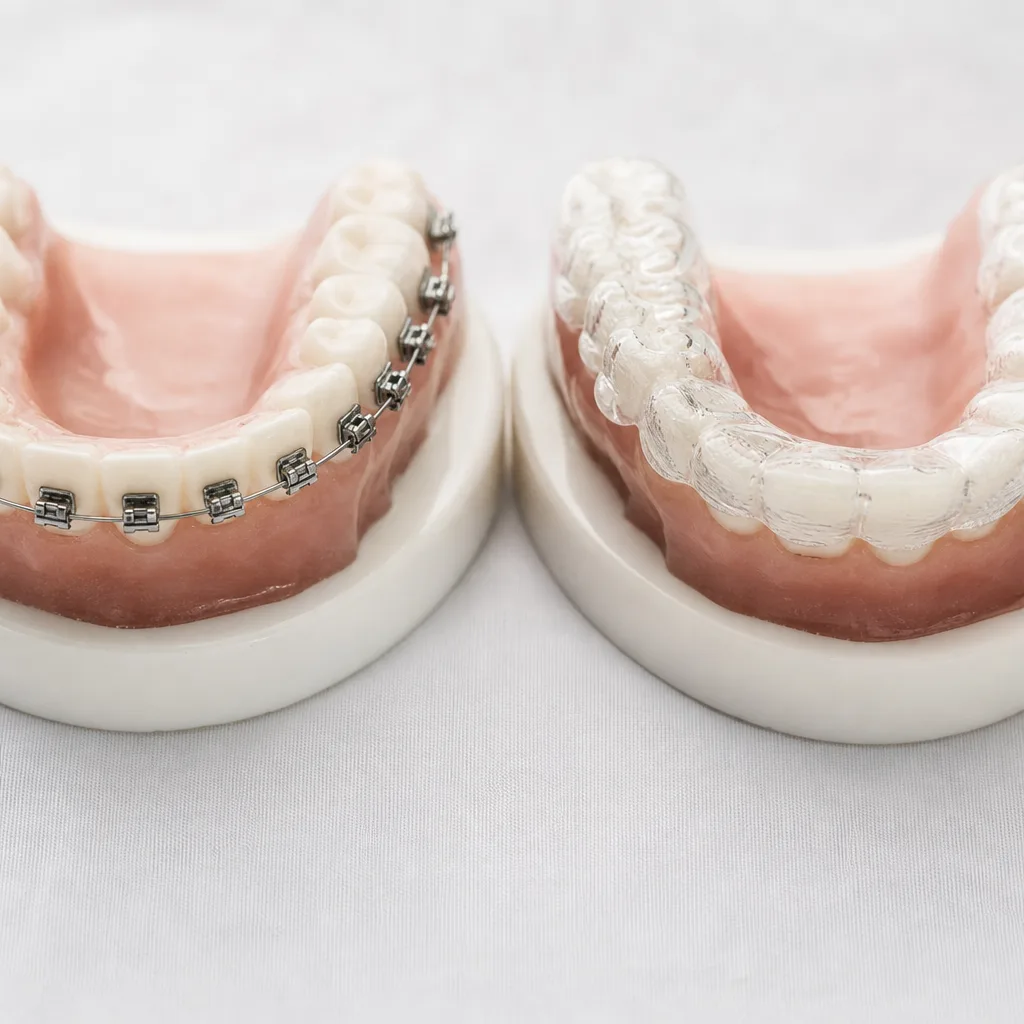
With braces, the brackets and wires stay put. You don’t think about them much, which some people love. But you’re working around them at every meal, and flossing takes longer than you’d like. Popcorn, corn on the cob, and chewing gum are now completely out of the question!
With Invisalign, you can take the clear trays out to eat. You brush, you snap them back in, and you move on. That freedom can be enticing when deciding between Invisalign and braces. And it’s also the catch, because trays sitting in a napkin aren’t moving anything.
We see this play out all the time. The people who do best with clear aligners are the ones who build a habit fast. They put their trays back in the minute they’re finished brushing and flossing and by the time they’ve taken their last bite.
So what separates the two options once you’re living with them?
- Daily effort: braces work in the background without any effort from you, Invisalign depends on you wearing the trays most of the day and all night.
- Eating: braces come with a “do not eat” list, Invisalign comes with a strict brushing routine before the trays go back in.
- Speech: a slight lisp is common in the first few days of a new aligner, and it usually goes away within a week or so.
- Visits: braces often need adjustment appointments, aligners often work in longer stretches between check-ins.
- Complex movement: some bites, rotations, and big vertical changes still respond better to fixed brackets.
Here’s the part most providers fail to recognize and educate their patients on. Straight teeth and a healthy airway aren’t the same thing.
You can finish either treatment with a beautiful, straight smile and still wake up with a dry mouth and a headache. If your jaw is narrow, your tongue has nowhere to rest, so it falls back. And the snoring, the restless nights, the sleeping in a separate room than your spouse… none of that changes just because your teeth are finally straight.
That’s why we look at space before we look at alignment. A CBCT airway scan shows us the available room your tongue has. For some adults in Brookfield, widening the upper jaw with MARPE comes first, and Invisalign finishes the job afterward.
Does that mean everyone needs the full workup? No. Plenty of people have crowding and nothing more. But if you’ve been told for years that you’re a restless sleeper or snorer, it’s worth asking the right questions before you commit.
One more thing worth naming. If your tongue rests low or a tight frenum keeps it tethered, teeth can drift back toward where they started. Myofunctional therapy exists for this very reason. Retainers hold the position of the teeth, but muscle habits decide whether the hold is easy or a fight.
Why ‘Which Is Better’ Is the Wrong First Question
You’ve probably already spent an evening or two researching your options. Someone in a group thread swears clear aligners changed their life. Someone else says traditional braces are the only thing that really works. And you end up no closer to a decision than when you started thinking about it.
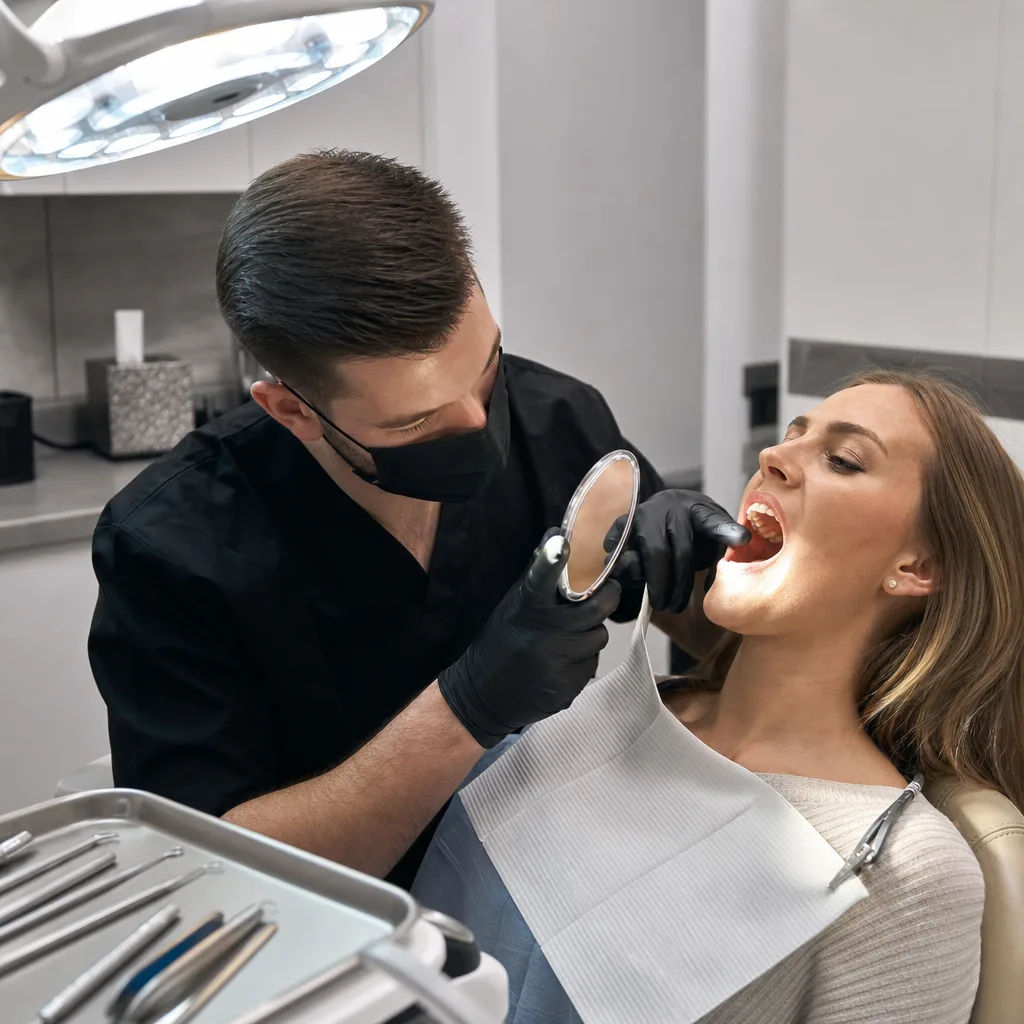
You’re not alone in wondering what the best option is for your mouth. Most of what’s written about braces vs. Invisalign in 2026 compares the appliances, not the mouths they go in.
Braces and clear aligners are both tools. A tool isn’t better or worse on its own, it’s better or worse for a specific job. So the best place to start is understanding what’s going on with your bite, your jaws, and how you breathe.
We see this every week. A patient comes in certain they want one option, but are open to hearing what we have to say after reading the CBCT scan.
Crowded lower teeth, for example, are rarely just crowded teeth. Often the upper jaw is narrower than it should be. A narrow palate leaves less room for the tongue to rest. The tongue drops back or sits low, and the airway gets tighter at night. That’s why some adults grind their teeth, wake up with a sore jaw, or sleep fine but never feel rested. Straightening the front teeth doesn’t touch any of that.
So before you pick a method, it helps to know which of these applies to you.
- Mild crowding or spacing with a stable bite and no breathing complaints
- A narrow upper jaw, high palate, or teeth that look pushed inward
- A bite that doesn’t meet evenly, or one side that feels off when you chew
- Snoring, morning headaches, clenching, or a partner who sleeps down the hall
- Limited tongue movement that keeps the tongue from resting against the roof of the mouth
Both approaches can handle mild crowding or spacing with a stable bite well, but the rest of the list need a plan built around space and airway first, alignment second.
This is why we start with imaging first almost every time. A CBCT scan shows the jaws, the sinuses, and the airway in three dimensions. Regular x-rays can’t show that. Once we can see the whole picture, the aligner-or-bracket conversation gets easier.
And sometimes the answer is both, in sequence. Widen first, then align. For adults, that can mean MARPE, a palatal expander anchored with small screws, used as an alternative to jaw surgery. Straightening comes after the foundation is right.
None of this means clear aligners are a lesser option. Many of our Brookfield patients finish treatment with Invisalign after the groundwork is done, and they love how straightforward it is.
But the order matters. Get the foundation wrong and you can end up with straight teeth and the same tired mornings you started with.
Curious which category you fall into? That’s exactly what an airway evaluation sorts out, and it takes one visit.
That same focus carries through the practical invisalign guidance our team provides to local families.
How Invisalign Candidacy Has Changed by 2026
Maybe someone told you years ago that you weren’t a candidate. Your bite was too deep, your teeth too crowded, your case too complicated. So you filed it away and moved on.
That answer is out of date. Aligner design, attachment placement, and treatment planning have all shifted. Cases that once got sent straight to metal brackets now get planned with clear aligners instead.
Candidacy isn’t just about how your teeth look from the front. It’s about how much room your jaw has. A narrow upper jaw crowds teeth, yes. It also crowds the tongue. And a tongue with nowhere to rest tends to fall back toward the throat at night. That’s the connection we look for first.
We see this pattern all the time in adults who come in asking about straight teeth. They mention the morning headaches almost as an afterthought. Or the grinding. Or that their partner moved to the guest room because of the snoring. Those aren’t separate problems from the crowding, they’re usually part of the same story.
So when we evaluate candidacy, we’re looking at more than a scan of your teeth.
- Jaw width, because a narrow palate limits how far teeth can safely move
- Airway space, measured with CBCT 3D imaging rather than guessed at
- Tongue position and mobility, including whether a tongue tie is restricting movement
- Bite depth and how your back teeth meet, not just the front eight
- Wear patterns on enamel that hint at nighttime clenching or grinding
What does that change in practice? Sometimes nothing. Plenty of people are straightforward aligner cases and we move ahead. But sometimes the scan shows there isn’t enough room yet, and pushing teeth into a jaw that’s too small just moves the crowding around.
In those cases, we may talk about widening the upper jaw first. MARPE uses small anchors in the palate to create real skeletal width in adults. It’s an alternative to jaw surgery for some people, and it can make aligner treatment work better afterward. Myofunctional therapy often comes alongside it, retraining the tongue and lips so results have a better chance of holding.
Adults in Brookfield often ask if they’ve waited too long. Age matters less than you’d think. What matters more is what your jaw and airway look like today, and nobody can tell you that without a CBCT scan.
The honest answer about candidacy is that it needs the full scan, imaging, a conversation about how you sleep and how you breathe.
Frequently Asked Questions
Common questions about Braces vs. Invisalign in 2026: Which Is Better for You?
How do I know if I need braces or Invisalign?
The right choice depends on your bite, jaw width, and habits, not just how crooked your teeth look. Mild crowding with a stable bite usually works with either option. But if you have a narrow upper jaw, uneven bite, or signs of poor sleep, the plan needs to start with space and airway, not appliance choice. A CBCT airway scan shows this clearly before you commit to either path.
Can Invisalign fix a bad bite the same way braces can?
Sometimes, but not always. Invisalign handles mild crowding and spacing well. Complex bite problems, big rotations, or major vertical changes often still respond better to fixed braces. Some Brookfield adults need jaw widening with MARPE before aligners can finish the job. Your jaw structure and bite shape that decision more than personal preference, so imaging comes before picking a method. Our article on why some dentists don’t recommend Invisalign covers the most common reasons a case isn’t a fit for aligners alone.
Why do my teeth feel like they’re shifting back after treatment?
This usually happens because of muscle habits, not a failed treatment. If your tongue rests low or a tight frenum holds it in place, teeth can drift back toward their old position even with a retainer. Retainers hold teeth still, but they don’t fix muscle patterns. Myofunctional therapy addresses that root cause so your results last.
Does snoring or poor sleep have anything to do with my teeth alignment?
Yes, and it’s often missed. A narrow jaw leaves less room for your tongue, which can fall back and block your airway at night. This can cause snoring, headaches, or restless sleep, even after your teeth look straight. Straightening alone doesn’t fix this. If you’ve dealt with poor sleep for years, it’s worth asking about an airway evaluation before choosing braces or Invisalign.
How does Wisconsin’s cold weather affect wearing Invisalign trays?
Cold weather itself doesn’t damage trays, but winter routines in Brookfield can affect your wear time. Hot coffee or cocoa means trays come out more often, and busy holiday schedules can tempt you to skip hours. Since Invisalign only works while trays are in your mouth, consistency matters more in winter than people expect. Building a steady nightly habit keeps treatment on track.
Is it a mistake to pick Invisalign just because it’s less noticeable?
It can be, if your bite or airway needs more than cosmetic straightening. Many people choose Invisalign for looks without checking whether their jaw has enough room for their tongue. This leaves underlying issues untouched. Before deciding based on appearance alone, an airway and bite evaluation can show whether your case is a simple choice or needs a different starting plan.
Ready to Get Started?
Book Your Airway Evaluation. Call (414) 935-8460 today.

