
Breathe Easier, Sleep Better, Live Fuller. Airway care for Brookfield families.
☎ Call Now (414) 935-8460📅 Book Your Airway Evaluation
✓certified Myobrace® provider
⚡child
📍bodyworkers
🛡occupational therapists
What’s Covered on This Page
- Why a Dentist Might Say No to Invisalign
- What Disqualifies You From Getting Invisalign
- When a ‘No’ Really Means Something Else Needs Attention First
- Can a narrow jaw really stop you from getting Invisalign?
- How do you know if crowding is a tooth problem or a jaw problem?
- Why do dentists in Brookfield check for grinding and snoring before recommending Invisalign?
- What is MARPE and how does it help adults get approved for Invisalign?
- Is a tongue tie really connected to whether Invisalign will work?
- Should you get a second opinion if your dentist says you’re not a candidate for Invisalign?
Need Why Some Dentists Don’t Recommend Invisalign: What to Know Before You Start?
Book Your Airway Evaluation
Why a Dentist Might Say No to Invisalign
Most dentists who say no to Invisalign aren’t judging your case as hopeless. They’re seeing something clear aligners alone can’t fix, like a narrow upper jaw, a bite that shifts under pressure, or a tongue that never learned to rest in the right spot. Understanding what they saw usually points you toward a better starting place, not a dead end.
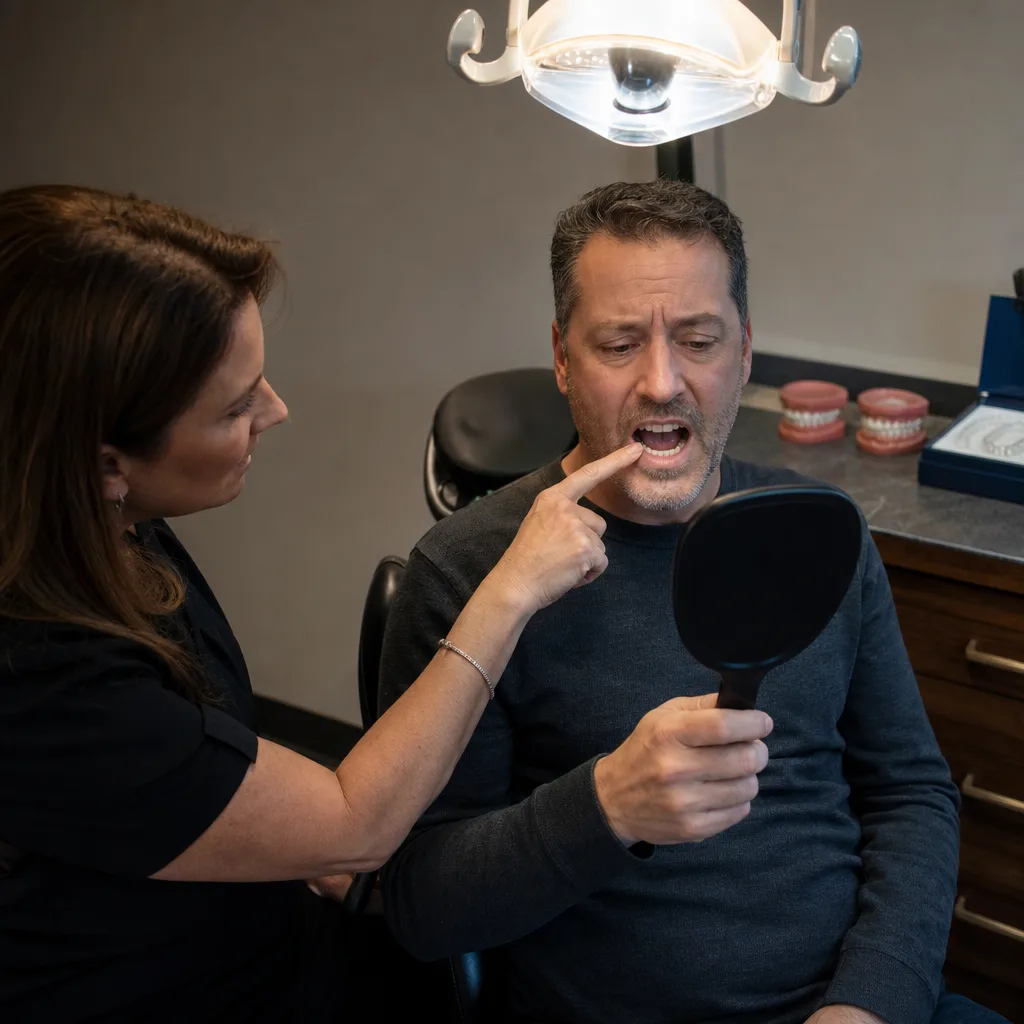
You sat in the chair, asked about Invisalign, and got a short answer. Maybe it was “you’re not a candidate.” Maybe it was “let’s just watch it.” No explanation. You left the office feeling brushed off.
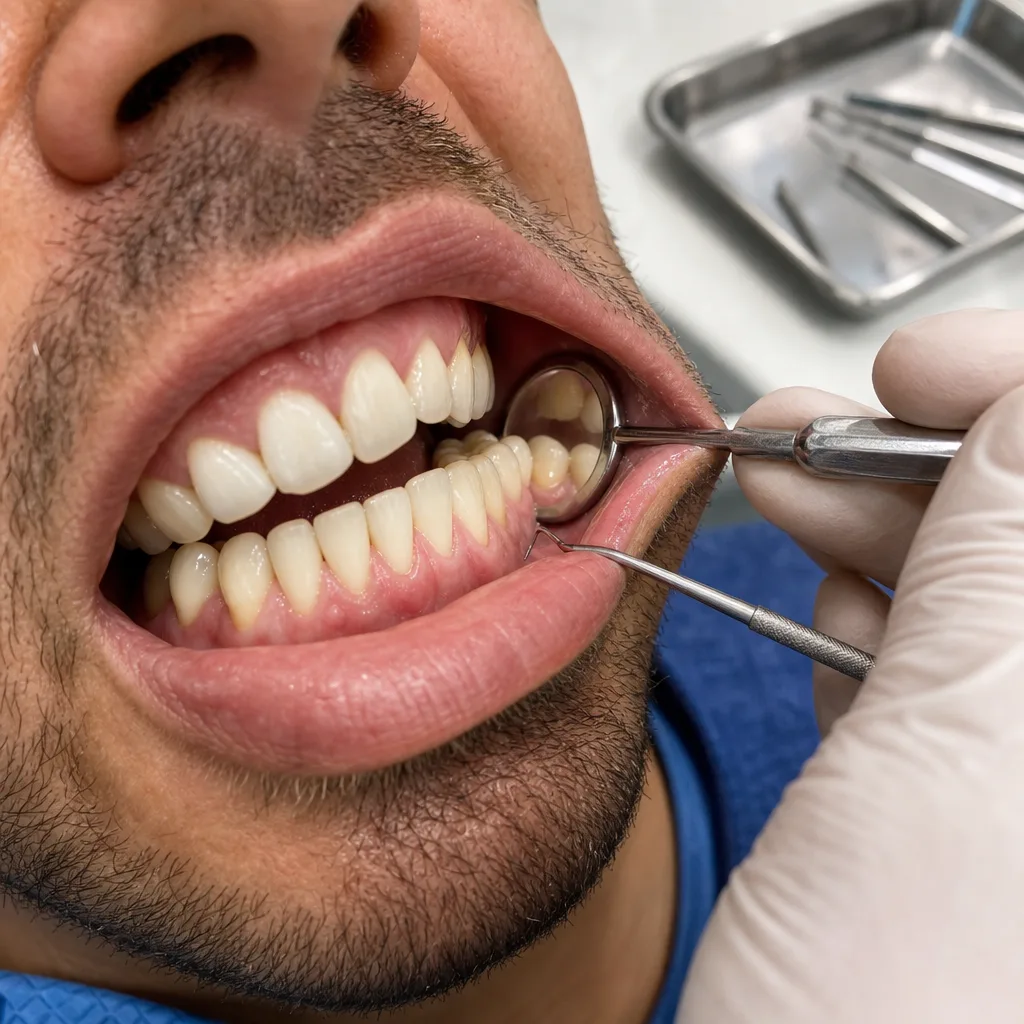
That’s frustrating, and it happens a lot. We hear about it every week from people driving in from Brookfield, Elm Grove, and around Waukesha County.
Here’s the part nobody explained. A no is usually a clue. Your dentist saw something. They just didn’t have the time or the tools to walk you through it.
So what are they seeing? A few things come up over and over.
- A narrow upper jaw. There isn’t enough room for the teeth, so moving them just shuffles a crowding problem around.
- Severe rotation or a tooth that’s badly tipped. Some movements are hard for aligners to control well.
- Gum or bone concerns. Teeth shouldn’t be moved through unhealthy tissue, period.
- A bite that shifts. If the jaw isn’t landing in a stable spot, straight teeth can still feel wrong.
- Grinding and clenching at night. That’s often a breathing signal, and aligners don’t touch the cause.
- A tongue that can’t reach the roof of the mouth. A tight tongue tie or low tongue posture keeps pushing teeth back out of place.
- Honest doubts about wearing them. Aligners only work in your mouth, not in your bag.
Look at that last group again. Grinding, a narrow jaw, low tongue posture. Those aren’t tooth problems. Those are airway and space problems.
And that’s the part most people never get told.
If you wake up with a sore jaw or a headache, if your partner moved to the guest room because of the snoring, if your dentist keeps mentioning flat, worn-down teeth, the crowding is a symptom. Not the story. Straightening the front teeth won’t change how much room your tongue has at 2am.
Most people don’t realize this until they’ve already finished one round of treatment and watched the teeth drift back.
This is why we look before we plan. A 3D dental image (CBCT) shows us the airway, the sinuses, the roots, and how wide the upper jaw really is. A flat photo can’t show that. We also check how the tongue moves and where it rests, because that muscle is working on your teeth all day and all night.
When a no makes sense, it usually follows a sequence like this.
- Look at the whole picture first, including the airway, not just the front teeth.
- Treat health issues like gum inflammation before anything moves.
- Make room if the jaw is narrow, sometimes with MARPE for adults or expansion for kids.
- Free up and retrain the tongue when a tie or weak habit is driving things.
- Then move the teeth, once the foundation holds.
Plenty of people who were told no become good Invisalign candidates after step three or four. The order just matters.
What Disqualifies You From Getting Invisalign
You came in ready. Maybe you’d already picked the start date. Then someone looked at your scan and said Invisalign isn’t the right fit for you. That stings, and most people walk out without a real explanation.
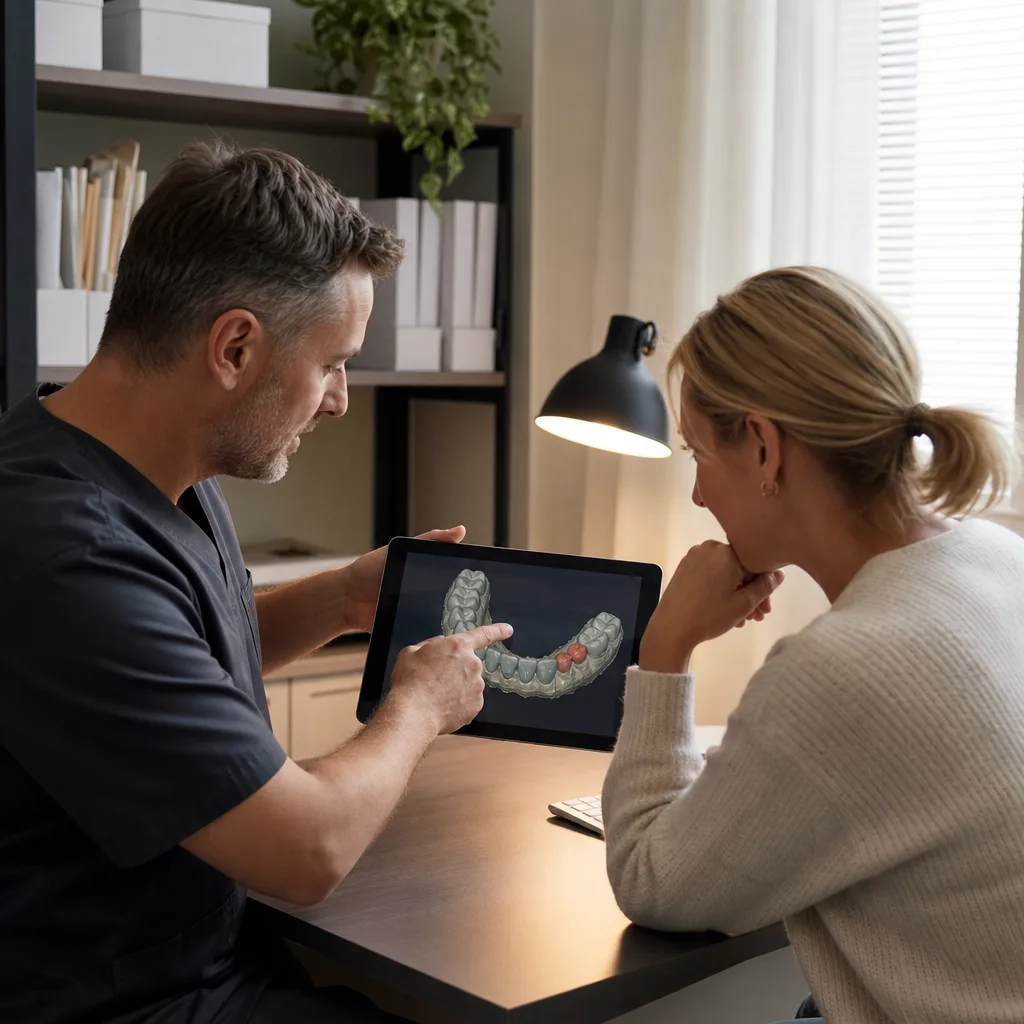
So let’s give you one. A no usually isn’t about your commitment or your teeth being “too bad.” It’s almost always about how much the aligners can physically move, and about what’s underneath the crowding.
Aligners are great at tipping and rotating teeth. They’re weaker at big vertical moves, pulling teeth down into place, or shifting where your jaws sit relative to each other. That’s the honest limit.
Here are the reasons we see most often when someone gets turned down.
- Severe crowding with no room in the arch, so teeth have nowhere to go without widening or removing teeth
- A skeletal bite issue, meaning the jaws themselves are mismatched and not just the teeth
- Teeth that need to be rotated or pulled down a long distance, which aligners struggle with
- Gum disease or untreated decay that has to be handled before any tooth moves
- Short or oddly shaped teeth that give the attachments nothing to grip
- Wear-time reality, because aligners out of your mouth do nothing at all
Look at that list again. The first two show up the most, and they share a cause. Not enough room in the upper jaw.
That’s where we push a little further than a standard consult. A narrow palate crowds teeth, but it also narrows the space your tongue needs. The tongue then sits low and back. And that’s the same pattern we see in people who snore, grind at night, or wake up with a headache and a dry mouth. We see this connection all the time, and it rarely gets mentioned.
This is why we take a CBCT scan before we say yes or no. A 3D image shows us arch width, root position, and airway space. A flat photo of your smile can’t show any of that.
So how do you find out where you stand? Here’s the order we work through.
- Get gums and any decay stable first, since nothing should move in an unhealthy mouth
- Take 3D imaging to see jaw width, root angles, and airway space together
- Ask whether the crowding is a tooth problem or a jaw-size problem
- If the jaw is narrow, discuss expansion with MARPE before ruling out clear aligners
- Screen for sleep and breathing symptoms like snoring, grinding, or morning headaches
- Then decide whether aligners alone can finish the job, or need help
That fourth step changes a lot of answers. MARPE widens the upper jaw in adults using tiny anchors in the palate, no jaw surgery. Once there’s room, clear aligners often become workable again.
Adults with a mismatched bite and a narrow palate often do better with expansion first, then Invisalign to finish the alignment. Sequence matters more than most people are told.
And sometimes the answer really is no, at least for aligners by themselves. But you deserve to know which of the six reasons above applies to you. Vague isn’t good enough.
That same focus carries through the practical invisalign guidance our team provides to local families.
When a ‘No’ Really Means Something Else Needs Attention First
You walked in ready. Maybe you’d been saving for years, maybe you finally had the time. And then someone told you Invisalign wasn’t a good fit for you, without really explaining why. That’s a deflating drive home.

Here’s what we want you to hear. A no isn’t always about your teeth. Sometimes it’s about everything behind them.
We see this every week in Brookfield. Someone comes in for a second opinion, frustrated, assuming they were turned away for no reason. Then we look at the whole picture and the reason shows up fast. A tongue that can’t reach the roof of the mouth. A narrow upper jaw. A throat that closes a little every night while they sleep. Move the teeth without addressing that, and the teeth often drift right back.
So what does your dentist see when they hesitate?
- A tongue-tie, meaning the tissue under the tongue is too tight for normal movement and resting position
- A narrow palate, so there isn’t enough width in the upper jaw for teeth to line up without crowding
- Tongue thrust or mouth breathing, where daily muscle habits push teeth out of place faster than aligners can move them back
- Signs of an airway problem, like scalloped tongue edges, worn enamel from grinding, or a partner who’s moved to the guest room
- Jaw joint pain or clicking that gets worse when the bite changes
None of these mean you can’t have Invisalign. They mean the order matters.
Think about a room addition on a house that has a cracked foundation. You can hang beautiful drywall. It’ll look great for a season. But the crack keeps moving, and the drywall keeps splitting. Teeth behave the same way. They sit in bone, and they get pushed around every hour by the tongue, the lips, and the way you breathe.
Most people don’t realize this until their retainer stops fitting.
When a refusal points to something deeper, here’s the sequence we generally follow:
- Listen to your history first. Morning headaches, snoring, grinding, dry mouth, waking up tired. These matter more than most people expect.
- Take CBCT airway imaging, a 3D scan that shows the width of your jaws and the space in your airway. Flat photos can’t show this.
- Check tongue mobility and resting posture. If the tongue can’t lift, we look at whether a laser tongue-tie release makes sense.
- Screen for sleep-disordered breathing, sometimes with a home sleep study you do in your own bed.
- Build width where it’s missing. For adults, that may mean MARPE, a palatal expander anchored with small screws, instead of jaw surgery.
- Retrain the muscles with myofunctional therapy so the tongue holds its new position.
- Then straighten the teeth with Invisalign, on a foundation that will hold them.
That’s not a delay tactic. It’s the difference between a result you keep and one you pay for twice.
And if the answer turns out to be yes, you’ll know exactly why, and what’s holding your smile in place for the long run.
Frequently Asked Questions
Common questions about Why Some Dentists Don’t Recommend Invisalign: What to Know Before You Start
Can a narrow jaw really stop you from getting Invisalign?
Yes, a narrow upper jaw is one of the biggest reasons dentists say no. There isn’t enough room for your teeth to move without shuffling the crowding around. This also crowds the space your tongue needs, which can affect breathing and sleep. Widening the jaw first, sometimes with MARPE, often opens the door to Invisalign later. If you were told no because of jaw width, ask about a 3D scan to see what’s really going on.
How do you know if crowding is a tooth problem or a jaw problem?
You can’t tell just by looking in the mirror. A flat photo or mold only shows where teeth sit, not how wide your jaw is or how much room your airway has. A 3D scan, called a CBCT, shows arch width, root angles, and airway space together. This is the step that separates a simple tooth issue from a jaw-size issue. That difference changes your whole treatment plan.
Why do dentists in Brookfield check for grinding and snoring before recommending Invisalign?
Grinding, snoring, and morning headaches often point to airway or tongue posture problems, not just crowded teeth. We see this pattern often in patients coming from Brookfield and nearby Waukesha County. Straightening teeth without fixing the underlying space problem can lead to teeth drifting back later. Screening for these symptoms first helps build a plan that holds.
What is MARPE and how does it help adults get approved for Invisalign?
MARPE is a way to widen a narrow upper jaw in adults using small anchors in the palate, without jaw surgery. It creates room for teeth and gives the tongue more space to rest properly. Adults who were told no because of a narrow palate often become good candidates after this step. Understanding why some dentists don’t recommend Invisalign starts here, since jaw width is one of the most common hidden reasons behind a no.
Is a tongue tie really connected to whether Invisalign will work?
Yes, a tight tongue tie or low tongue posture can keep pushing teeth out of place even after Invisalign finishes. The tongue works on your teeth all day and night, so if it can’t rest against the roof of your mouth, it undoes progress over time. Freeing and retraining the tongue before or during treatment helps the results last. This step gets skipped a lot, and it’s often why teeth drift back.
Should you get a second opinion if your dentist says you’re not a candidate for Invisalign?
Yes, a second opinion with 3D imaging can give you a clearer answer than a quick chairside look. Many people told no later become candidates once gum issues are treated, the jaw is widened, or the tongue is retrained first. The order of these steps matters more than most people realize. A closer look at your airway, jaw width, and bite shows which steps apply to you. If aligners still aren’t the right fit, our article on braces vs. Invisalign in 2026 explains when fixed braces handle a case better.
Ready to Get Started?
Book Your Airway Evaluation. Call (414) 935-8460 today.