



If you’ve been circling the question of whether your child needs tongue tie treatment, you’re not alone. A lot of parents we see drove past three or four practices to get to us. Not because those practices are bad — but because tongue tie in kids lives in a gap most general dentists aren’t trained to close.
So let’s keep this simple.
Tongue tie is a restriction. It shows up in speech, in feeding, in sleep, and in how the jaw grows. Treating it in childhood is usually faster, calmer, and less disruptive than treating it later. This guide walks Columbine, Dutch Creek, Kipling Hills, and Ken Caryl parents through tongue tie treatment children Columbine Lakewood Colorado families can access at our nearby office — what the visit looks like, what recovery involves, and how to plan around school and activities.
Our Lakewood office is 15 to 20 minutes north, most of it a straight shot up Wadsworth or C-470. Consults open most weekdays. No referral needed.
Tongue Tie in Children Shows Up in Signs Beyond Speech
Most people hear “tongue tie” and think speech. That’s only one piece.
A tongue tie is a tight tissue band under the tongue — the lingual frenulum — that limits normal movement. When the tongue can’t lift, reach, or rest where it should, the effects show up all over the body.
What we see in kids:
- Speech signs: trouble with L, R, S, or T sounds; slower speech development
- Feeding signs: picky eating, gagging on textures, slow meals, food pocketing in the cheeks
- Sleep signs: mouth breathing at night, snoring, restless sleep, bedwetting past age 6
- Dental signs: narrow palate, crowded teeth, thumb-sucking that won’t stop
A lot of SW Jeffco parents first hear the word “tongue tie” from a Dutch Creek Elementary speech therapist or a Ken Caryl pediatrician. Sometimes a dental hygienist flags it at a cleaning. The American Academy of Pediatric Dentistry’s policy on frenulum management recognizes tongue tie as a functional issue worth evaluating — not just a cosmetic observation to wait out.
If your gut has told you something’s off and the answer keeps coming back as “it’s just a phase,” that’s worth a second look.
Laser Release Is a Quick, In-Office Procedure for Kids
The procedure is shorter than most parents expect.
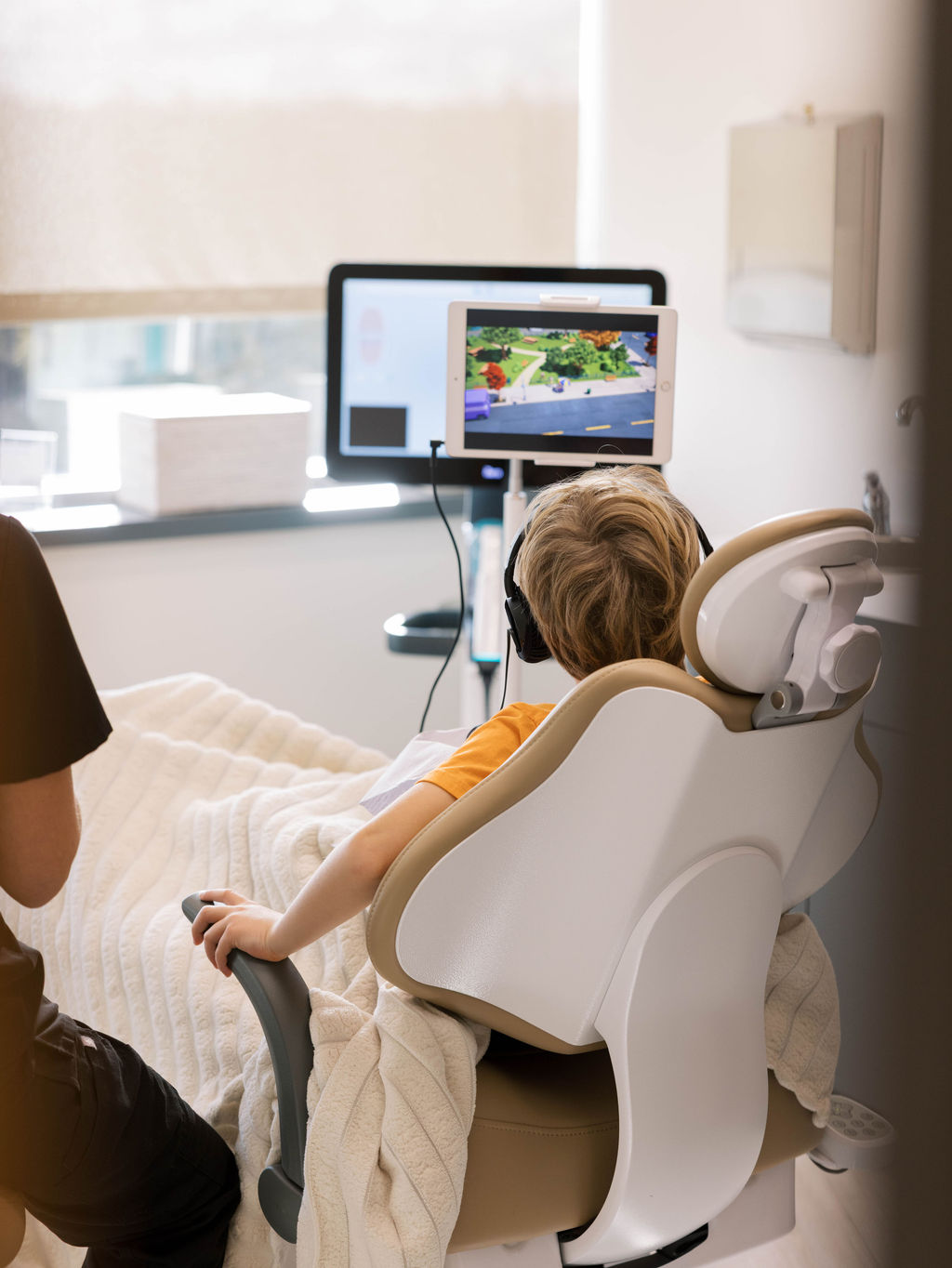
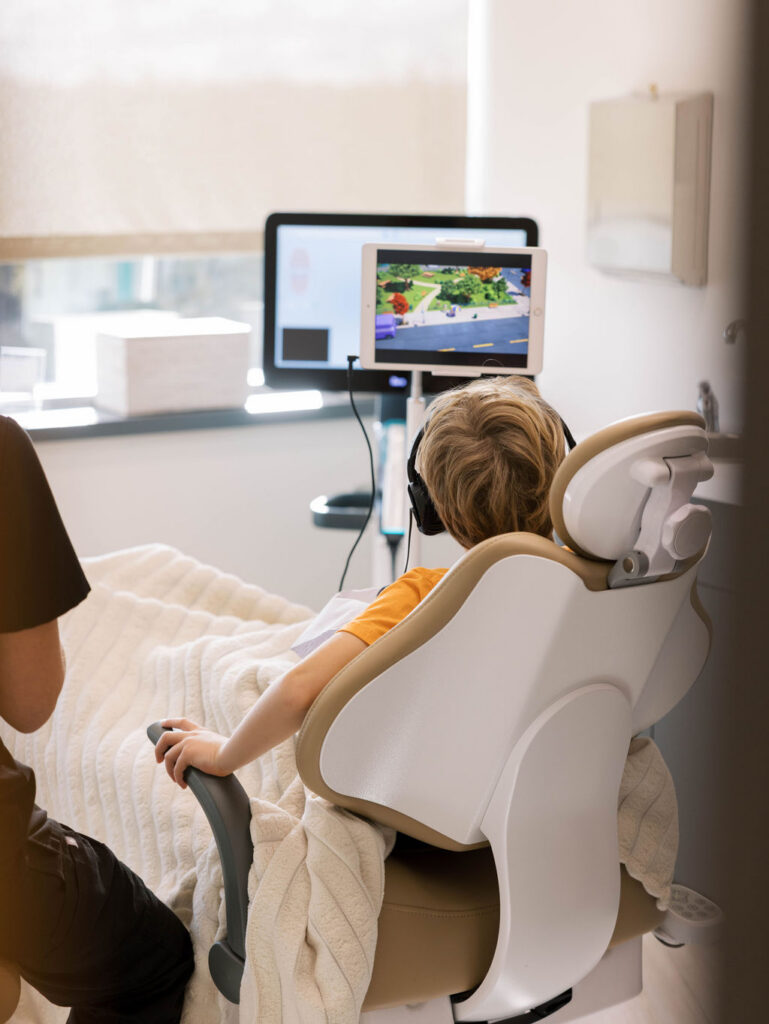
Once the area is numb, the release itself takes seconds. A soft-tissue laser cuts and seals in the same motion — which means no scalpel, no stitches, and very little bleeding. Your child stays awake and calm with a parent right there. General anesthesia isn’t needed in nearly all cases. The full visit, from walking in the door to walking out, usually runs under an hour.
What to expect during the appointment:
- A short functional exam to map the release
- Topical numbing first, then local anesthetic
- The laser release (under a minute of active work)
- A demo of the post-release stretches
- A few minutes of comfort time before heading home
Because the laser seals as it goes, most kids are eating and drinking normally within hours. Many Columbine and Kipling Hills families finish in time for an afternoon at Robert F. Clement Park or practice at Falcon Bluffs Middle School.
We hear one quiet worry more than any other: is this going to traumatize my child? Kids handle this far better than adults expect. Almost always.
Aftercare Shapes the Long-Term Result More Than the Release Itself
Here’s the honest part most practices gloss over: the release is the easy step. Aftercare is what decides whether the change sticks.
The three pieces of solid aftercare:
- Gentle stretches a few times a day for about two weeks to keep the healing area from reattaching
- Myofunctional therapy to retrain tongue posture so the tongue learns to rest on the palate
- Follow-up visits to confirm healing and adjust the plan
Stretches take under a minute per round. We send you home with a video so you’re not guessing. Most children eat and drink normally within hours of the release, so meals aren’t a fight.
Expect change to unfold over four to eight weeks, not overnight. Speech clarity improves. Meals speed up. Sleep deepens. Cleveland Clinic notes that functional improvements after release depend heavily on post-procedure support — the release opens the door, but therapy walks through it.
Signs healing is going well:
- White or yellow patch under the tongue (that’s normal, not an infection)
- Kid is eating, talking, and sleeping about as usual
- Discomfort fades day by day
Signs to call our office:
- Active bleeding that won’t stop with gentle pressure
- Refusal to eat or drink for more than 6 hours
- Fever over 100.4°F
- Swelling that’s getting worse, not better
Planning the Visit Around School Drop-Off and Activities Is Easy From Columbine
SW Jeffco parents juggle a lot. We know. The visit shouldn’t add to the load.
Morning consults work well if you’re heading to work in the DTC, downtown Denver, or Lakewood. The office opens at 8 AM Monday through Thursday, which fits a lot of school-drop-off windows.
To make the visit smoother:
- Fill out paperwork online before you arrive — check-in takes minutes, not half an hour
- Bring a comfort item, a favorite soft snack, and a change of clothes just in case
- Schedule when your child is rested, not after a long day at Chatfield State Park
- Plan a soft-food afternoon — yogurt, smoothies, mac and cheese, applesauce
Follow-up visits are short — usually 15 to 20 minutes. Easy to fit around Dutch Creek Elementary, Coronado Elementary, or Columbine Hills Elementary pickup.
The Drive From Columbine to the Lakewood Office Is Straightforward
Our office sits at 3900 S Wadsworth Blvd in south Lakewood — about 15 to 20 minutes north of most SW Jeffco neighborhoods.
From Columbine West or Columbine Hills: Wadsworth Boulevard straight north. No turns to track.
From Dutch Creek or the Coalmine Shopping Center area: head north on Wadsworth from Coal Mine Avenue.
From Ken Caryl Ranch or Valley: Kipling Parkway north to Hampden, then east to Wadsworth. Or C-470 east to Wadsworth north.
From Kipling Hills: Kipling north to Hampden, then east to Wadsworth.
Parking is free at the building. The office is on the 6th floor, Suite 625 — elevator straight up from the ground floor. RTD riders can connect from the Southwest Plaza Park-n-Ride at Wadsworth and C-470.
The honest truth: the drive is worth the trip. No SW Jeffco practice offers the same airway-focused pediatric approach under one roof — tongue tie release, myofunctional therapy, airway orthodontics, and sleep-breathing evaluation all coordinated by one team.
Frequently Asked Questions
How far is your office from Columbine or Ken Caryl?
The Lakewood office is about 15 to 20 minutes north of most SW Jeffco neighborhoods via Wadsworth Boulevard or C-470. Midday traffic is lighter than morning or evening commute hours, so a late-morning or early-afternoon visit usually runs smoothly.
My child’s dentist near Southwest Plaza said to “wait and see.” Should we get a second opinion?
A second opinion from an airway-focused provider is reasonable. General pediatric dentists often screen for cavities and alignment, not always for functional ties that affect sleep, breathing, and jaw growth. If you’re still sorting out whether it’s a tongue tie, a lip tie, or both, our safety-first guide for Wheat Ridge families walks through the distinctions side by side.
Does my 7-year-old need to be put to sleep for a tongue tie release?
No. Most children’s releases are done awake, in-office, with only local numbing. Sedation is rarely needed for a cooperative child. Most kids sit calmly with a parent nearby for the full visit.
Will tongue tie treatment help my child’s bedwetting or mouth breathing?
For many children, restoring tongue posture after a release improves sleep quality, which can reduce mouth breathing and sometimes bedwetting over time. Results vary, and often the release is paired with myofunctional therapy and an airway evaluation. Our deeper read on tongue tie vs lip tie for Wheat Ridge parents covers the full symptom picture.
Can we do the consult and the release in the same visit?
Sometimes. It depends on your child’s cooperation and what we find in the exam. Most families prefer to schedule the release as a short follow-up visit, so your child knows what to expect and the day isn’t rushed.
Will my child need speech therapy after the release?
Some children do, especially if speech concerns started before the release. Others improve with myofunctional therapy alone. If speech is the main reason you’re exploring treatment, our article on children’s tongue-tie release for speech delays near Englewood covers the connection in more detail.
What does recovery look like the first few days?
Expect mild soreness, soft foods, and stretches done a few times a day for about two weeks. Most kids are eating and talking normally within 24 hours. For a full day-by-day walk-through, our post on recovery for Green Mountain and Bear Creek families breaks it down clearly.
What if we go through with it and nothing changes?
That happens, and it’s worth understanding before you book. The two most common reasons are a tongue tie that wasn’t the root cause to begin with, or stretches that got dropped after the first week and let the tissue reattach. Neither is a reason to avoid treatment, but both are reasons to want a thorough evaluation first. Our guide to tongue-tie release risks and downsides covers what can go wrong and why some pediatricians question the procedure.
Is there parking close to the office for families coming from Ken Caryl with multiple kids?
Yes. The 3900 S Wadsworth Blvd building has free surface parking with elevator access directly to Suite 625. The entry is stroller-friendly if you’re bringing younger siblings along.

